An Anthem homeowner woke up Monday morning to a Model 3 at 12 percent state of charge. The Powerwall was at 100 percent. The home charger was offline because of a peak-hour NV Energy event. The car needed to drive to work. The Powerwall couldn’t help. Powerwalls don’t send charge to cars. They back up the house.
What a Powerwall actually does
A Tesla Powerwall is a home battery. It stores energy from solar panels or from the grid. It powers the house during a grid outage. It can also smooth demand by discharging during peak hours and charging during off-peak hours. NV Energy’s time-of-use EV window runs 10:01pm to 8:00am, per nvenergy.com.
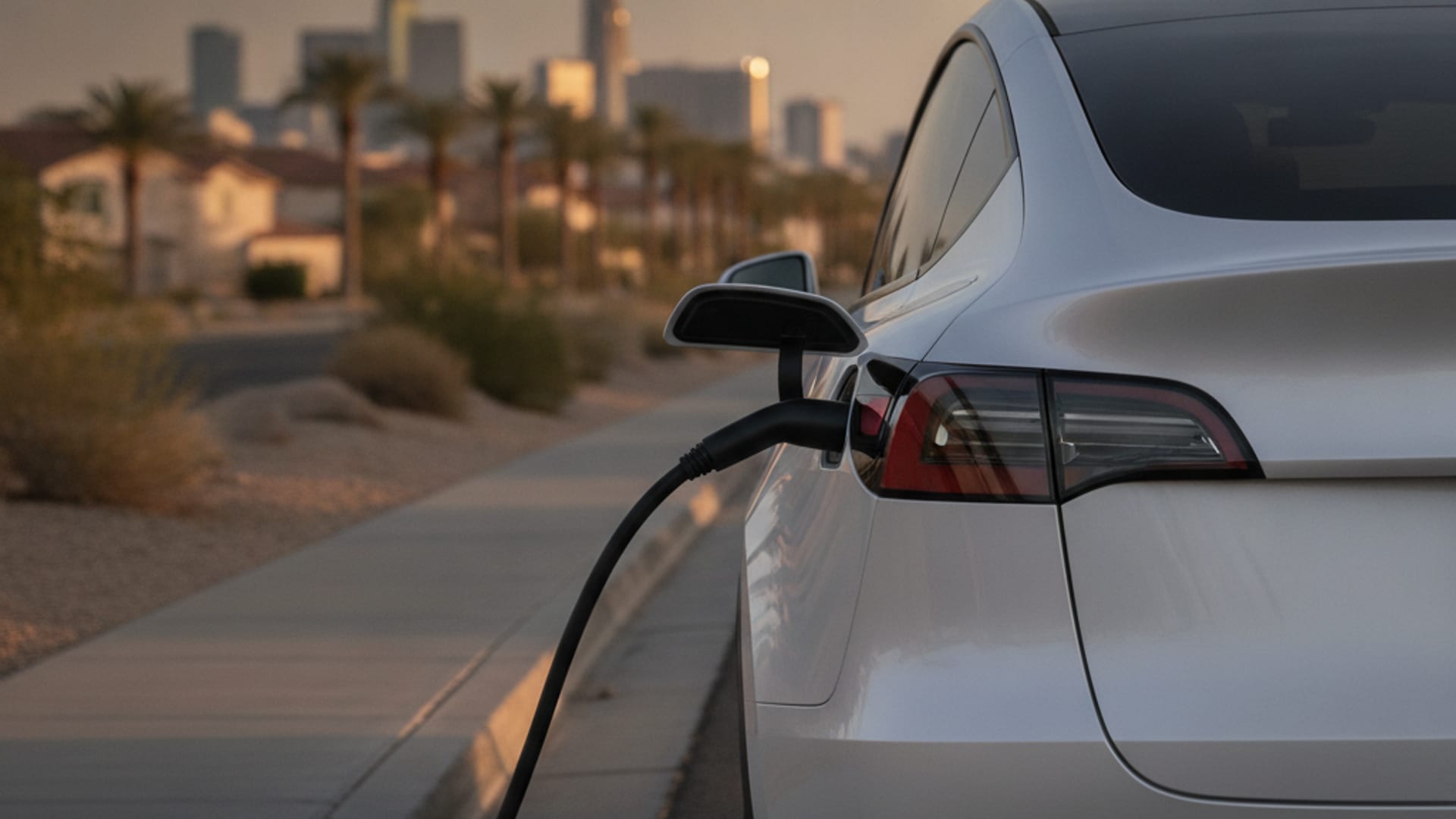
The Powerwall does not have a NACS or CCS plug. It cannot send energy to a car. The car charges from a separate Wall Connector or mobile connector plugged into a 240V outlet or hardwired circuit. The two systems share the home’s electrical panel but not energy.
Anthem sits in the eastern Henderson foothills. Most homes are newer subdivisions with garages and dedicated 240V circuits. The Powerwall makes sense for homes with solar. It does not solve an EV stall.
What mobile EV rescue actually does
Mobile EV rescue brings a 240V Level 2 source to the car’s location. The matched operator carries a portable charger with a native NACS plug. CCS or J1772 adapters cover non-Tesla EVs on the same call.
A typical session adds 10 to 20 miles of range in 15 to 30 minutes. That covers the commute to work, the run to a charger, or the trip home. The operator quotes the job before starting and bills you directly.
For an Anthem stall at home, the operator meets the driver in the driveway or on the street. The work happens at the car. The driver doesn’t need to install anything or wait for a shop appointment.
Mobile EV charging is the service. It’s the right call when the car is at the wrong state of charge for the day’s plans.
When a Powerwall does help
The Powerwall helps in three situations that look similar but aren’t EV rescues.
Power outage. A grid outage in Anthem knocks out the home charger. The Powerwall keeps the house circuits alive, including the garage outlet if it’s wired to backup. The car still charges overnight as long as the Wall Connector is on a backed-up circuit. The Powerwall doesn’t charge the car directly. It keeps the outlet alive.
Solar self-consumption. The Powerwall stores solar production for evening use. The car charges from solar in the afternoon. Less grid draw. Lower utility bill. The Powerwall is part of a home energy system, not an EV backup.
Peak shaving. NV Energy’s time-of-use rate makes off-peak charging cheaper. A Powerwall can store off-peak grid energy for peak use. The car still benefits because the home’s peak draw drops. The Powerwall is doing home energy management, not direct EV charging.
These are real benefits. They’re not the same as charging a stranded car on the side of the road.
When mobile EV rescue is the right call
Three Anthem situations call for a mobile operator.
The car stalled on the way home from a Henderson event. The commute spent more range than planned. The owner needs enough charge to clear the Anthem climb. A mobile operator meets the driver at a flat parking lot near the home.
The car stalled at an Anthem event lot. A concert, a school event, or a sports game used more range than the dash predicted. The owner needs enough charge to reach the home charger. A mobile operator meets the driver at the event lot.
The home charger is offline and the car needs to drive today. The Powerwall isn’t an EV charger. The mobile operator adds range at the car. The owner drives to work or to a public charger.
Out-of-charge EV recovery covers the third case. The matched operator adds 10 to 20 miles. The owner drives to a charger or to work.
The Anthem climb specifically
Anthem sits at about 2,400 feet in the eastern foothills. The climb from the valley floor adds range cost. A driver coming back from the Strip at 20 percent state of charge may arrive at home at 5 percent. The climb is the test.
Plan the climb with at least 30 percent state of charge at the valley floor. That’s a working buffer for the Anthem approach. Anything less is risky in summer.
The mobile operator EV roadside assistance covers Anthem. The operator meets the driver at home, at a flat lot near the subdivision, or on the approach road. The matched operator quotes the job before starting.
The cost math
A Powerwall’s installed cost varies. Tesla’s published price fluctuates with rebates and install scope. The Powerwall doesn’t reduce the cost of a single EV rescue call. It’s a home energy investment, not a roadside tool.
A mobile EV rescue is a per-call cost. The matched operator quotes the job before starting. The matched operator bills the driver directly. The matched operator’s work is the work the matched operator performs. Charge Pro LV is the connection, not the operator.
AFDC’s residential storage pages at afdc.energy.gov cover the cost of home storage in detail. The per-kWh cost of a Powerwall is different from the per-call cost of a mobile rescue. They serve different needs.
What an Anthem driver should plan for
Three habits help.
Keep the home charger on a backed-up circuit if a Powerwall is installed. The car charges from the outlet even when the grid is down. The Powerwall keeps the outlet alive. The car is ready to drive when the grid returns.
Treat the Anthem climb as a separate range event. Plan 30 percent state of charge at the valley floor. The climb is a known cost. The buffer covers it.
Keep a public charger in the regular rotation. A green Anthem driver can usually stay home-charged. A driver who attends events in Henderson or the Strip needs a public charging plan as backup. The mobile operator is the third line, not the first.
Frequently asked questions
Can a Powerwall charge a Tesla?
No. A Powerwall is a home battery that powers house circuits. It does not have a NACS or CCS plug. The car charges from a separate Wall Connector or mobile connector plugged into a 240V outlet. The Powerwall can keep the outlet alive during a grid outage.
Does the mobile operator come to Anthem?
Yes. The matched operator covers Anthem and the eastern Henderson foothills. The matched operator EV roadside assistance covers the full metro.
How much range does the Anthem climb cost?
The climb from the valley floor to Anthem costs about 5 to 8 percent of a typical Model 3 or Model Y charge. The exact cost depends on speed, climate, and load. Plan for 8 percent as a buffer.
Will the operator replace a dead 12V at the Anthem home?
Yes. The matched operator carries low-voltage boosters and replacement 12V packs. The swap happens in the same driveway. The car relearns the 12V serial number in a few drive cycles.
Can the home charger be on the same circuit as the Powerwall?
Yes, if the install is done correctly. The Wall Connector should be on a dedicated 240V circuit, sized for the charger’s draw. The Powerwall is a separate device on the home’s electrical panel. A licensed electrician handles the install. NV Energy’s EV programs cover residential and multifamily incentives, per nvenergy.com.