You rent in a valley apartment with no outlet in the stall. NV Energy’s managed charging program is real, but it helps overnight at home, not in a lot with no plug. Here’s when a mobile charge at the car solves the day, and when a home battery is a different answer for a different problem.
The problem isn’t the same problem twice
A driver with no plug in their apartment lot has two failures stacked. The first is overnight charging. The second is what to do when the pack runs low before a public stall is available. Mobile EV charging and a home battery backup address different jobs. They aren’t alternatives to each other.
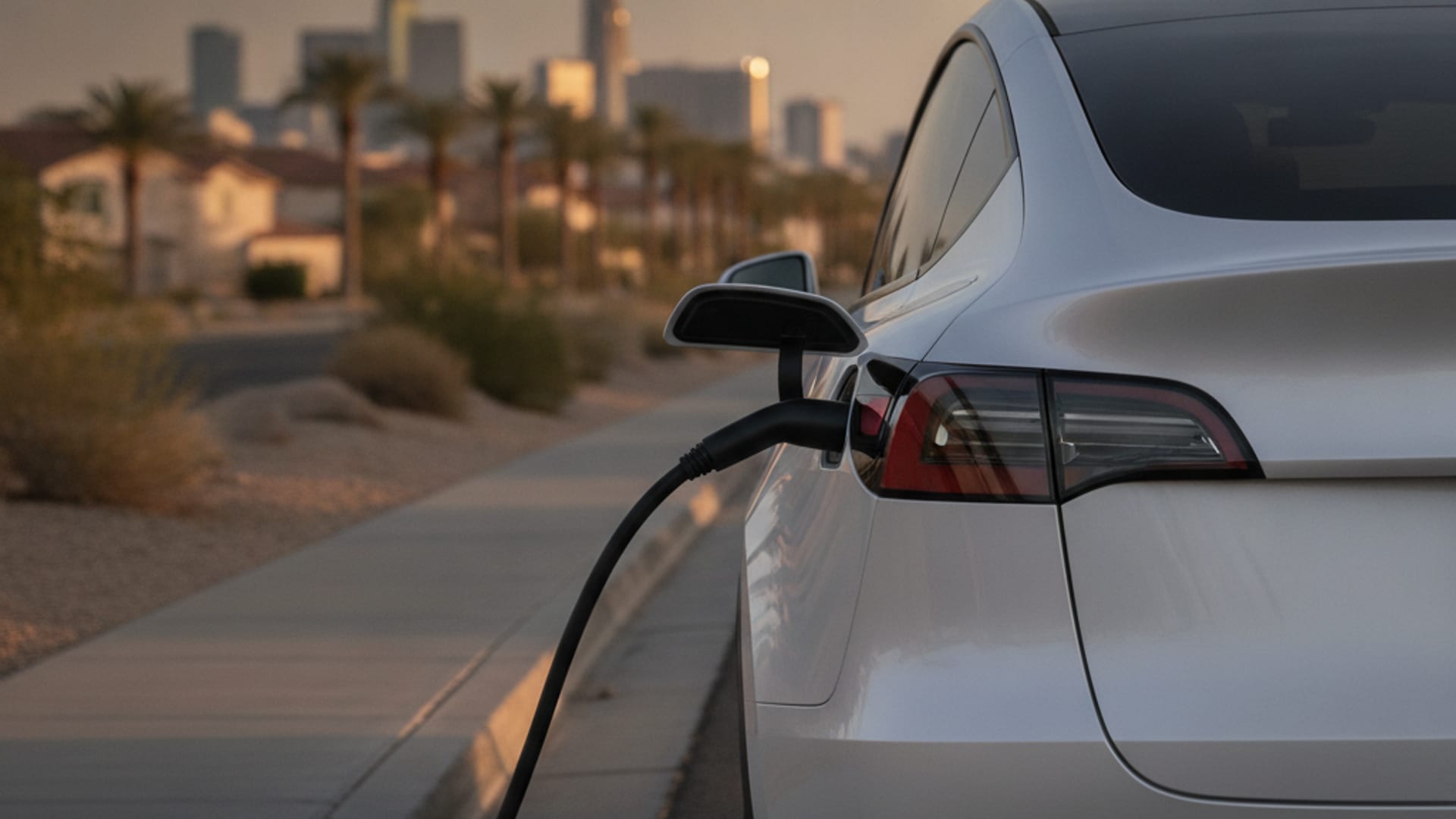
A mobile charge at the car is a Level 2 session in the lot where the car already sits. A 240-volt source connects to the car. A typical session adds 10 to 20 miles of range in 15 to 30 minutes of charging. That’s enough to clear the lot and reach a working charger. It’s a daily rescue, not a daily charge.
A home battery backup is for a different question entirely. That’s the question of whether the home loses power during a grid outage, and whether the fridge and the lights stay on. NV Energy publishes a Residential Managed Charging Program, time-of-use rates, multifamily charging programs, and home charging station incentives. None of those keep a 12V alive in a 100F apartment lot, and none of them are a substitute for a home battery that runs your refrigerator.
For the apartment-dweller with no plug, the real fix is a managed charging plan, a public stall network, and a referral line that handles the days those two fail. The home battery is for the lights.
What NV Energy actually publishes
NV Energy runs a Residential Managed Charging Program, with a handbook revised in 2026. The utility publishes time-of-use rates under the Residential Electric Vehicle Recharge Rider, with a charging window from 10:01pm to 8:00am. The utility also publishes Residential EV Charging Station Incentives, Multifamily Charging, and Public Charging programs, including an Interstate Corridor Charging Depot, Outdoor Recreation, and Public Agency offerings.
A driver with a plug at home can shift overnight charging into the cheapest window. A driver without a plug gets none of that. Clark County Title 30 requires EV-ready wiring in new construction. It doesn’t reach back and rewire a 1970s walk-up that already exists. The drivers who need this most live in buildings built before the rule.
The Lower Income EV Rebate closed on June 30, 2023. There is no Nevada state EV purchase rebate. There is no Nevada EV registration surcharge. The state ranks about sixth in EV adoption, but the apartment problem is structural.
When a mobile charge is the right answer
The mobile charge is for the day the public stall failed, the day the pack went below ten percent before the next stall, the day the 12V died in the sun. The operator brings a 240-volt source to the lot where the car already sits. You don’t tour the valley looking for a green-light kiosk. The work happens where the failure happened.
Charge Pro LV is a referral line. It matches stranded EV drivers with independent local mobile rescue operators. It performs no work, owns no trucks, and employs no technicians. It doesn’t set prices or publish hours. The operator quotes you before starting, then bills you directly. The pros we connect you with are licensed and insured.
Mobile EV charging is the work for the lots where the car already sits. Tesla roadside rescue and non-Tesla EV rescue cover the two connector paths.
When a home battery is a different answer
A home battery backup is for grid resilience. The nights in the valley are mostly mild. The summers are brutal. NWS Las Vegas shows about 78 days a year at or above 100F and about 9.4 at or above 110F. The all-time record high is 120F, set July 7, 2024. Grid demand spikes on those days. NV Energy runs time-of-use rates that shift charging into the cooler hours. A driver with a plug at home can charge the car and the battery on the same overnight plan.
A driver without a plug doesn’t get that. The home battery is still useful for the fridge and the lights. It doesn’t add miles to the car in the lot.
The home battery question is also a separate industry. There are licensed electricians who do that work. The home battery is not a referral service. The mobile charge at the apartment lot is.
For the apartment-dweller, the right question is who brings a Level 2 source to the stall today. That’s the referral line. Call (702) 935-4699 and Charge Pro LV will connect you with an independent operator. That operator quotes the job before it starts.
For a deeper comparison, the EV rescue vs repair in the Las Vegas Valley guide walks through the two call paths.
Frequently asked questions
Does NV Energy offer a managed charging program?
Yes. The Residential Managed Charging Program is active, with a handbook revised in 2026. The time-of-use rate window runs from 10:01pm to 8:00am. It helps drivers with a plug at home. It does not put a working outlet in a lot that never had one.
Can I install a Level 2 charger in my apartment lot?
Generally no. The property owner controls the electrical infrastructure. Multifamily charging programs exist through NV Energy, but they require owner participation. A Level 2 home charger also needs a Clark County electrical permit.
Is a home battery a substitute for overnight charging?
No. A home battery runs the fridge and the lights during an outage. It does not add miles to the car in the lot. The two solve different problems.
Does the Lower Income EV Rebate still exist?
No. The Lower Income EV Rebate closed on June 30, 2023. Nevada has no state EV purchase rebate. Confirm current programs directly with NV Energy before relying on any specific incentive.