A Rivian R1T ran the pack down on US-95 north of the valley. The driver pulled to the shoulder, hazards on, and checked the app. Pack at 3 percent. The driver had two questions. Does a normal mobile EV truck carry the right plug for my truck, and how much range can one truck actually add? The answer to both is yes, with a CCS adapter for older Rivians and NACS for newer ones, and about 10 to 20 miles per 30-minute session. Here is what that call looks like on a valley shoulder.
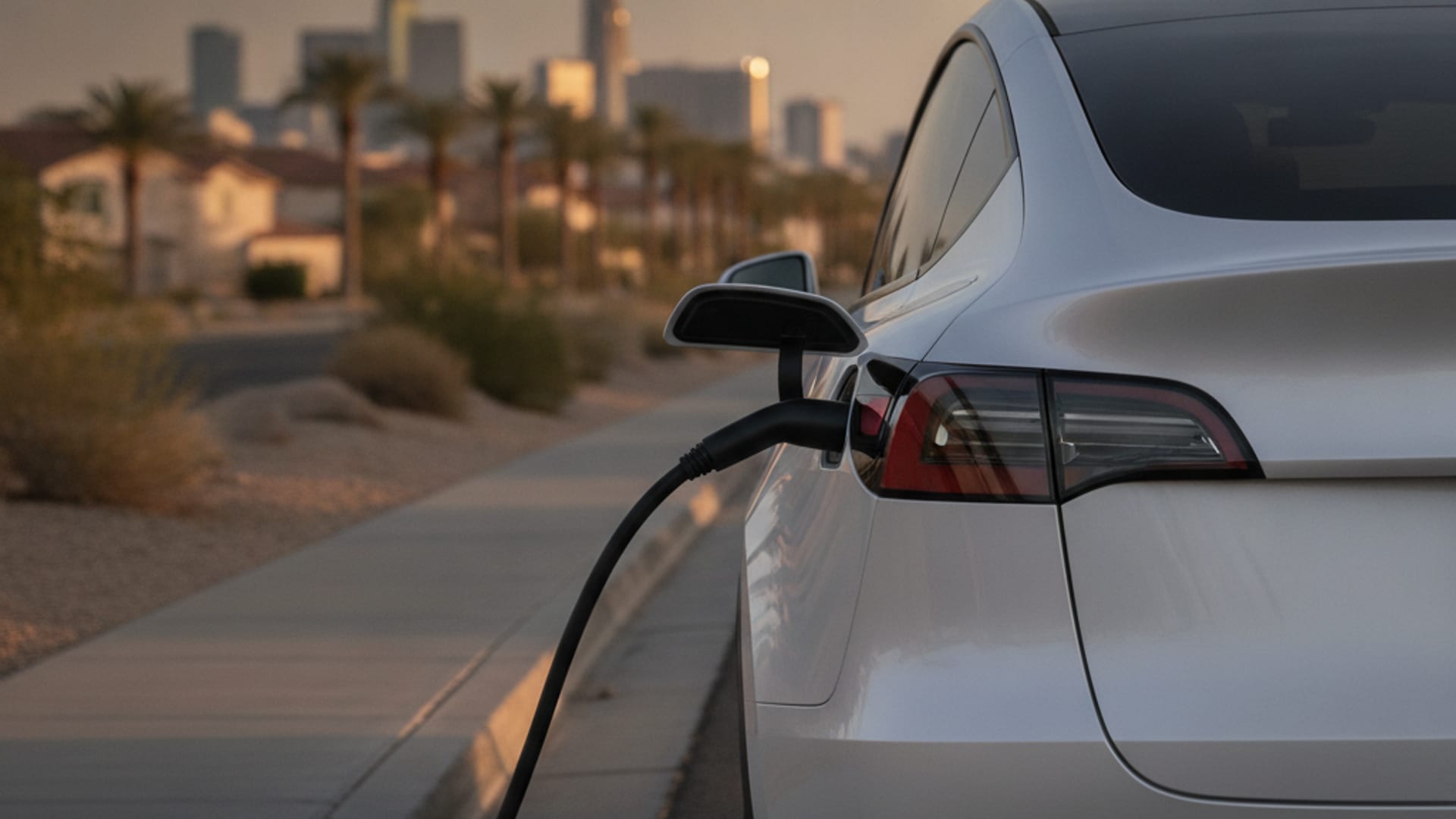
What plug a Rivian actually uses
The Rivian R1T and R1S both shipped with a CCS1 (Combined Charging System, version 1) inlet from 2022 through 2024. Newer 2025 and 2026 model year Rivians have moved to the NACS (North American Charging Standard, the Tesla plug) inlet on the driver’s side rear quarter. The CCS cars use a CCS handle. The NACS cars use a NACS handle.
A mobile EV operator carries both. A typical truck has a native NACS cable for Teslas and newer Rivians, plus a CCS adapter for older Rivians, the Ford F-150 Lightning, the Chevy Silverado EV, and other trucks still on the CCS standard. The operator picks the cable based on the inlet the driver describes.
For the broader standard story, see mobile EV charging trucks in the valley and mobile EV charging.
What a Level 2 source can do for a Rivian on the shoulder
A 240V Level 2 source delivers up to about 19.2 kW on a high-current unit. A mobile truck usually runs a smaller inverter, in the 9 to 12 kW range. That adds about 25 to 35 miles of range per hour. A 15 to 30 minute session adds 10 to 20 miles, depending on how dead the pack was at the start.
That is enough to clear most valley shoulders. A Rivian R1T with the Large pack holds about 130 kWh. A Rivian R1S with the Max pack holds about 130 kWh too. A driver at 3 percent has about 4 miles of range left. The mobile operator adds 10 to 20. That gets the driver to a working charger in the valley core.
NRS 484B.440 lets a vehicle disabled so it cannot avoid stopping stay put without a time limit. NRS 484B.443 lets law enforcement treat the vehicle as abandoned after 24 hours on freeways and primary highways. Do not plan to wait two days on US-95.
For the broader valley route pattern, see out of charge on US-95 near Indian Springs and out of charge on I-15 south to Primm.
Why Rivian’s own network is thin in Clark County
Rivian runs an adventure-focused charging network, mostly in the West and Northeast. Clark County sits outside the dense map. The Adventure Network sites closest to Las Vegas sit further out: a few in California and Arizona, none inside the valley core. A Rivian driver in the valley charges at home, at a CCS public stall, at a Tesla Supercharger with a NACS adapter, or at a mobile truck at the bumper.
The brand’s own roadside help routes most calls to a service center or to the in-vehicle help line. Mobile charging at the shoulder is an edge case for Rivian’s program. A driver who waits on the brand dispatch may sit on the shoulder for over an hour. A driver who calls a local referral line gets a quote and an operator.
For the broader brand-network gap, see Rivian roadside phone and local backup in the valley.
Why a CCS adapter matters for older Rivians
The 2022 through 2024 model year Rivians used a CCS inlet. The NACS adoption came later. A driver with an older R1T or R1S has a CCS port on the truck. The Tesla Supercharger network uses NACS. The two do not physically mate without an adapter.
A mobile operator carries a NACS-to-CCS adapter. The adapter steps the plug down to the truck’s inlet. The truck charges. The driver does not have to hunt for a CCS stall in the valley. The mobile truck brings the charger to the car.
A driver with a 2025 or 2026 Rivian has the opposite problem. The new inlet is NACS. Some public CCS stalls will not accept a NACS-to-CCS reverse adapter without the right firmware. The mobile truck’s native NACS cable solves that without an adapter at all.
What the operator does at the shoulder
A mobile operator pulls in behind the truck. The operator sets cones, asks the driver to stay buckled or step to the safe side of the barrier, and runs the cable to the inlet. The operator quotes you on the phone or at the car before starting. The session adds 10 to 20 miles in 15 to 30 minutes of charging. That is enough to clear the shoulder.
NDOT’s Freeway Service Patrol covers the most-traveled Las Vegas Valley freeways. Hours are 5:00am to 8:30pm, seven days a week. Quality Towing operates it, and GEICO sponsors it. The patrol handles tire changes, jump starts, fuel, minor fire suppression, and traffic control. NDOT’s published patrol materials do not mention EV charging. A Rivian on US-95 north of the valley sits outside the patrol’s coverage anyway.
Charge Pro LV is a referral line for the Las Vegas Valley and the longer routes out. It matches stranded drivers with independent local mobile rescue operators. It performs no work, owns no trucks, and employs no technicians. The operator quotes you before starting and bills you directly. The pros we connect you with are licensed and insured.
For the broader rescue pattern, see EV roadside assistance in North Las Vegas and out of charge recovery.
How to plan for the next valley run
A few habits keep a Rivian out of a shoulder rescue.
Charge to 90 percent before any long valley run. The NWS Las Vegas climate record puts the average July high at 104.5F. About 78 days a year hit 100F or more. About 9.4 days hit 110F or more. Recurrent Auto measured about 17 to 18 percent range loss at 100F, with cabin cooling drawing 3 to 5 kW. The 90 percent start buys back some of that loss.
Carry a NACS adapter in the frunk if you drive an older CCS Rivian. The Tesla Supercharger network is the densest fast-charging grid in the valley. An adapter gets you on it.
Keep the pack above 20 percent before any US-95 or I-15 south run. Jean and Primm sit roughly 30 and 45 miles south of Primm respectively. A dead pack past Jean is a long dispatch.
For the broader heat-loss pattern, see EV battery care in Las Vegas Valley heat.
Frequently asked questions
What plug does a Rivian use?
Rivian R1T and R1S trucks from 2022 through 2024 use a CCS1 inlet. Newer 2025 and 2026 model year Rivians use a NACS inlet. A mobile operator carries both. The operator picks the cable or adapter based on the inlet the driver describes.
How much range can a mobile truck add to a Rivian?
A typical 240V Level 2 source adds about 25 to 35 miles per hour of charging. A 15 to 30 minute session adds 10 to 20 miles. That is enough to clear most valley shoulders and reach a working charger in the valley core.
Does Rivian’s own roadside program send a mobile charger?
Rivian’s adventure network is thin in Clark County. The brand routes most help calls to a service center or to the in-vehicle help line. Mobile charging at the shoulder is an edge case. A driver who waits on the brand dispatch may sit on the shoulder for over an hour. A local referral line gets a quote and an operator faster.
What if my Rivian will not roll?
A truck that will not roll needs a flatbed. Call Rivian’s roadside line and ask for a tow to the nearest qualified facility. Nevada tow operators need an NTA certificate under NRS 706. Non-consent tow rates are filed as tariffs under NAC 706.408. There is no single statewide maximum. Confirm the rate with the tower before you sign.
Call (702) 935-4699 when you want a local operator at the car instead of a long brand dispatch.