An EV stall in the Las Vegas Valley is a fork. You can pay a mobile operator to add range at the bumper, or you can pay a tower to take the car to a charger or a shop. The choice is not always obvious. The shape of the failure, the type of car, and where you sit determine the right call. Nevada’s tow tariffs are unpublished, so operators quote you before they start.
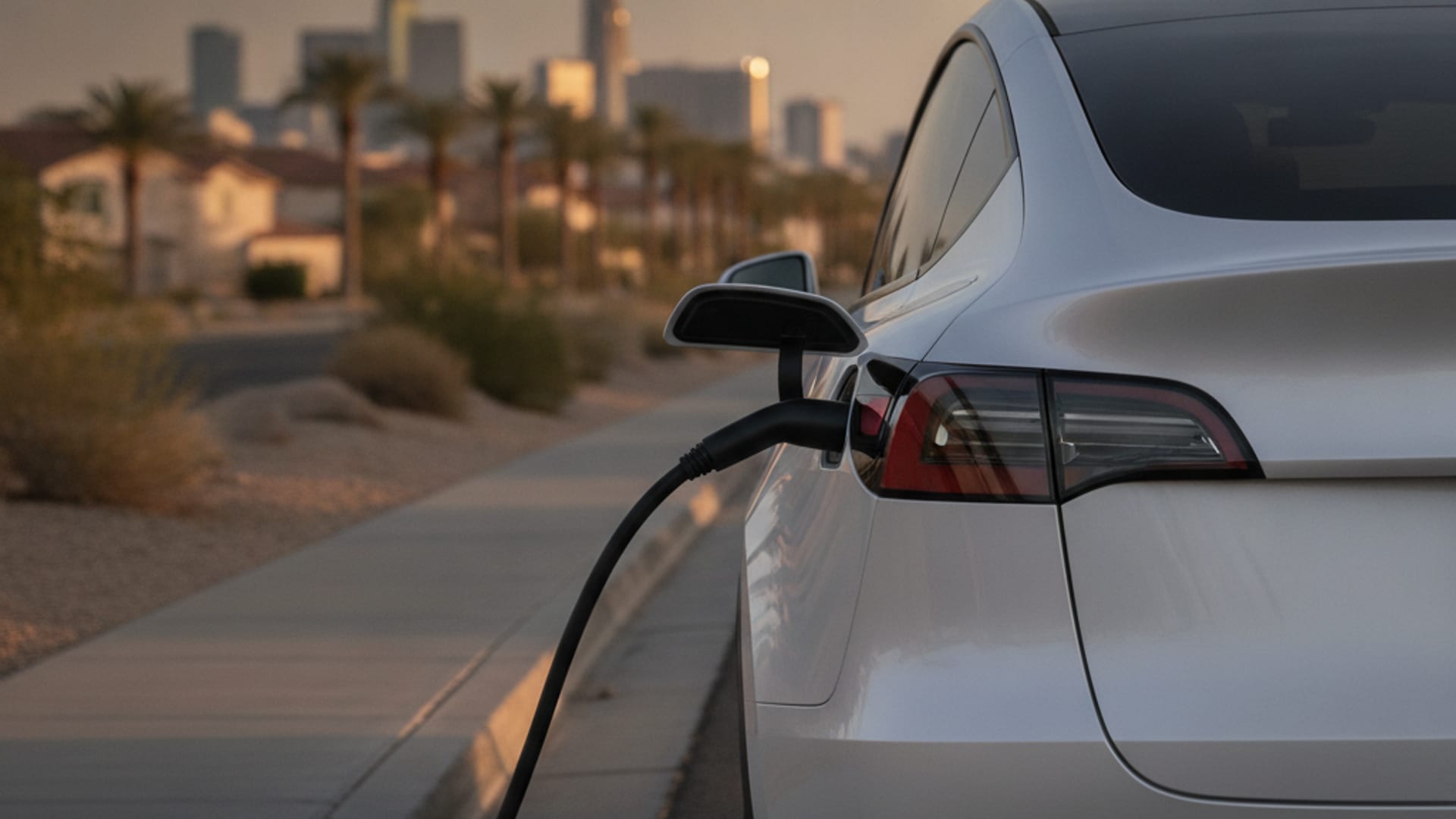
Three failures look the same from the curb
From the sidewalk, an empty pack, a dead 12V, and a broken drive unit all read as a car that won’t move. The right call depends on which one you’re in.
The dash is on and the car unlocks, but this stall won’t start a session. That’s a charger or network problem. You already did the stall tests. The traction pack still has range. Move to a working stall or call a mobile operator to add range at the bumper.
The car won’t wake, the app can’t connect, and the doors are stubborn. Think 12V, not an empty pack. Valley heat wears that small battery even when the traction pack still has energy. A jump or an on-site 12V replacement is a different job from adding range. Tell the operator what the dash is doing.
The traction pack is at zero, or so close the car won’t take a public session. You need a charge delivered to the parking stall. That’s the mobile EV charging case. A 240V Level 2 source at the bumper adds 10 to 20 miles of range in 15 to 30 minutes of charging. That window is charging time, not an arrival time.
When mobile charging at the car is the better call
Stay put and add range when the car is fine and the pack is empty. That’s the freeway empty-pack case on I-15, I-215, and US-95. It’s also a garage stall where a long flatbed can’t turn. A resort self-park deck at the Cosmopolitan or the Wynn is a poor fit for a wrecker. A charging van can often reach a stall a flatbed can’t.
The operator brings a 240V Level 2 source to the car. Tesla drivers get a native NACS plug. Other brands get a CCS or J1772 adapter. A typical session adds 10 to 20 miles. That’s charging time. It isn’t how long anyone takes to arrive. For the umbrella service, see mobile EV charging.
A 12V failure looks like a dead car even with miles still showing. Screens stay dark, and handles may not pop. The operators we send can jump or replace that battery on site. If the high-voltage pack is the empty one, they add driving range instead. For the dead-12V case, see Tesla 12V battery jump.
When the tow is the better call
Call a tow when the car itself is broken. A bent suspension or a collision needs a haul. So does a wheel that won’t take a spare. An empty pack in a healthy car doesn’t need that haul.
Nevada tow operators need a Nevada Transportation Authority certificate under NRS 706.4463 and related sections. Non-consent rates sit in operator-filed tariffs under NAC 706.408. There is no single statewide maximum on this site. Confirm the rate with the tower before you sign. If the car’s already hooked, NRS 706.4467 requires a release at the original spot. You pay that operator’s release fee.
For the breakdown split between charge, jump, and tow, see Charge, jump, or tow when the EV dies. For the AAA option, see AAA or mobile EV charging when the pack is empty.
Nevada law on the shoulder
NRS 484B.440 lets a disabled vehicle stay if it can’t avoid stopping. The statute sets no clock on that stop. NRS 484B.443 lets law enforcement remove a disabled or abandoned vehicle. On freeways and primary highways, abandoned treatment can start after 24 hours. On other roads the mark is 72 hours, and the owner pays removal.
You are not racing a secret five-minute limit on the shoulder. You still want the car moving before a rotation tow is called. Nevada has no toll roads or express-lane transponders. I-15, I-215, CC-215, US-93, US-95, and I-11 are free. I-15 HOV from Silverado Ranch to the Spaghetti Bowl needs two-plus occupants. Those hours are 6-8am and 4-6pm weekdays. A stalled EV doesn’t get a solo HOV pass.
For the live statute text, see NRS 484B on the Nevada Legislature site. For the tow tariff rules, see NAC 706.408.
NDOT’s freeway patrol won’t charge your EV
NDOT’s Freeway Service Patrol covers the busiest Las Vegas Valley freeways. Quality Towing runs it under a GEICO sponsorship. Hours are 5:00am to 8:30pm, seven days a week. It is free to motorists on those routes.
Published help includes tire changes, jump starts, fuel, minor fire suppression, and traffic control. Statewide it clears about 55,000 incidents a year. About 31,500 of those stops are in Las Vegas. None of NDOT’s published FSP materials mention electric vehicles, EV charging, or EV-specific service. That’s an advertising silence. It isn’t a claim that the patrol can’t help an EV. A dead 12V may still get a jump from that truck. An empty high-voltage pack is a different failure.
For the broader patrol limits, see NDOT news releases. For conditions and closures, see Nevada 511 and nvroads.com.
What the operator will quote on site
Charge Pro LV is a referral line for the Las Vegas Valley. It matches stranded drivers with independent local mobile rescue operators. It performs no work, owns no trucks, and employs no technicians. It does not set prices or promise an arrival time. The operator quotes you before starting and bills you directly. The pros we connect you with are licensed and insured.
Out-of-charge recovery is the empty-pack job. Tesla roadside rescue is the Tesla-specific call. Non-Tesla EV rescue covers other brands. Operators on this line carry the kit to add range at the bumper. They quote you on site.
You don’t have to choose in advance. Call (702) 935-4699, describe what’s happening, and we’ll match you with an operator who can quote the right job. If the operator on the call decides a tow is the right answer, they’ll tell you before they start.
Frequently asked questions
Does a tow cost less than a mobile charge in Nevada?
Nevada tow rates are operator-filed tariffs under NAC 706.408. There is no single statewide maximum, and no rate is published on this site. A mobile charge has no membership on this line. The operator’s quote on site is the number that matters for both jobs.
Will NDOT’s patrol charge my EV on the freeway?
No. NDOT’s published FSP materials do not mention electric vehicles, EV charging, or EV-specific service. The patrol jumps cars and changes tires. For an empty high-voltage pack, call a mobile operator instead.
What if the car will not unlock or wake?
That is usually a dead 12V, not an empty pack. The operator brings jump leads and can replace the 12V on site. Describe what the dash is doing when you call. That split decides jump versus charge.
What does Nevada law let me do on the shoulder?
NRS 484B.440 lets a disabled vehicle stay if it cannot avoid stopping. The statute sets no time limit on the stop. NRS 484B.443 lets law enforcement remove a disabled or abandoned vehicle. Confirm the live text with the Nevada Legislature site before you rely on it.
Call (702) 935-4699 when you want us to match you with a local operator who can quote the right job at the curb.