A Polestar 2 sits in a Summerlin strip mall lot after a long shift. The owner walks out with a coffee, hits the unlock button, and nothing happens. The handles stay flush. The mirrors don’t fold. The cabin is dark. The traction battery still has 60 miles on paper. What failed is the small 12V lithium-ion auxiliary battery under the hood, and Las Vegas heat is the most common reason it failed.
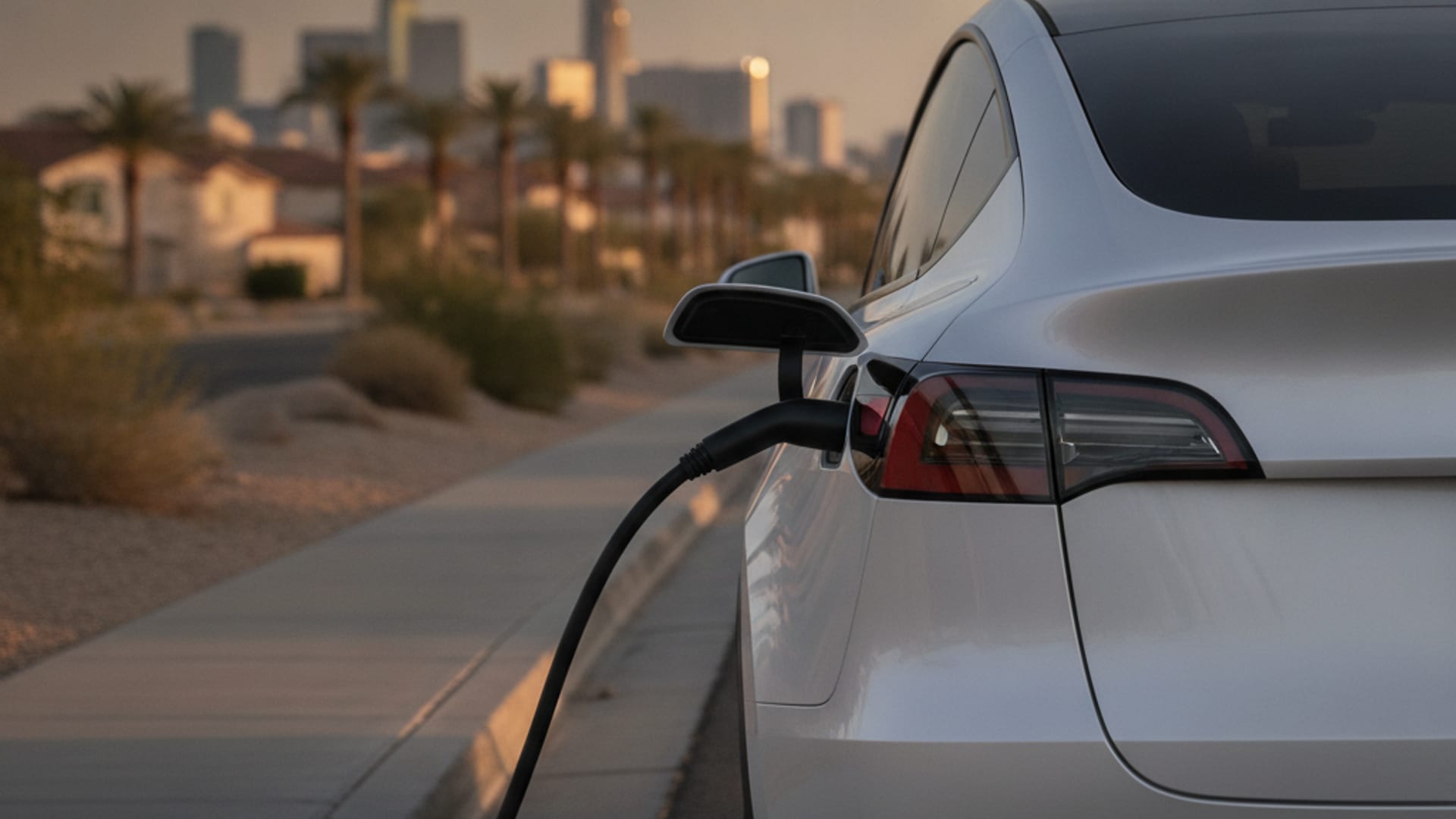
The Polestar 2 uses a 12V lithium-ion auxiliary, not lead-acid
The Polestar 2 is unusual among modern EVs. It uses a small 12V lithium-ion battery for the auxiliary systems instead of the lead-acid or AGM unit most EVs still ship with. That battery powers the infotainment boot, the contactors that connect the high-voltage pack to the motors, the keyless entry receiver, the window regulators, and the frunk release.
Lithium-ion 12V batteries hold their charge better than lead-acid in mild climates and weigh less. They also have a tighter operating window. When the cells drop below a certain voltage, the battery management system locks the pack to protect the cells from further drain. A locked lithium 12V can’t be jump-started with a regular lead-acid jumper. It needs a smart booster or a lithium-compatible charger.
The Polestar’s 12V sits in the engine bay on the passenger side, under a plastic cover. Removing the cover exposes the positive post and a marked ground point. The car’s manual shows the layout for each model year.
Why valley heat is the trigger
Las Vegas Valley heat is hard on every battery, but a sealed lithium 12V under a hood sees the worst of it. The official NWS Las Vegas record shows an average July high of 104.5F, with about 78 days a year at or above 100F and about 9.4 days at or above 110F. The all-time record is 120F, set on July 7, 2024. The east valley and downtown can run up to 11F hotter than the west rim.
A hood in a Summerlin parking lot at 3pm can easily read 150F or higher. The 12V battery management system protects the cells by isolating the pack when temperatures spike or when state of charge drops below threshold.
Recurrent Auto’s hot-climate work shows about 5 percent range loss at 90F and 17 to 18 percent at 100F for the traction pack. The 12V feels the same heat harder because it sits under the hood with no active cooling.
What the failed moment looks like in a Polestar 2
The Polestar 2 has a few warning signs before the cabin goes dark. The infotainment screen can show “12V battery critical” or a similar message before the failure. The car can also display reduced power warnings or a charging-system fault. If a driver ignores those for a week or two, the next heat cycle is the one that strands.
The fob does nothing. The handles stay flush. The Polestar uses electronic release handles that need 12V power. The mechanical key blade still opens the driver’s door manually, but the alarm will sound until the driver puts the fob against the start button and presses. With no 12V, the start button doesn’t answer either. The shifter stays locked in Park.
This isn’t a flat traction pack. The battery state of charge can read 50 or 60 percent on the app before the 12V drops. The fix isn’t a charge session. It’s a 12V jump with a smart booster or a 12V swap on site.
The on-site jump that wakes the Polestar
A regular lead-acid jump from another car can confuse the Polestar’s 12V lithium-ion management system. The right tool is a lithium-compatible smart booster. The operator brings one as part of the standard kit.
The smart booster connects to the under-hood posts, red on positive, black on the marked ground point. The booster runs a controlled charge cycle to bring the 12V cells back above the locked-out threshold. Once unlocked, the pack reconnects to the car’s 12V bus. The dashboard lights. The contactors close. The Polestar shows READY on the cluster.
A waking Polestar isn’t a fixed Polestar. The 12V is the symptom, and the next heat cycle will lock it again if the underlying cells are weak. The driver should drive the car for at least 30 minutes after the jump, ideally to a Level 2 charger, to bring the 12V back up. Then book a service appointment to load-test the 12V.
When to swap the 12V on site
If the 12V is more than three years old or has been jumped twice already, replacement is the right call. The operator carries a Polestar-compatible 12V lithium-ion replacement unit. The swap takes about 20 minutes once the car is awake.
The replacement battery isn’t a stock part at every auto-parts store. The operator sources them through a parts network in Henderson or Las Vegas. The driver should confirm the part number before the swap.
Tesla 12V battery jump covers the similar workflow for a Tesla. Mobile EV charging is the right call if the traction pack is the actual problem.
What doesn’t help and what does
Standing in a 110F parking lot trying every button on the fob doesn’t help. Calling the OEM and waiting hours for a contracted tow doesn’t help if the car can’t reach a working charger on a flat 12V. Touring the west valley on a guess about which kiosk works doesn’t help.
What helps is a single call to (702) 935-4699. Charge Pro LV connects drivers with operators who carry the right smart booster for a Polestar 2 12V and the right replacement unit if the swap is needed. The operator quotes the work before it starts. The driver stays with the car.
If the car is in a private Summerlin HOA lot, check with the property manager before calling. Some HOAs restrict commercial vehicles. Most operators drive unmarked vans, but a heads-up helps.
For the broader context, Polestar roadside assistance in the Las Vegas Valley walks through what the OEM program covers and where a local operator is the faster call.
Frequently asked questions
Why won’t my Polestar 2 start even with range in the traction pack?
The 12V lithium-ion auxiliary battery powers the contactors and the keyless entry. When it drops below its locked-out threshold, the contactors stay open and the handles stay flush. The traction pack is fine. The fix is a smart-booster jump or a 12V swap, not a charge session.
Can I jump a Polestar 2 from another car?
Use a lithium-compatible smart booster, not a regular lead-acid jumper. The Polestar’s 12V management system can lock out after a hard lead-acid jump. Connect to the under-hood posts, red on positive, black on the marked ground. The owner’s manual shows the exact layout.
How long does a Polestar 12V battery last in Las Vegas heat?
Lithium-ion 12V batteries in desert climates typically last 3 to 5 years. Watch for “12V battery critical” warnings and book service promptly.
Who can jump or replace a Polestar 12V in the Las Vegas Valley?
Charge Pro LV connects drivers with independent local operators who carry lithium-compatible smart boosters and Polestar-compatible 12V replacements. The operator quotes the work before it starts. Call (702) 935-4699 to reach the line.
The NWS Las Vegas climate page is the source for the temperature numbers in this post. Geotab’s battery-degradation work explains why hot climates shorten battery life. Recurrent Auto’s hot-climate range study covers the traction-pack side.