A Model Y in a Summerlin driveway showed “Low Voltage. Pull over safely” on the dash. The owner drove home from work at 5pm, parked, and tried to head out again at 7. The car had been sitting in 110F heat for two hours. The big pack was at 60 percent. The warning was about something smaller.
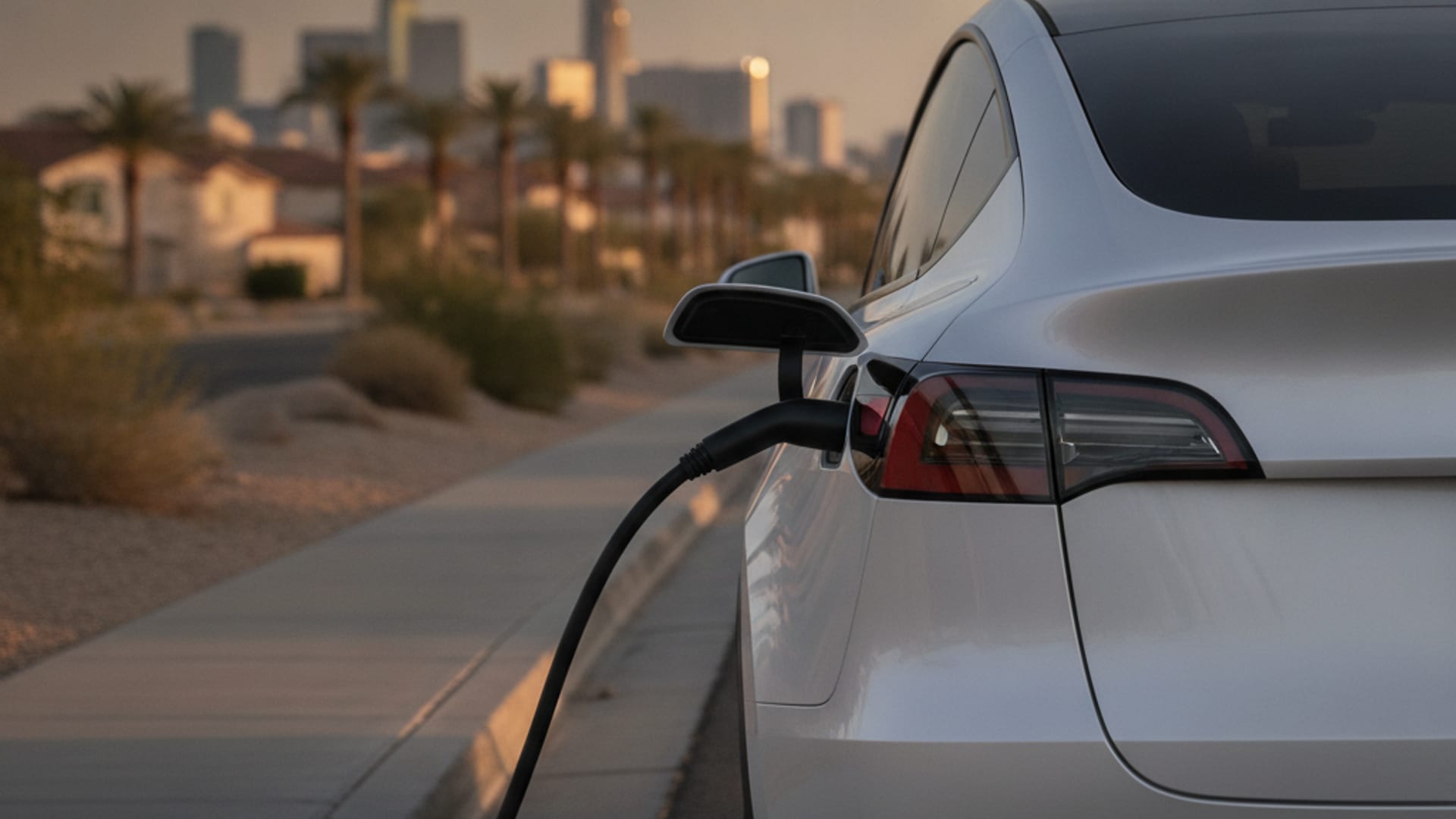
What the “low voltage” warning really means
Tesla uses the same low-voltage language for two different systems. The traction pack runs at 400V or more. The 12V system runs accessories, lights, the touchscreen, and the wake-up handshake. The dashboard message can come from either.
In desert heat, almost every low-voltage warning on a Tesla comes from the 12V, not the traction pack. The traction pack has its own thermal management. It stays within its operating window even at 120F in the cabin. The 12V does not. It sits in an under-hood service panel. Air around it can run 30 to 50F hotter than the outside ambient. The NWS Las Vegas climate record puts the average July high at 104.5F, with about 78 days a year at or above 100F.
A lithium 12V in a new Model Y or a lead-acid 12V in an older Model 3 both hate that heat. Heat accelerates calendar aging. The cell voltage sags below the wake threshold. The BMS interprets that as a system fault and posts the warning.
How to tell if it is the 12V or the traction pack
Three checks separate the two.
First, the door handle. If the handle extends and the car unlocks, the 12V is still alive. If the handle doesn’t respond, the 12V is below safe voltage.
Second, the app. Open the Tesla app. If it shows the battery state of charge and the climate status, the 12V is fine. If the app says “vehicle offline” or shows the car as greyed out, the 12V is not holding the cellular modem up.
Third, the dashboard. If you can reach the dashboard and it shows a normal state of charge with the warning present, the traction pack is fine. If the dashboard flickers or won’t wake, the 12V is the failure point.
The combination of “Low Voltage” on the dash with a car that unlocks but won’t drive points to a partial 12V failure. The car is awake enough to display the warning, but the 12V is too weak to close the high-voltage contactors. The traction pack is full and ready, but the gate stays open. Tesla 12V battery jump handles this case.
What an operator does on the call
The operator brings a low-voltage booster rated for the model’s 12V chemistry. The 12V in a 2021 and later Model Y or Model 3 is a lithium-ion pack. Earlier cars use absorbed glass mat lead-acid. The booster must match. A mismatched booster can damage the BMS.
The operator connects the booster to the under-hood jump posts, not directly to the 12V terminals. Tesla designed the posts to limit inrush current. A direct connection can weld a relay. The procedure is the same one in Tesla 12V battery failure in desert heat.
In most cases the car wakes on the first try. The booster stays connected for five to ten minutes so the DC-DC converter can top off the 12V. The operator then disconnects, the car runs a self-check, and the warning clears.
If the 12V won’t hold charge, the operator carries a replacement lithium pack for newer cars or an AGM pack for older cars. The swap happens in the same lot. The car relearns the 12V serial number in a few minutes.
Why valley heat is harder on the 12V than on the pack
Calendar aging is the slow killer of 12V batteries. Heat speeds it up. Geotab’s desert-climate study found hot-climate batteries degrade about 0.4 percent per year faster than mild climates. Phoenix-style heat is the worst case. Las Vegas sits in the same climate band.
The traction pack benefits from thermal management. Coolant loops keep the cells within a narrow temperature window. The 12V has no such system. It sits in still air under the hood. Summerlin driveways hold heat all night. Henderson garages, even when shaded, stay in the 90s by 8am.
A lithium 12V is a small improvement. The cell chemistry tolerates heat better than lead-acid, but every lithium cell has a calendar life. Two to three years is a realistic lifetime in the valley for a lithium 12V with regular use. Three to five years is realistic for lead-acid in the same conditions, but lead-acid dies suddenly rather than gradually.
Related guides
For another angle on the same valley stall, see How to tell a Tesla 12V is dead in valley heat.
Frequently asked questions
Is the “low voltage” warning always the 12V?
No. It can mean the traction pack is too low to drive, or the 12V is too weak to wake the system. The door handle test and the dashboard state-of-charge reading tell you which. In desert heat, the 12V is the more common cause.
Can I drive with the warning still on?
If the car still drives, yes. If it asks you to pull over, do so. A persistent warning means the 12V is at the edge of its capacity. A second warning means the BMS is about to disconnect the high-voltage contactors for safety.
Why does the warning appear in the evening and not during the day?
The 12V runs accessories during the drive. Voltage looks fine while the DC-DC converter is running. When the car sits for two hours, the 12V carries the parasitic load alone. A weak cell sags below the warning threshold during that sit. The evening warning is a useful predictor of an imminent failure.
Will Tesla replace the 12V under warranty?
Tesla’s warranty covers defects, not calendar aging. A 12V that fails inside the warranty period gets a free replacement. One that fails outside the warranty period is paid. The matched operator quotes the cost of an out-of-warranty 12V before starting the swap.
Does the climate control setting matter for 12V health?
The cabin climate control does not directly load the 12V while the car is awake. The traction pack powers the compressor. The 12V sees the cabin climate only during preconditioning before driving. Cabin preconditioning in 110F heat can pull meaningful current from the 12V. Minimize remote start cycles in the valley summer.