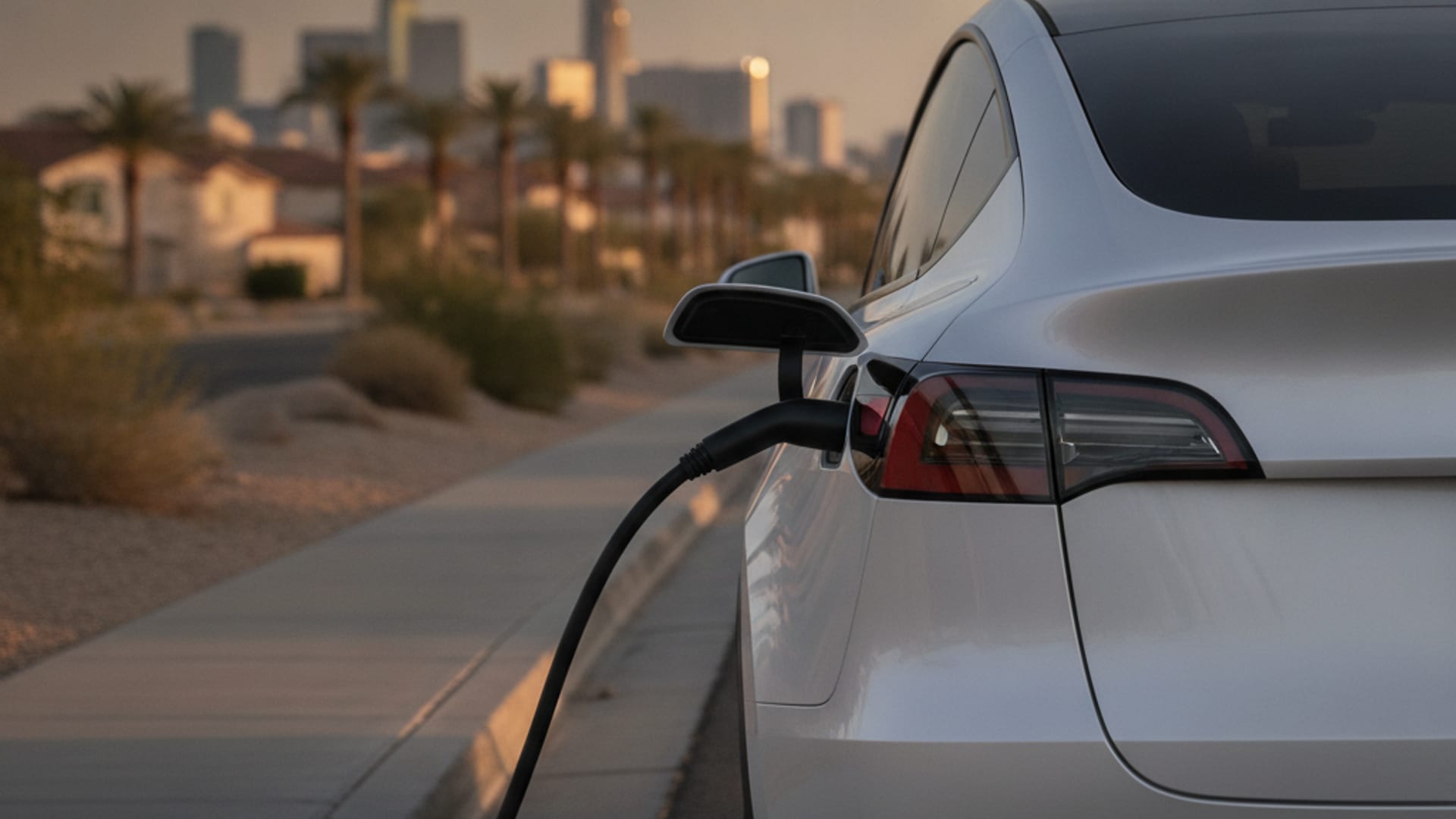
A 2023 Model Y in an Anthem garage wouldn’t wake Sunday morning. The owner had charged to 80 percent Saturday night. The car showed nothing on the dash Sunday. The phone key wouldn’t connect. The app said the vehicle was offline. The owner assumed the lithium 12V had solved the heat problem. It hadn’t.
Why lithium 12V packs still fail in the valley
Tesla moved Model 3 and Model Y cars to lithium-ion 12V batteries starting around 2021 in some markets. The lithium cell is lighter and lasts longer in calendar terms than a lead-acid cell. The change was real but not magic.
Heat still kills lithium cells. The chemistry is more heat-tolerant than lead-acid, but every lithium cell has a calendar life. Two to three years is a realistic lifetime in the Las Vegas Valley. The cells degrade faster in 110F garage air than they would in 70F coastal air.
The NWS Las Vegas climate record puts the average July high at 104.5F, with about 78 days a year at or above 100F. The east valley can run up to 11F hotter than the rim. Anthem sits on the eastern edge of Henderson, which is in that warmer band. The 12V sees the full heat.
A lithium 12V also has the same wake-up job. It runs the door handles, the touchscreen, and the contactor handshake. When the cell voltage sags below the wake threshold, the car won’t wake. The traction pack is irrelevant because the 12V can’t close the contactors.
The signature symptoms
A lithium 12V failure on a Model 3 or Y looks almost identical to a lead-acid failure. The car won’t wake. The door handle doesn’t extend. The app is offline. The phone key fails. None of this is a traction pack issue.
The lithium pack does offer one diagnostic. A lithium cell that is fully dead may throw a red flag icon on the dash before it dies completely. The car warns in advance. A lead-acid pack usually dies without warning.
If the owner sees a “12V battery needs service” message on the dash, the cell is at the edge. The car will drive a few more times. The cell will fail completely within weeks, sometimes days. Treat the warning as urgent.
Tesla 12V battery failure in desert heat covers the full symptom list. The summary: anything that prevents the car from waking, combined with a traction pack that should be charged, points at the 12V.
What the matched operator does
The operator brings a low-voltage booster rated for lithium 12V packs. A lead-acid booster can damage a lithium cell. The operator knows the difference and brings the right booster.
The booster connects to the under-hood jump posts, not the 12V terminals directly. The posts are part of the inrush-limiting circuit. A direct connection can weld a relay or throw a BMS fault. The operator’s job is to wake the car, not to create a second problem.
If the booster wakes the car, the DC-DC converter takes over. The 12V charges from the traction pack. The operator leaves the booster connected for five to ten minutes to top off the cell. The car runs a self-check and resumes normal operation.
If the booster won’t wake the car, the 12V is below its recovery voltage. The operator carries a replacement lithium pack rated for the year and model. The swap happens in the same lot. The car relearns the 12V serial number over a few drive cycles.
Why a tow to a shop is the wrong first move
A flatbed will move the car but won’t fix the 12V. The shop will charge or replace the pack. The owner pays for the tow and the shop work. The car spends days off the road.
A mobile 12V jump or swap, in contrast, fixes the symptom on the spot. The owner pays for one call. The car drives away under its own power in most cases. The matched operator Tesla 12V battery jump is the right service.
For the cases where the car truly needs dealer diagnostics, the operator will say so. They will not promise a result they can’t deliver. They will quote the next step before starting.
How to extend lithium 12V life
Three habits help.
Avoid leaving the car in direct sun for multi-day sits. A weekend at a Henderson resort is fine. Two weeks at Harry Reid long-term is hard on the 12V.
Keep the car’s software up to date. Tesla has shipped updates that reduce 12V parasitic load. The reduction is small but real. Out-of-date firmware keeps the 12V bus more active than needed.
Check the 12V status through the Service menu periodically. A reading that drops below 12.0V with the car awake means the cell is aging. Plan the replacement before the cell dies at the worst moment.
Frequently asked questions
Is the lithium 12V in a 2023 Model Y better than lead-acid?
It is more heat-tolerant in calendar life. The lithium cell lasts longer than lead-acid in the same conditions. Neither is immune to valley heat. Both fail eventually.
Can I jump the lithium 12V from another car?
No. Use a low-voltage booster rated for lithium 12V packs, connected to the under-hood jump posts. The procedure is the same one in Tesla 12V battery jump. A direct connection to the 12V terminals can damage the BMS.
Why does the lithium 12V fail in a covered garage?
A covered garage in valley summer holds heat overnight. Air temperatures in a stucco garage can run 90F at 8am. The 12V sits in that air. Direct sun adds another 20 to 30F. Covered parking helps but does not eliminate heat exposure.
Will Tesla replace the lithium 12V under warranty?
Tesla’s warranty covers 12V defects, not calendar aging. A pack that fails inside the warranty period gets a free replacement. One that fails outside is paid. The matched operator quotes the cost of an out-of-warranty replacement.
Can I drive the car with a “12V battery needs service” message?
You can, briefly. The car is warning that the 12V is at the edge. Schedule a replacement before the cell dies at the worst moment. A dead cell leaves you stranded on the next drive cycle.