The game ended. The walk back to the row feels longer than the walk in. You tap the fob and the car does nothing. Mobile EV charging at Allegiant Stadium is for the lot where the 12V gave up while you were inside.
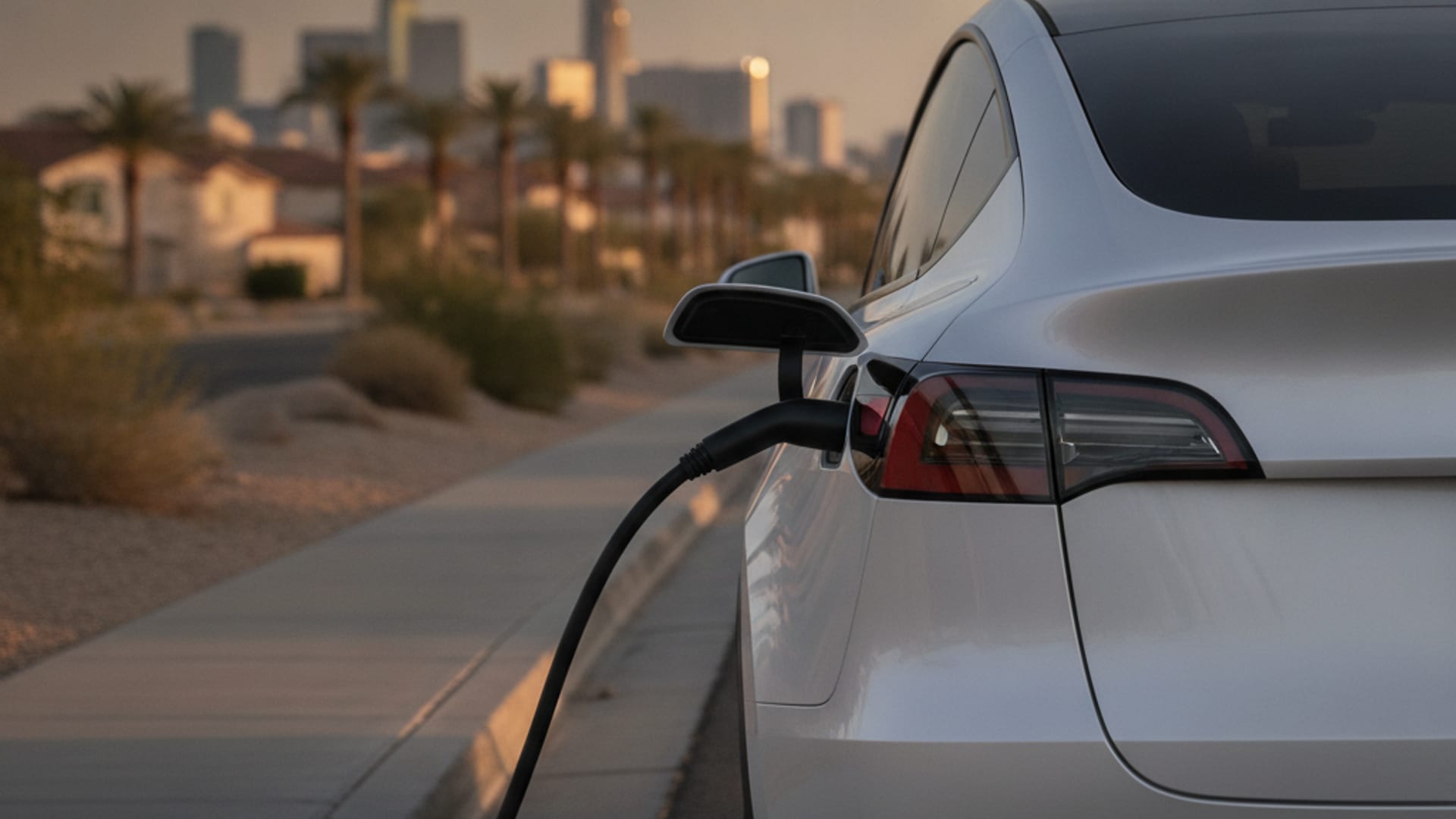
Why Allegiant lots kill 12V batteries
Allegiant Stadium sits in Paradise, in the Strip Corridor region. The lots are paved, sun-exposed, and run for acres. Cars sit in the same row for three to six hours during an event. The traction pack goes to sleep. The 12V keeps the alarm, the modem, and the keyless entry awake.
Heat is doing real work on the small battery. NWS Las Vegas data shows an average July high of 104.5F at the airport. About 78 days a year reach 100F or more. About 9.4 days hit 110F. The all-time record high is 120F, set July 7, 2024. The east valley runs up to 11F hotter than the rim. The lot is a paved heat island on top of that. The 12V cooks.
NV Energy serves Paradise. The utility runs a Residential Managed Charging Program, time-of-use rates, and multifamily charging programs. None of that keeps a 12V alive in a stadium lot at 110F. A parked EV that can’t see the sun is still drawing power. Heat makes that draw worse.
Drivers often panic because the dash shows range they could drive home on. That energy is in the high-voltage pack. The 12V is a separate battery that runs the computers, the locks, and the contactors. When the 12V is dead, the contactors won’t close. The car won’t ready.
Don’t tow yet
The temptation is to call a flatbed. A flatbed solves a flat tire or a body shop visit. A dead 12V is a roadside fix. A tow costs more than the fix and leaves the car at a yard. You’ll pay NAC 706.408 tariff rates. Those are operator-filed, not capped at a statewide number.
NRS 484B.440 covers a disabled vehicle. NRS 484B.443 lets law enforcement remove a vehicle after 24 hours on a freeway or primary highway. Stadium lots are private property. Private-property tows follow NRS 706. Posted signs and a 48-hour warning sticker are required before a vehicle can be moved.
Stadium lots also have towing contracts. A driver who calls the lot’s number first gets the contracted tow, not the cheapest one. A referral line routes to an independent operator who specializes in EVs. Different trucks, different tools, different prices.
For the area itself, the EV charging in Paradise hub covers the local service picture.
What an operator brings to that stadium stall
Charge Pro LV is a referral line. It matches stranded EV drivers with independent local mobile rescue operators. It performs no work, owns no trucks, and employs no technicians. It doesn’t set prices or publish hours. The operator quotes you before starting, then bills you directly. The pros we connect you with are licensed and insured.
Operators bring a 12V source or a portable 12V replacement to the car. Tesla drivers get a native NACS plug for the contactor. Other brands get a CCS or J1772 adapter. A 12V jump wakes the car. The traction pack still shows the range it had on arrival. You drive home.
If the pack is also low, the same operator can run a Level 2 session. A typical Level 2 session adds 10 to 20 miles of range in 15 to 30 minutes of charging. That number is charging time. It isn’t how long anyone takes to arrive.
EV roadside assistance is built around that decision. The same line that handles a 12V jump also handles a Level 2 charge if the pack is also low.
Stay safe in the lot
Stadium lots run heavy. Cars move in rows. Tailgaters spill into driving lanes. Don’t stand between two parked cars while you wait. Stay with the group, on the driving-lane side, with hazards on if the car is on.
The operator will ask for a row number. Send the lot section. Have the row plate number ready. Stadium rows are long and confusing at night.
NDOT’s Freeway Service Patrol covers the most-traveled valley freeways from 5:00am to 8:30pm. Quality Towing operates it, GEICO sponsors it. A stadium lot isn’t a freeway shoulder. The patrol won’t appear in the row.
When the pack is also low
If you drove in on a partial charge and the traction pack is also at zero, both have to be addressed. The 12V first. The pack second. The operator will bring both tools. They pick the right one at the curb.
Out-of-charge recovery is the work for a stalled traction pack. Tesla 12V battery jump is the work for a flat small battery. The same referral line dispatches both.
Frequently asked questions
Why does a 12V die in a stadium lot?
The 12V keeps the alarm, modem, and keyless entry awake while the car is parked. Heat makes that draw worse. A 12V that won’t hold a charge for three to six hours in a 110F lot is a worn 12V.
Will the stadium tow the car?
Stadium lots have contracted tow operators. They move vehicles for owners who abandon them or block lanes. A driver who calls the lot’s number first gets the contracted tow and its set rate. A referral line routes to an EV specialist.
Can I jump an EV’s 12V from a friend’s car?
Yes, the 12V side is conventional. A 12V jump from a running ICE vehicle won’t damage the EV. Use a referral line so the operator knows the connector sequence.
Is it faster than waiting for a tow?
Yes. A 12V jump at the stall wakes the car in minutes. A tow means a ride to a shop, a wait, and the operator’s filed rate. The jump is the right fix.