A Mountains Edge EV can stall on the I-15 launch after a home charge. July heat and the Harry Reid connector spend spare miles first. EV roadside assistance in Mountains Edge is a local operator at the car. Charge Pro LV matches you with that independent pro. We don’t own trucks or set a price.
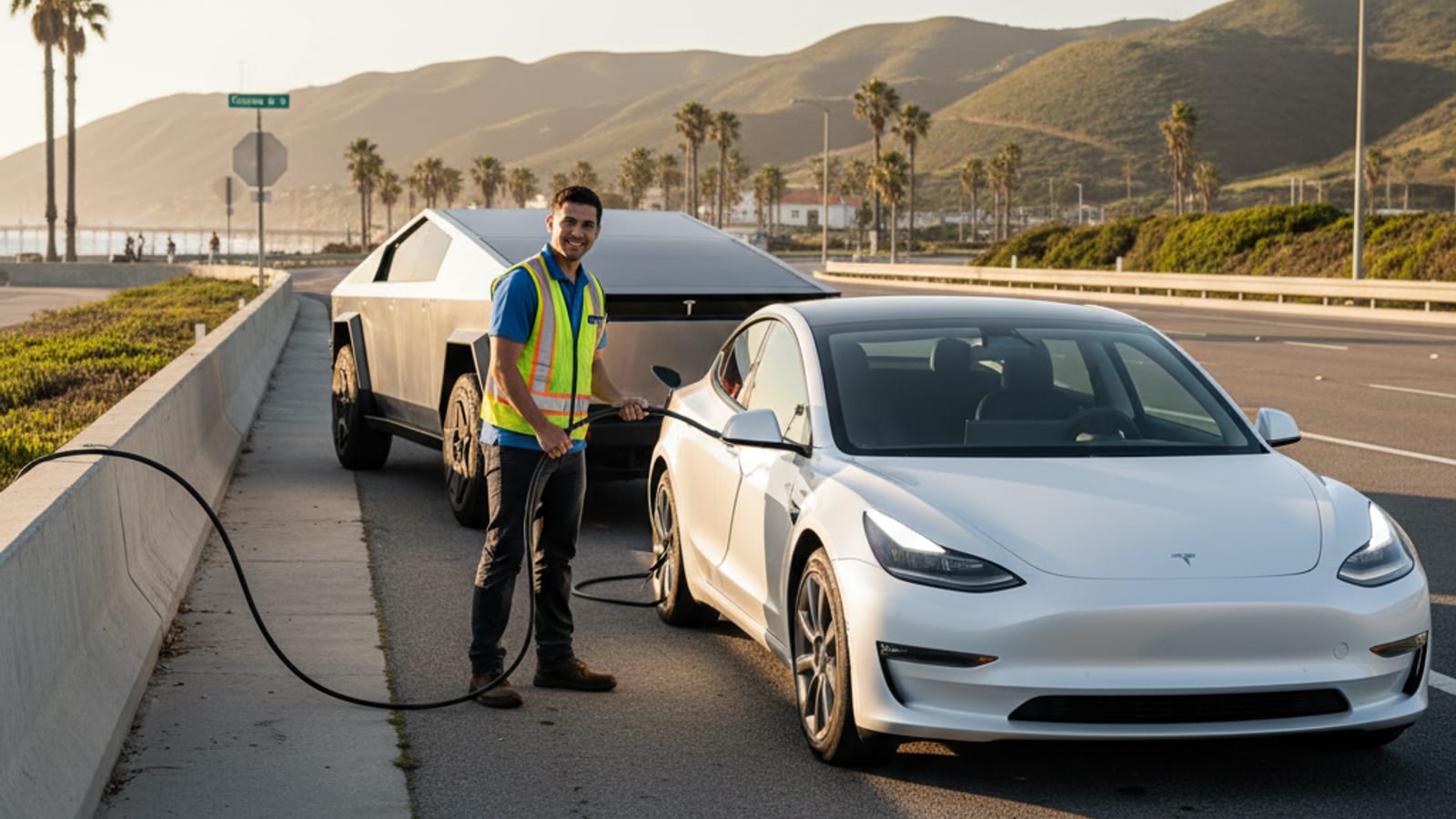
Home charging still leaves a thin Beltway buffer
Mountains Edge is a large master-planned community in the southwest valley. ZIPs 89178 and 89179 sit on newer streets. Clark County Title 30 requires EV-ready wiring in new construction. The calls aren’t about a house without a charger.
They’re about the I-215 Beltway commute that ends at single digits. They’re about the errand that ran long past Blue Diamond Road. The desert starts just past the last rooftops. NV Energy serves this part of the Las Vegas Valley. A lot of owners charge overnight on the Residential Electric Vehicle Recharge Rider. That window runs from 10:01pm to 8:00am. It still doesn’t rebuild range you spend at midday.
NWS Las Vegas lists an average July high of 104.5F. About 78 days a year reach 100F or more. Recurrent Auto found about 5% range loss at 90F. The same study found 17 to 18% loss at 100F. Cabin AC can draw 3 to 5 kW while it cools a hot interior. AAA measured 8.5% range loss at 95F in May 2026. No Tesla-published range-loss figure turned up, but I-215 still feels those numbers. The southwest rim can run cooler than downtown. Harry Reid still sits 5 to 15F hotter than outlying areas. You feel that jump when you leave the rooftops for the airport connector.
Pack empty, or the 12V already quit
Two failures look alike from the sidewalk. A traction pack at zero needs mobile EV charging where you sit. A dead 12V can lock a car that still has pack miles. The operators we connect you with jump or replace that 12V on site. They handle Tesla and every major EV brand.
For an empty pack, the operator brings a 240V Level 2 source. Teslas use a native NACS plug. Other brands use a CCS or J1772 adapter. A typical session adds 10 to 20 miles of range. Charging time is usually 15 to 30 minutes. That’s plug time, never an arrival time.
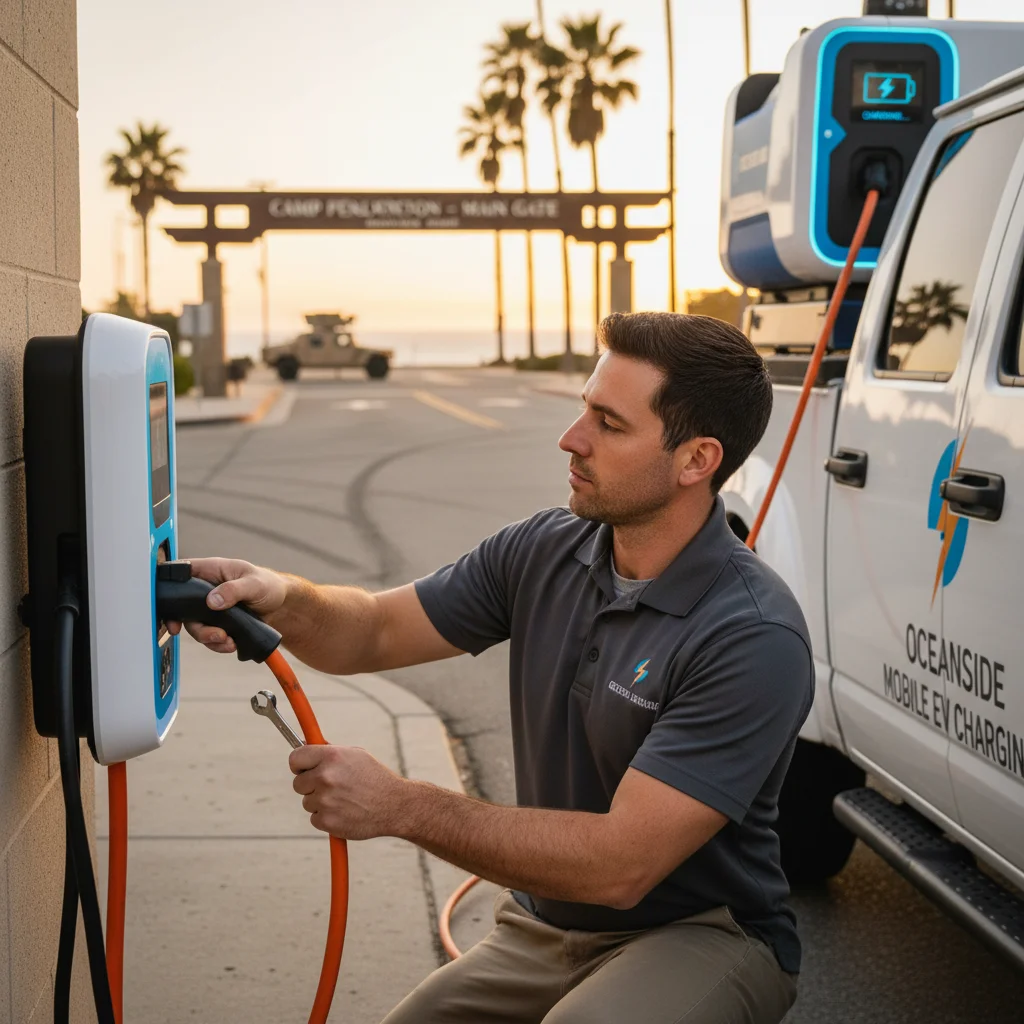
Stalls on I-215, I-15, and the airport run
I-215, CC-215, and I-15 are free, and Nevada has no toll roads. If you can’t keep moving, NRS 484B.440 covers a disabled vehicle on the highway. NRS 484B.443 can treat a freeway sit as abandoned after 24 hours. Stay with the car if it’s safe, and keep hazards on.
The NDOT Freeway Service Patrol covers the busiest valley freeways. Hours are 5:00am to 8:30pm, seven days a week. Published FSP materials don’t advertise EV charging. Check Nevada 511 or nvroads.com for cameras and closures. Nevada State Police Highway Patrol Southern Command is (702) 486-4100. From a cell you can also try *647.
Harry Reid International Airport sits in Paradise, not in Mountains Edge. Drivers still aim that connector with a thin buffer. The airport site doesn’t publish whether parking lots have EV charging. That couldn’t be confirmed from the airport’s own pages. Confirm current parking details there before you count on a plug. Airport parking does list free battery jumps and tire inflation at (702) 261-5122. That’s a 12V service, not a pack charge.
Same heat on the south rim
The pattern continues toward Mountains Edge South and the Enterprise rim. Long Beltway runs and the I-15 south launch cut the same buffer. For the whole-valley checklist, use the 2026 rescue guide. If a few miles remain, stretch the rest before you idle in heat.
Charge Pro LV is a referral line. The operator quotes you before work starts and bills you directly. For Mountains Edge EV roadside assistance, call (702) 935-4699.