A Chevy Bolt sat three weeks in a Sun City Aliante driveway. The dash was dark. The key fob did nothing. The traction pack still showed 60 percent in the app. The 12V under the hood was below 8 volts, and the modules that close the high-voltage contactors were off. Heat-soaked 12V packs fail in this valley more often than the traction pack. A proper 12V jump wakes the modules without hurting the rest of the car.
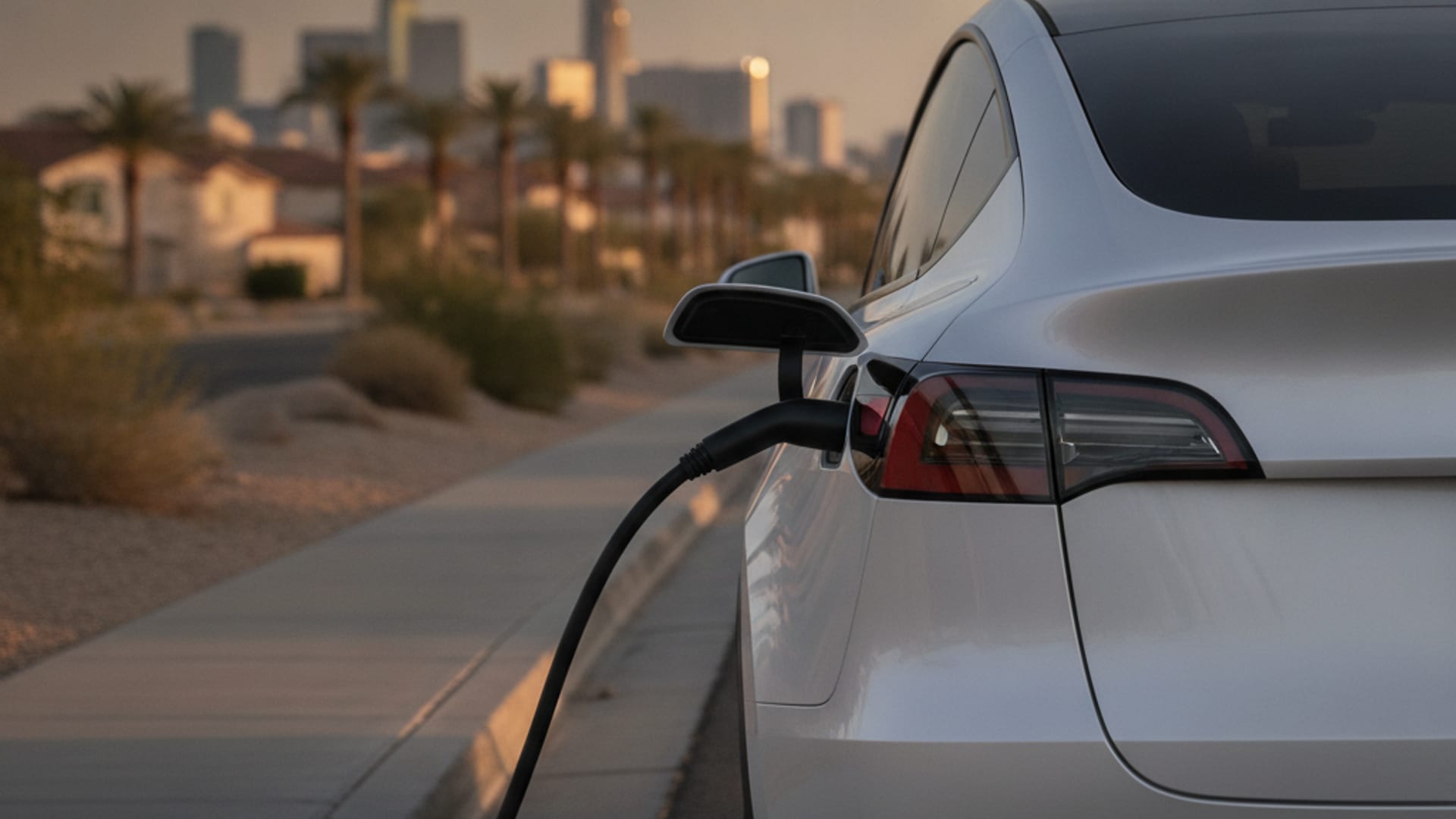
Why the 12V is the usual culprit in valley heat
Every modern EV uses two batteries. The traction pack is the big one that drives the wheels. The 12V auxiliary battery runs the modules that wake the car. A 12V is what closes the high-voltage contactors, lights the dashboard, and answers the key fob. Without it, the traction pack cannot connect to the car.
NWS Las Vegas puts the average July high at 104.5F. About 78 days a year reach 100F or more. About 9.4 days reach 110F or more. The all-time record is 120F, set on July 7, 2024. The Las Vegas airport weather station runs 5 to 15F warmer than outlying areas, and the east valley and downtown can run up to 11F hotter than the rim. A 12V parked at a Winchester apartment or a downtown garage lives with that heat on every summer afternoon.
Heat ages a 12V through electrolyte loss, plate sulfation, and accelerated internal corrosion. A 12V that would last four years in Seattle might last two and a half in the valley. A 12V that limps through August will refuse to wake in December. The average January low in Las Vegas is 37F with about 10 freeze nights, and a weak 12V fails the wake test first in cold weather.
How a 12V jump works on an EV
A 12V jump on an EV looks almost like a 12V jump on a gas car, with one important difference. The cables clamp to the 12V jump points, not the traction pack studs. Most EVs put those points under the hood with a red plastic cover and a plus and minus symbol. The traction pack studs are high-voltage orange cables, and those never get a clamp.
A proper 12V jump uses a lithium jump pack rated for 12V automotive use. The pack clamps to the 12V posts, sits for a few seconds, and powers the modules. The modules wake, the contactors close, and the traction pack takes over. The car’s own DC-DC converter then recharges the 12V while you drive.
A donor 12V battery from another car can do the same job, with the same plus-and-minus discipline. Red on the dead 12V’s positive post, black on a clean chassis ground. The donor car does not have to be running. A small 12V battery is enough to wake the modules. A diesel truck’s jump cables work, but only on the 12V posts.
What you should never do
Never clamp a 12V jump pack or a donor battery to the traction pack orange cables. The high-voltage system is not 12V. A 12V source across the high-voltage system can short modules, blow fuses, and create a safety hazard. The high-voltage system is also the part of the car that requires the most caution around water, fires, and damaged cables.
Never use a 12V jump to start an EV that has thrown a high-voltage isolation fault. The fault means a damaged cable or a flooded pack has compromised the insulation. A 12V jump in that condition wakes the modules, which then detect the fault and refuse to close the contactors. Worse, a wake cycle can mask a fault that a tow operator needs to see clearly.
Never jump a 12V that is cracked, swollen, or leaking. Heat-aged 12Vs swell and leak acid. A swollen 12V is a fire hazard on a 12V jump. The right answer is a 12V swap, not a jump. A mobile operator carries common 12V group sizes and can do the swap on site.
Never assume the traction pack is full. A wake from a 12V jump reveals the traction pack state. If the pack is at 5 percent, the next stall is the charger. A jump plus a 12V charge at the curb is the right sequence. A jump plus a drive home with no charge leaves the car dead again in a week.
What an operator brings to the curb
Charge Pro LV is a referral service that connects stranded EV drivers with independent local mobile rescue operators. The operators carry the right jump pack, the right 12V group sizes, and the diagnostic gear to read what the wake-up reveals. They bring a 240V Level 2 source for the cases where the traction pack is also low.
A typical session starts with a 12V jump. The operator clamps the jump pack, powers the modules, and reads the dash. If the traction pack is also low, the operator can switch to a Level 2 charge without leaving. The brown site job becomes one stop.
The operator quotes the work before starting. The quote covers the dispatch, the equipment, and the time. We do not publish the quote. The operator on the call sets the number. The pros we connect you with are licensed and insured.
How to read the symptoms before the call
The symptoms tell you whether the 12V is the fault or the traction pack is. A dark dash and a dead key fob point at the 12V. A lit dash with a low state-of-charge warning points at the traction pack. A lit dash with a propulsion error or a service needed warning points at something the shop handles.
A driver can also try the door handle manually. Some EVs release the mechanical key hidden in the fob. Pulling the manual key and opening the door manually does not wake the 12V. It just gets you inside. The car still needs a 12V jump.
A driver can read the phone app. A dead 12V usually shows the car as offline or stuck in the last known state. A working 12V with a low traction pack shows the live state of charge. The phone state is one of the easier ways to split the diagnosis before the operator arrives.
The desert heat cycle that kills the 12V
The cycle is consistent. Summer cooks the 12V. The owner drives less because of the heat. The 12V sits in a 130F engine bay or a 100F garage for weeks. Internal corrosion accelerates. The 12V drops a turn of cranking amps every month.
Fall brings cooler weather, and the owner starts driving again. The 12V that limped through August fails to wake on the first cool morning. The dashboard is dark. The phone app is stuck. The first jump works, but the 12V is past saving. The right answer is a 12V swap on site or a service appointment.
Winter adds freeze nights and cabin preheat draws. A weak 12V that survives August can fail to wake in December. A driver who lives at a Boulder City home with a detached garage and no Level 1 charger should consider a 12V trickle charger. The cheapest protection.
What to do after a successful jump
Drive the car for at least 30 minutes. The DC-DC converter recharges the 12V from the traction pack. A short trip is not enough. The 12V needs sustained drive time to recover.
Check the 12V state in the days after the jump. Most EVs show a 12V voltage reading in the service menu. A reading below 12.4 volts after a long drive means the 12V is not holding charge. That is the next failure. Plan a 12V swap.
Treat a 12V that has been jumped as a warning, not a fix. A 12V that needed a jump is past the threshold where it can be trusted for another long sit. A driver who parks a car for two weeks at a Henderson vacation home should plan a 12V swap before the next trip.
A 12V jump on an EV in the Las Vegas Valley works the same way as a 12V jump on a gas car, with the discipline of clamping only the 12V posts and respecting the traction pack orange cables. Heat-soaked 12Vs are the usual failure, and a mobile operator handles the jump plus the diagnosis at the curb. When the dash is dark, call (702) 935-4699 and we connect you with an independent operator who quotes the job before starting.
Frequently asked questions
Can I jump an EV like a gas car?
Yes, but only through the 12V jump points under the hood. Never clamp anything to the high-voltage orange cables. A standard 12V lithium jump pack or a donor 12V battery wired to those posts will wake the modules.
How do I find the 12V jump points?
Most EVs put the 12V jump points under the hood with a red plastic cover marked plus and minus. The owner’s manual shows the exact location. For Teslas, check the owner’s manual for the 12V jump point under the cowl screen. The traction pack orange cables are clearly marked and not the place to clamp.
Will a jump hurt the traction pack?
No, when done through the 12V posts. The 12V jump wakes the modules, which close the contactors, which connect the traction pack to the car. The DC-DC converter recharges the 12V from the traction pack during the drive. The traction pack is the source of energy after the jump, not the recipient.
When is the right time to replace a 12V instead of jumping?
A 12V that is more than three years old in the Las Vegas Valley, has been jumped before, or sits a car that parks for more than two weeks at a time is a 12V swap candidate. A mobile operator carries the right group size for most EVs and can swap on site.