You parked your Ioniq 5 at a Boulder City home with the dash showing 303 miles. The owner’s manual says 303 miles is the EPA range on a full charge of the long-range pack. The first 100F day cuts that to closer to 250 in real driving. Heat range loss on valley trips is why the Ioniq 5 spec sheet is not the real number. The 58 kWh standard pack and the 77.4 kWh long-range pack both lose more in this valley than in a mild climate.
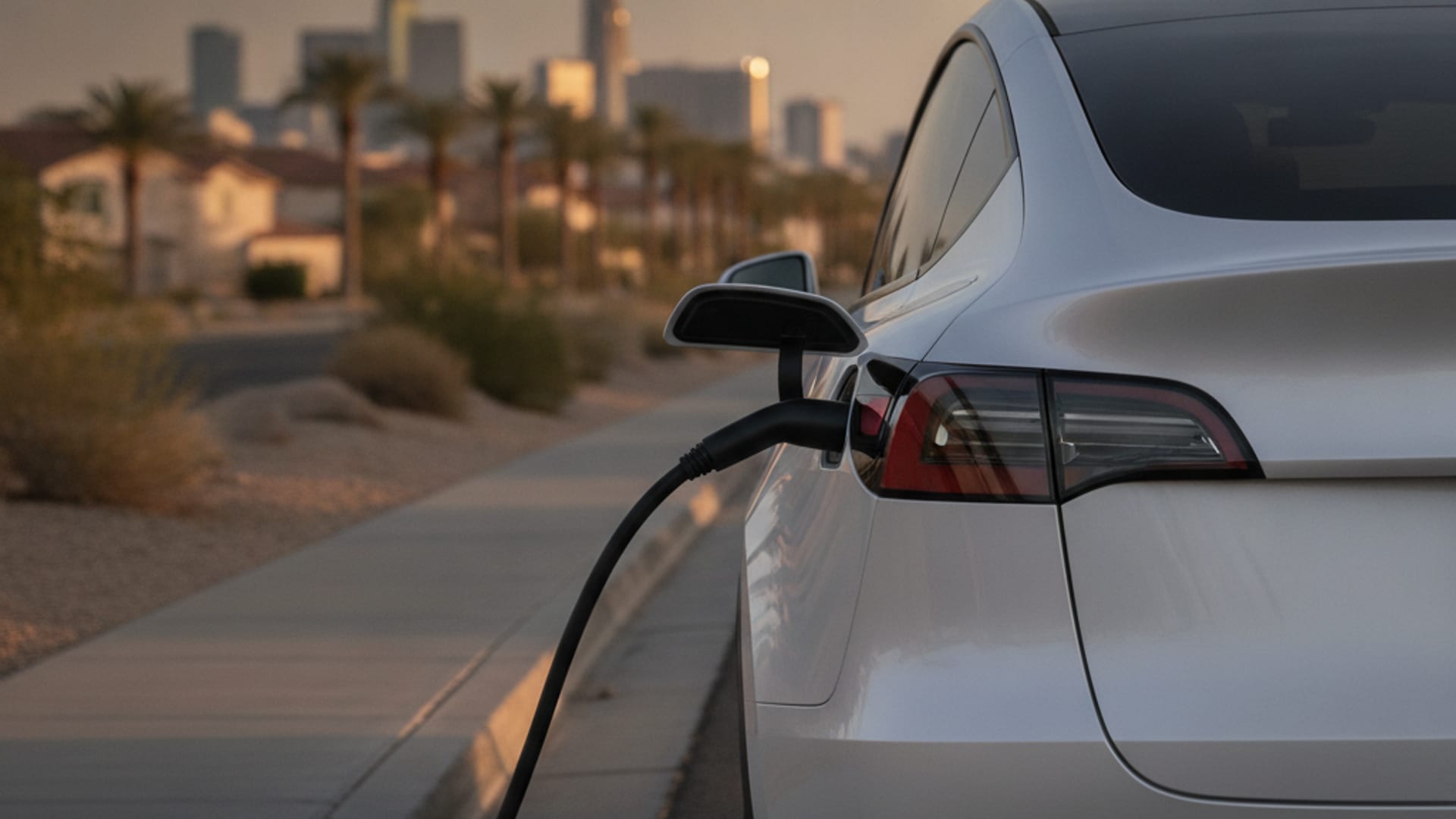
What the Ioniq 5 actually carries
The Hyundai Ioniq 5 ships with two traction pack sizes in the United States. The standard pack is 58 kWh usable. The long-range pack is 77.4 kWh usable. AWD models use the long-range pack with a front motor added. The RWD long-range is the highest EPA range figure in the lineup.
The EPA range figures for the lineup sit at about 220 miles for the standard pack RWD, about 266 miles for the standard pack AWD, about 303 miles for the long-range pack RWD, and about 260 miles for the long-range pack AWD. The standard-pack AWD range is lower than the standard-pack RWD because of the front motor and the additional weight.
The Ioniq 5 also uses an 800V architecture, which is faster at fast charging than the 400V architecture most EVs use. A 350 kW DC fast charger can add range quickly when the pack is in the right state of charge window. The valley has several 350 kW-capable sites. A driver who knows the pack’s curve can plan around it.
What valley heat does to those EPA numbers
NWS Las Vegas puts the average July high at 104.5F. About 78 days a year reach 100F or more. About 9.4 days reach 110F or more. The all-time record is 120F, set on July 7, 2024. The Las Vegas airport weather station runs 5 to 15F warmer than outlying areas, and the east valley and downtown can run up to 11F hotter than the rim. The Ioniq 5’s heat pump helps, but the cabin cooling still draws power on a 100F day.
Recurrent Auto found about 5 percent range loss at 90F and 17 to 18 percent at 100F. Cabin cooling can draw 3 to 5 kW to cool a hot cabin, versus about 1 kW to hold a temperature. AAA, in May 2026, measured 8.5 percent range loss at 95F. The Ioniq 5’s heat pump reduces the cabin-cooling draw at moderate temperatures but does not eliminate the range hit on the worst days.
A long-range RWD Ioniq 5 in the valley in July sees a real-world range closer to 240 to 260 miles on a full charge, not 303. A standard-pack RWD sees closer to 190 miles, not 220. The driver who plans around the EPA figure finds themselves hunting a charger with a thin buffer. The driver who plans around the valley-adjusted figure gets home with margin.
Why the spec sheet is not the real number
EPA range is a multi-cycle lab test. The test blends city and highway runs at moderate temperatures with a controlled climate. The Ioniq 5’s 303-mile figure is the EPA’s measurement, not a Las Vegas measurement. The same car on the same roads in 110F air loses 30 to 60 miles of range.
The first loss is cabin cooling. The Ioniq 5’s heat pump helps on days below about 95F. Above that, the resistive heater or a heavy heat pump draw takes over. A car parked at a Winchester apartment for the workday comes back to a 130F cabin. Cooling the cabin down to 72F takes 10 to 15 minutes of AC, drawing 3 to 5 kW.
The second loss is pack thermal management. The Ioniq 5 manages the pack’s temperature to keep the cells in a healthy range. Hot packs need cooling, which draws energy from the same traction pack. The draw is small but consistent.
The third loss is speed and grade. A 75 mph cruise on I-15 from the Strip to Primm costs more energy per mile than a 55 mph cruise through town. A climb up to Railroad Pass at 2,360 feet costs more on the way up than the same distance on flat ground. The valley’s topography adds up.
How to plan around the real number
Precondition the cabin while still plugged in. NV Energy’s REVRR window runs 10:01pm to 8:00am. The car pulls the precondition energy from the wall, not from the pack. The driver climbs into a 72F cabin with a full pack and a 10-minute AC head start.
Plan the long loops around a center charger. A Boulder City loop with a Henderson home charger at the center is easier than a Boulder City loop with no anchor. A Primm loop with a Strip garage charger at the center is easier than a Primm loop with no anchor.
Use the car’s built-in range prediction conservatively. The Ioniq 5’s navigation system predicts arrival state of charge based on past driving. On a 100F day, treat the prediction as 10 to 15 percent optimistic. Add that buffer to the plan.
A driver with a long-range pack can plan a 200-mile loop with a home charge at the end. A driver with the standard pack should plan a 150-mile loop, not a 200-mile loop. The pack size matters for the valley math.
How the pack’s curve affects fast charging
The Ioniq 5’s 800V architecture charges fastest between about 10 and 60 percent state of charge. Above about 80 percent, the charge rate slows to protect the pack. A driver who arrives at a fast charger at 10 percent sees a fast session. A driver who arrives at 70 percent sees a slow session.
Heat affects the curve too. A pack that arrives at a fast charger above 95F may throttle the charge rate to protect the cells. A driver who preconditions the cabin and drives gently to the charger arrives with a cooler pack. The cooler pack takes the higher rate.
A driver who plans a long Primm loop or a Mesquite loop should plan two shorter fast charges, not one long one. Two short sessions are faster than one long session, and they keep the pack in the curve. The valley’s fast charging sites sit in the right places for that.
When the pack still runs short on a charge
A driver who arrives at a charger with a flat pack and finds the site full needs a backup plan. Mobile EV charging brings a 240V Level 2 source to the parking stall and adds 10 to 20 miles of range in 15 to 30 minutes of charging time. That is enough to clear a strip-mall garage, reach a working stall, or get home.
A driver who cannot reach the charger needs out of charge recovery. The on-site answer for the days the plan does not work. The operator brings the same Level 2 source to wherever the car sits.
The Ioniq 5 spec sheet is the EPA’s number, not the valley’s number. The 77.4 kWh long-range pack delivers 240 to 260 miles on a valley day, not 303. The 58 kWh standard pack delivers 190 miles, not 220. Plan around the real number. When the day outruns the plan, call (702) 935-4699 and we connect you with an independent operator who quotes the job before starting.
Related guides
For another angle on the same valley stall, see Ioniq 5 charging time on the shoulder · Ioniq 5 charge port stuck after sitting in the heat.
Frequently asked questions
What are the Ioniq 5 pack sizes?
The Hyundai Ioniq 5 ships with a 58 kWh standard pack and a 77.4 kWh long-range pack in the U.S. market. RWD models use either pack. AWD models use the long-range pack with a front motor added.
What is the EPA range for the Ioniq 5?
EPA range figures for the U.S. lineup are about 220 miles for the standard pack RWD, about 266 miles for the standard pack AWD, about 303 miles for the long-range pack RWD, and about 260 miles for the long-range pack AWD. The actual range in the Las Vegas Valley is lower than those numbers, especially in summer.
How much range does an Ioniq 5 lose in 100F heat?
Recurrent Auto measured about 17 to 18 percent range loss at 100F. AAA, in May 2026, measured 8.5 percent range loss at 95F. Cabin cooling draws 3 to 5 kW. A long-range RWD Ioniq 5 in July sees about 240 to 260 miles on a full charge, not 303.
Where does the Ioniq 5 charge fastest on a valley loop?
The Ioniq 5’s 800V architecture charges fastest between about 10 and 60 percent state of charge. Two shorter fast charges are faster than one long session, and they keep the pack in the curve. Plan around the curve, not the EPA range.