A Polestar 2 rolls to a stop on the right shoulder of I-15 southbound near Silverado Ranch. The dash reads 0 percent. The hazard lights still work. The driver is in a thin lane with cars passing at speed. The first ten minutes are about safety. The next hour is about what Nevada law and the valley’s rescue network actually let you do.
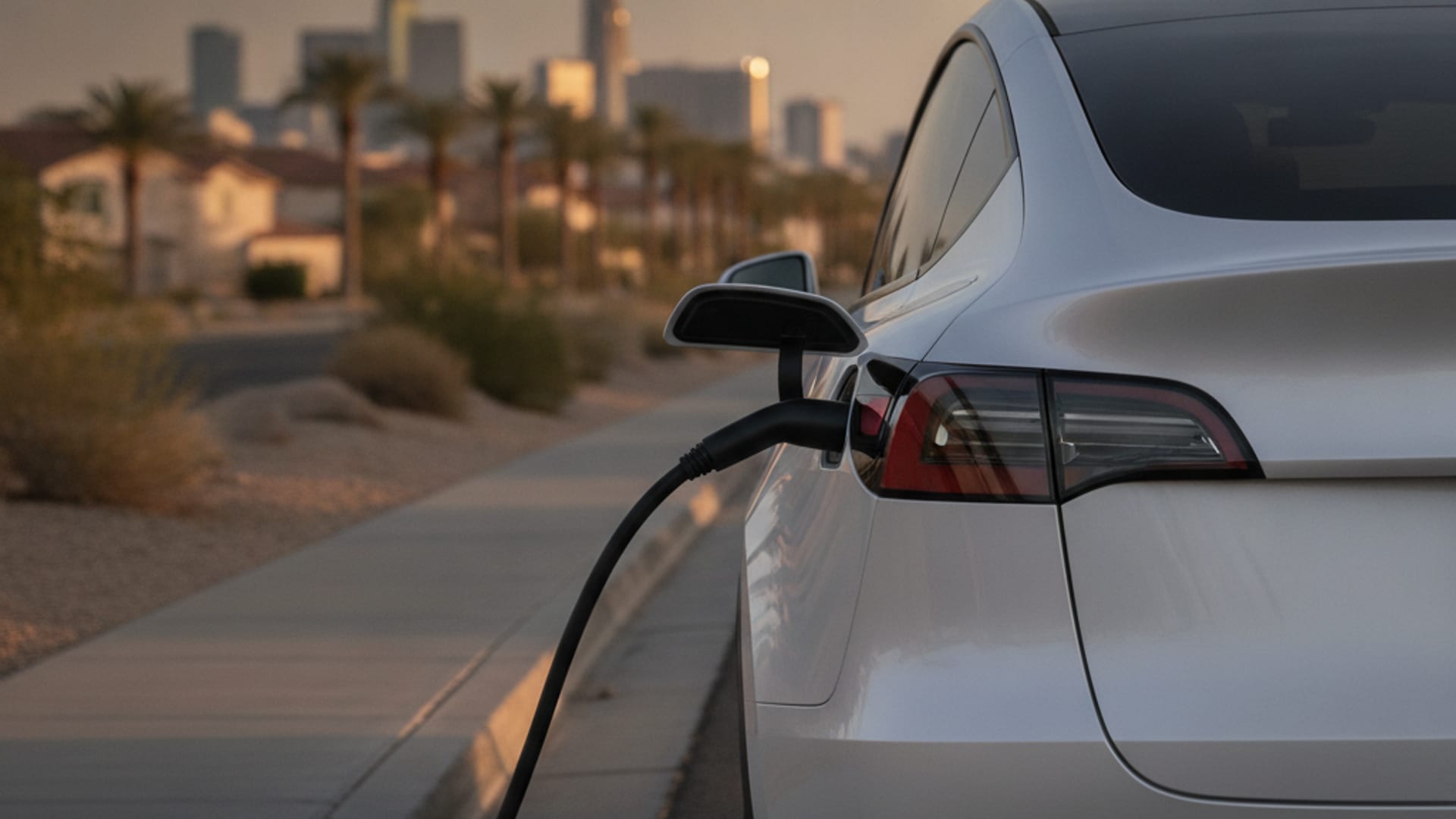
Step one is to get out of the lane and out of the car
Freeway shoulders are not safe places to stand. Stay in the car with the seatbelt on if the shoulder is wide enough to be away from the lane. If the shoulder is too narrow to sit in safely, exit through the passenger side, climb the embankment or move behind the barrier, and stay there. Don’t stand in the gore point. Don’t stand behind the car.
Turn on hazards. Raise the hood if it is safe to do so and if the car is well off the lane. A raised hood signals trouble to other drivers. Place a reflective triangle if you carry one. Many EVs don’t include a triangle in the trunk, so this is something drivers add themselves.
The car is on the shoulder. The battery is flat. The clock on safe sitting time starts now.
What NRS 484B.440 actually says
Nevada law treats a disabled vehicle differently than a parked one. Under NRS 484B.440, a vehicle that is disabled so it cannot avoid stopping is exempt from the no-stopping-on-highway rule. The statute sets no time limit on how long that disabled vehicle may remain on the shoulder.
That sounds generous until you read NRS 484B.443. A disabled or abandoned vehicle on a freeway or primary highway is treated as abandoned after 24 hours. On other roads, that window is 72 hours. Law enforcement may remove an abandoned vehicle, and the owner pays the removal cost.
What this means for an EV driver on a thin pack: you can sit on the shoulder while you arrange help. You cannot leave the car for a week and expect it to be there. NDOT or NHP can also remove vehicles that block traffic flow or create hazards, regardless of the clock.
The legal point matters because drivers sometimes panic about whether they can leave the car. The answer is yes, briefly, while help is en route. The longer the wait, the more important it is to keep the line of communication open with whoever is coming.
What NDOT’s Freeway Service Patrol does and doesn’t do
NDOT runs a Freeway Service Patrol across the most-traveled Las Vegas Valley freeways. The patrol is operated by Quality Towing and sponsored by GEICO. It runs 5:00am to 8:30pm, seven days a week, free to motorists.
The patrol helps with:
- Tire changes
- Jump starts for the 12V battery
- A gallon of fuel for gas cars that ran out
- Minor fire suppression
- Traffic control while a disabled car waits for a tow
What NDOT’s published patrol materials do not mention is EV charging. None of the patrol’s published services include electricity for a flat traction pack. The truck carries fuel, not a portable Level 2 source.
NDOT’s patrol clears about 55,000 incidents a year statewide. About 31,500 of those are in Las Vegas. The patrol is the first responder for most valley freeway stalls. For an EV with a flat pack, the patrol can stay with you, hold traffic, and help arrange a tow, but it cannot charge the car.
The HOV lanes on I-15 from Silverado Ranch to the Spaghetti Bowl are not pay lanes. They’re free with two or more occupants between 6-8am and 4-6pm weekdays. None of the valley’s freeways have tolls or express lanes. The FasTrak I-15 Express Lanes are in California.
What the operator actually brings to a freeway stall
The right call for a flat pack on a freeway shoulder is a mobile rescue operator who can deliver a Level 2 charge at the car. The operator comes to the shoulder with a portable EVSE, the right adapter for the connector, and a portable 12V jump pack in case the auxiliary battery is also dead.
The session itself happens on the shoulder. The driver stays with the car. The operator stays with the car. The session takes 15 to 30 minutes for 10 to 20 miles of range. That’s enough to reach the next working public charger or the driver’s home Level 2 setup.
For drivers in Silverado Ranch or Enterprise, the next reliable fast charger is a short run on surface streets. For drivers in Jean or Primm, the next charger is far enough that a charge session at the shoulder makes more sense than a tow.
Out of charge recovery is the service line for this case. Mobile EV charging covers the energy delivery. EV roadside assistance is the umbrella for every kind of freeway stall.
What to do while you wait
Stay buckled if the shoulder is wide enough. Stay off the phone while in the lane or shoulder, but use it for the rescue call before you exit the car. Keep the hazards on. Don’t try to push the car.
If a friend or a second driver is coming, have them bring a portable Level 2 charger or a generator. Most consumer portable Level 2 EVSEs need a 240V outlet, which most homes don’t have on a moment’s notice. The operator’s portable source is the safer and faster path.
If the car was towed by NDOT, NHP, or a private operator while you waited, the tow goes to a storage yard. NRS 706.4463 through 4479 require the tow operator to release a still-hooked vehicle at the original location for the operator’s set release fee.
When to skip the wait and call right away
Don’t troubleshoot a flat traction pack from the shoulder. The dash is dead. The car won’t move. The fastest exit is a phone call to (702) 935-4699.
Charge Pro LV connects drivers with operators who carry portable Level 2 sources, the right adapters, and a 12V jump pack. The operator quotes the work before it starts.
NDOT’s news releases on the Freeway Service Patrol cover patrol hours, services, and coverage limits. Nevada Revised Statutes 484B.440 and 484B.443 are the legal references for disabled-vehicle stopping and abandoned-vehicle removal.
Frequently asked questions
Can I legally sit on a freeway shoulder with a dead EV?
Yes, briefly. NRS 484B.440 lets a disabled car sit on a highway because it cannot avoid stopping. The statute sets no time limit. NRS 484B.443 treats the same car as abandoned after 24 hours on a freeway.
Does NDOT’s Freeway Service Patrol charge EVs?
No. The patrol’s published services are tire changes, jump starts for 12V batteries, fuel for gas cars, minor fire suppression, and traffic control. None of the patrol’s published materials mention EV charging.
How long does a mobile Level 2 charge add on the shoulder?
A typical session adds 10 to 20 miles of range in 15 to 30 minutes of charging time. Charging time, not arrival. If 20 miles doesn’t reach a working public charger, the operator can extend the session or recommend a flatbed tow.
Can a tow operator release my car at the shoulder after hooking it?
Under NRS 706, the tow operator must release a still-hooked vehicle at the original location for the operator’s set release fee. Once the truck leaves with the car, the car is at the yard and the storage clock starts.