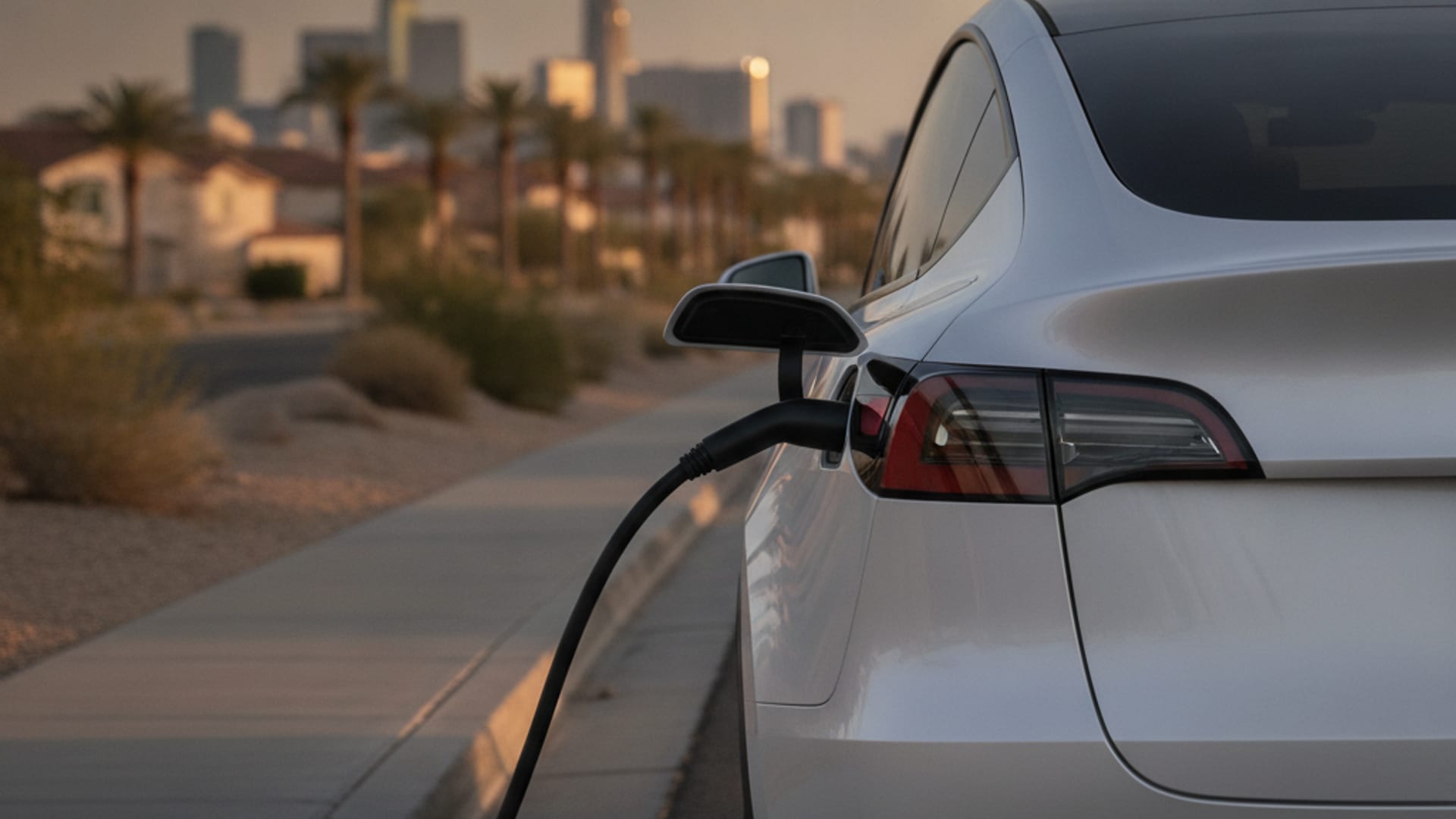
A driver pulls into a North Las Vegas fast charger on a 110F afternoon. The cable seats in the car. The kiosk shows the session starting. The connector light goes green. The car’s clock turns. The dash never moves off 22 percent. Ten minutes later, the kiosk still says charging. The car still says 22 percent. The handshake failed and nobody told the driver.
What a working handshake actually does
A modern public EV charger doesn’t pump electricity until the car and the cabinet have agreed to the session. The handshake covers the connector type, the battery’s state of charge, the battery’s temperature, the maximum current the car will accept, the maximum current the cabinet can deliver, the billing path, and the safety ground. Only when every step returns an answer does the cabinet close its internal contactors and start pushing current.
When the handshake fails, the cabinet often shows connected but doesn’t charge. The cable is locked in the car. The session timer runs. The dashboard says charging or waiting. No current flows. The driver can lose 10 or 15 minutes before realizing the pack is exactly where it was when they pulled in.
The official NWS Las Vegas record shows an average July high of 104.5F at KLAS, with about 78 days a year at or above 100F and about 9.4 days at or above 110F. The east valley and downtown can run up to 11F hotter than the rim. A battery sitting in that heat has a different handshake profile than one that just rolled out of a 72F garage. The car’s battery management system may throttle or refuse the session to protect the cells. The cabinet’s cooling system may throttle to protect its own electronics. The handshake ends in a polite refusal.
Why heat is the most common valley failure
Public chargers in the Las Vegas Valley sit in direct sun for most of the year. A cabinet’s internal temperature can climb well past 140F during a 4pm session in August. The cooling fans run at full speed. The thermistors throttle the cabinet’s output. A driver who pulls in expecting 150 kW may see 60 kW, then 35 kW, then a session that terminates entirely.
The car’s side of the handshake has its own heat problems. A battery at 110F or above will not accept a DC fast charge at full rate. Most modern EVs cap the session rate when the pack temperature is too high. Some refuse the session entirely. The driver sees “connected but not charging” because the battery management system has paused the session until the pack cools.
A DC fast charger also negotiates a target voltage. If the cabinet can’t supply the voltage the car wants, the handshake fails. A hot cabinet that has throttled its output voltage may not be able to deliver what the car requested. The car sees a stall that cannot meet its needs and pauses the session.
Recurrent Auto’s range work shows about 17 to 18 percent range loss at 100F for the traction pack. AAA, in May 2026, measured 8.5 percent range loss at 95F. The numbers describe what the driver is working with, not what the cabinet can deliver. A driver who arrives at a fast charger with a hot pack and a throttled cabinet will see the same outcome either way: connected but not charging.
What to try at the stall before you call
Step one is to stop the session from the app and start it again. Most stalls will release the cable after a fresh handshake. If the cable stays locked, push the emergency stop on the cabinet, wait 30 seconds, and press it again. Try the session a second time.
Step two is to check the stall status in the network app. ChargePoint, EVgo, and Electrify America all publish real-time stall status. PlugShare shows driver reports from the last few hours. If the stall is marked unavailable, don’t keep trying it.
Step three is to check the cable. Look for grit in the connector, a bent pin, or a damaged cable jacket. Wipe the connector with a microfiber cloth before reseating it.
Step four is to try a different network or wait 10 to 15 minutes for the pack to cool. A car parked in the shade for 15 minutes will drop several degrees of pack temperature. The handshake that failed at 110F may succeed at 95F.
Mobile EV charging is the right call when none of this works. EV roadside assistance covers the umbrella.
Why the inventory of public stalls is not a fix
A driver who knows every public stall in a 20-mile radius still has to reach one on a thin pack. The Las Vegas Valley has a mix of ChargePoint, EVgo, and Electrify America cabinets across Henderson, North Las Vegas, and the Strip corridor. The exact list shifts every quarter. The driver who tries to plan a route around that list can find every stall full or offline in the same week.
The faster path is a mobile Level 2 charge at the car. The operator comes to the driver. Out of charge recovery is the umbrella for that workflow.
What doesn’t help and what does
Sitting in a hot car running climate control while troubleshooting a handshake doesn’t help. Touring the east valley looking for a working stall doesn’t help. Calling the cabinet’s customer support and waiting on hold doesn’t help.
What helps is one phone call to (702) 935-4699. Charge Pro LV connects drivers with operators who carry portable Level 2 sources with the right adapter. The operator quotes the work before it starts.
If the car is in a private lot, check with the property manager before calling. Most operators drive unmarked vans, but a heads-up helps.
For the broader context, why a public charger won’t start a session walks through the same stall-troubleshooting steps. The NWS Las Vegas climate page has the official KLAS temperature record behind the heat numbers in this post. The U.S. DOE AFDC connector guide explains how the handshake negotiates voltage and current.
Frequently asked questions
Why does the charger say connected but not charging?
The handshake between the car and the cabinet failed. The cable is locked, but the cabinet hasn’t closed its internal contactors. Causes include a hot pack, a hot cabinet, a throttled output, or a stalled billing handshake. Stop the session from the app, wait 30 seconds, and try again.
Can heat alone cause a connected-but-not-charging session?
Yes. Most modern EVs cap or refuse DC fast charging when the pack is too hot. Wait 10 to 15 minutes for the pack to cool before retrying.
What if the cable won’t release from the car?
Don’t yank. Most cars have a manual release for the charging cable near the port. If the cable still won’t release, the car’s contactor is locked. A mobile rescue operator brings the right tools to release the latch without damaging the port.
Who can help if the handshake fails in a Las Vegas Valley lot?
Charge Pro LV connects drivers with operators who carry portable Level 2 sources with the right adapter. The operator quotes the work before it starts. Call (702) 935-4699 to reach the line.