The Model 3 showed 14 miles of range climbing the I-15 South grade out of Jean. The owner was heading back to Henderson after a Primm run. The car had been fine at the casino’s destination charger. The climb took it apart. The traction pack pulled hard. The battery icon flashed yellow. The car asked the driver to pull over and stop. Valley heat had already stolen more range than the dash admitted.
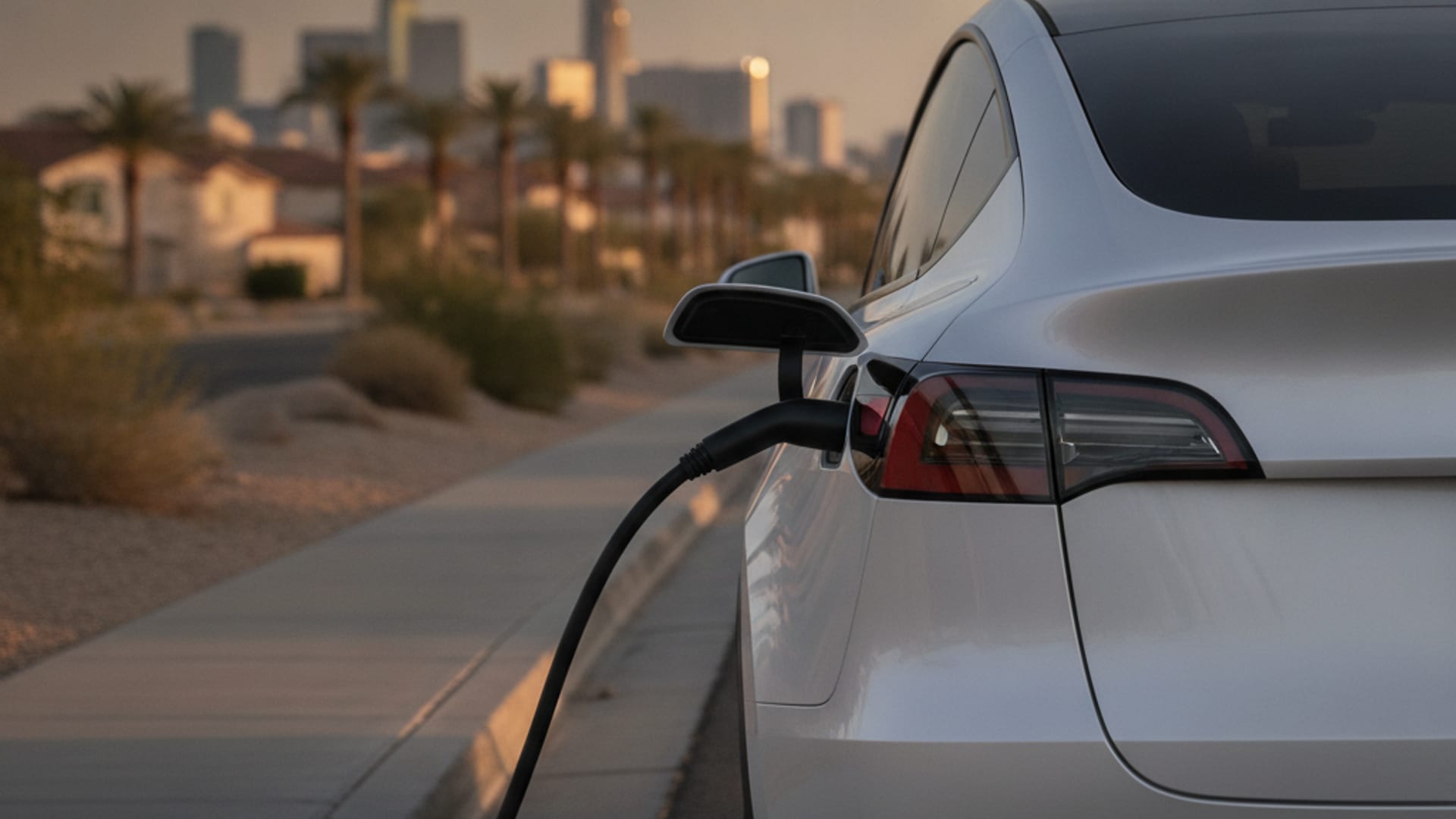
Why the warning fires early on a valley run
The low-battery warning on a Tesla is not a fixed number. It shifts with temperature, grade, and accessory load. In Las Vegas Valley summer heat, the warning fires sooner than the same percentage in milder climates.
Heat is the first drag. The NWS Las Vegas climate record puts the average July high at 104.5F and about 78 days at or above 100F. Cabin cooling at 110F pulls 3 to 5 kW. Recurrent Auto measured about 17 to 18 percent range loss at 100F. A car that left home at 90 percent in Anthem and showed 220 miles of range might actually have 180. The climb from the valley floor toward Primm adds another drag, because elevation gain eats more kWh than flat driving.
I-15 South between the resort corridor and Primm runs through a long climb. The road rises about 1,000 feet over twenty miles. The casino lots sit at the top. Drivers in Primm often assume the return trip is downhill and skip the top-up. The pack sags faster than the dashboard predicts.
What to do when the warning appears
Pull over at the next safe spot. The warning is not a request. It is a forced shutdown countdown in many Tesla models. The car will reduce power, then shut propulsion, then shut accessories. You want to be stopped before that sequence starts.
Set hazards. Get out and stand away from traffic. Nevada law lets a disabled vehicle stay on a highway when it can’t avoid stopping, per NRS 484B.440. Do not try to limp the car to a charger across active lanes. The car will shut off mid-intersection if the pack is at the warning threshold.
Turn the climate control off. The compressor draws 3 to 5 kW when running. Killing it slows the pack drain by a small but meaningful margin. Open the windows instead.
Call for out-of-charge EV recovery before the pack drops below the cutoff. The matched operator brings enough Level 2 charge to reach the next working charger. They quote the job before they start and bill you directly.
What an operator can do at the roadside
The matched operator brings a 240V Level 2 source with a native NACS plug. A typical session adds 10 to 20 miles of range in 15 to 30 minutes. That is enough to reach the next charger. The operator’s first job is to add range, not to diagnose. Diagnosis can wait until the car is moving again.
The operator also checks whether the warning was triggered by a 12V fault rather than the traction pack. A weak 12V can throw a low-battery warning on the dash because the BMS loses contact with the sensors. Tesla 12V battery jump covers that fork. The operator decides between a charge and a jump based on what the car does when the pack wakes.
The operator does not promise an arrival window. Charge Pro LV is a referral line. It does not own trucks, does not hold trade licences, and does not set prices. The matched operator quotes the job before starting.
Why the dashboard estimate lied
Tesla’s range estimate uses a recent driving average. On a valley summer run, the average includes cabin cooling, sustained highway speed, and long climbs. The estimate will look reasonable. The pack will run out faster than the number suggests.
The lesson is not to distrust the dashboard. It is to plan around the worst case. Treat the estimate as the optimistic number and the actual range as the pessimistic number. A 14-mile display on a 110F day with the AC on means about 8 miles of safe range.
The desert is not a place to gamble on optimistic estimates. AFDC publishes fuel-economy data at fueleconomy.gov that shows how much heat reduces EV range. Plan conservatively.
Frequently asked questions
At what percentage does a Tesla throw the low-battery warning?
Tesla’s low-battery warning fires when the pack reaches about 5 to 10 percent, depending on the model. The car reduces power, then asks the driver to pull over. The exact percentage is not published, and the threshold shifts with temperature and load.
Can I keep driving past the warning to reach a charger?
You can, but the car will start cutting power. The motor output drops to a fraction of normal. The accessory load draws from the same pack. The car may shut off entirely within a few miles. Pull over instead.
How much range does valley heat really cost?
Recurrent Auto measured about 17 to 18 percent range loss at 100F. AAA measured about 8.5 percent range loss at 95F. AAA’s number is closer to a typical valley morning. Recurrent’s number is closer to a peak afternoon. Plan around 15 percent loss as a working figure.
Will the matched operator meet me on I-15 South?
Operators meet drivers on shoulder sections of I-15 South near Primm and Jean. NDOT’s Freeway Service Patrol runs 5:00am to 8:30pm seven days a week, free to motorists. The patrol covers the busiest Las Vegas Valley freeways, per NDOT news releases. A private operator handles the EV-specific charging job.
What if the warning fired on US-95 toward Indian Springs?
US-95 toward Indian Springs runs through long, sparsely populated stretches. Plan your top-up at the Lone Mountain or Centennial Hills chargers before you leave the metro. If the warning fires anyway, the operator meets you at a wide shoulder or at the nearest exit.