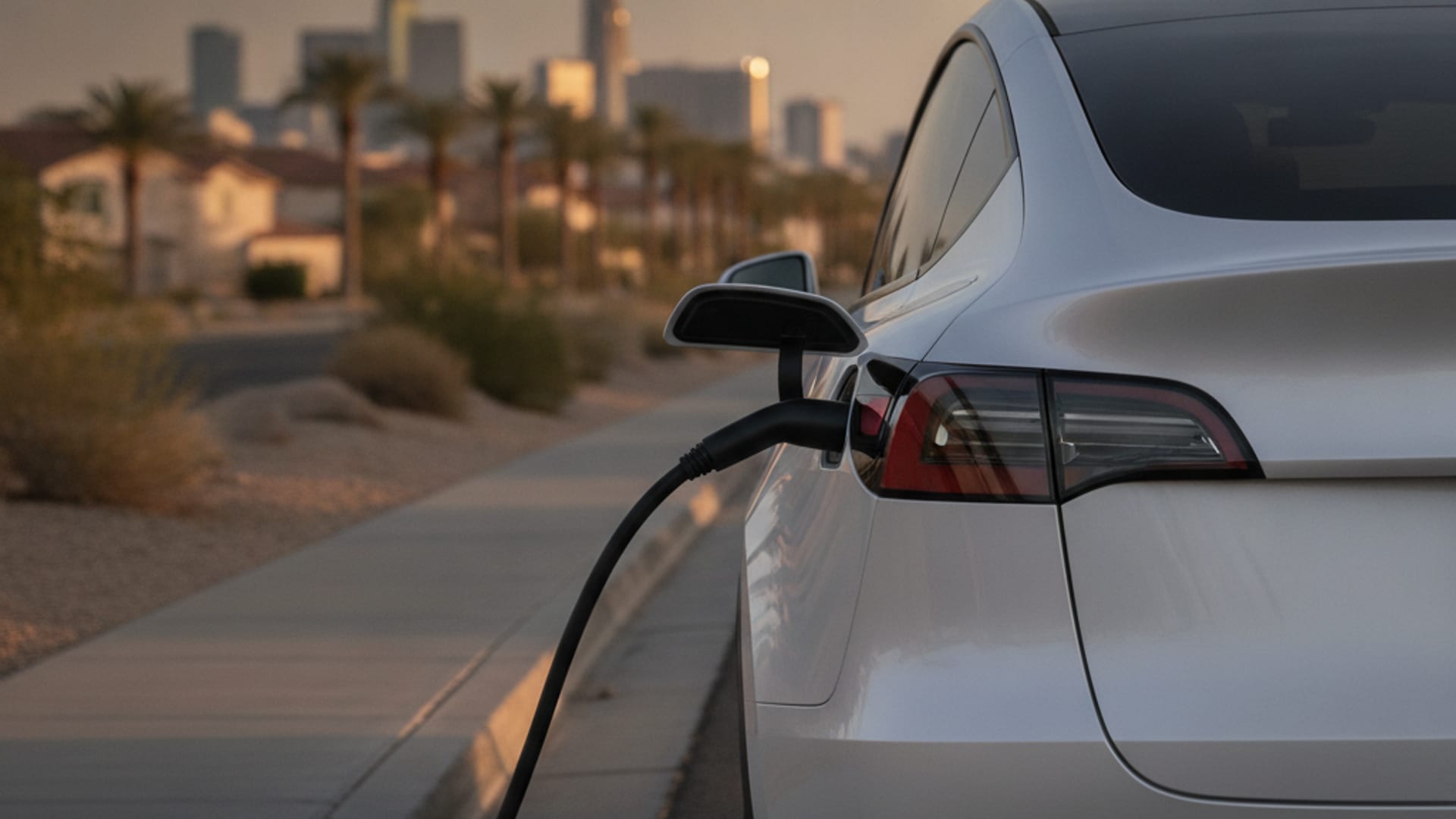
A Model Y driver parked at the Strip on a July night. A monsoon cell dropped an inch of rain in 25 minutes. Flamingo Wash jumped its banks. The driver came back to find the car parked in standing water halfway up the wheels. The charge port on the rear quarter had water visible inside the latch. The driver pulled the hood release and the frunk opened, then froze. The 12V was soaked too. Don’t plug a wet port in. Don’t drive through standing water when the latch is full.
What monsoon season actually does in the valley
NWS Las Vegas records at KLAS put annual Las Vegas precipitation at about 4.18 inches. Most of that falls in July and August as monsoon storms. Flash flooding hits washes and underpasses across the valley. The Las Vegas Wash, Flamingo Wash, the Tropicana Wash, and the eastern outfall channels all run during a strong cell. A road that was dry at 4pm can be a river at 5pm.
The standing water isn’t clean. Storm runoff in the valley carries grit, road oil, and chemicals from surfaces that don’t usually see rain. A charge port that fills with that water and then sits in the sun cooks the moisture into a film on the pins.
Why a wet charge port is a stop sign
Modern EV charge ports carry high-voltage direct current on a DC fast charger. On a Tesla Supercharger, the NACS plug carries up to 500 volts. On a CCS car, the upper pins carry the same. A water film across the pins can arc, short, or damage the charger. The car will refuse to start a session if it senses moisture at the latch, but it may also fail to sense it. Don’t trust a “ready” indicator to mean dry.
The charging standard has safety checks for moisture, but those checks vary by car. Some Teslas refuse to latch. Some CCS cars throw a port fault. Some cars charge anyway and the damage shows up later. The right move is to dry the port before plugging in.
How to dry the port without making it worse
The right tool is a microfiber cloth and patience. Open the port door. Blot the water out of the latch pocket. Don’t push the cloth deep into the pins. Don’t use a heat gun or a hair dryer on high. The plastic and the rubber gasket can warp.
A can of compressed air helps if you have one. Short bursts only. Hold the can upright. Don’t spray from inches away.
If you drove through a flood, the port may hold water for hours. Air it out before you plug in. Most cars tolerate this. A few don’t, and the latch gives up. A mobile operator carries a fresh port-door latch and the tools to dry the port without forcing it.
For the broader monsoon pattern, see delivery van dead on the Strip and mobile EV charging.
When the bigger problem is a wet cabin or a wet 12V
A car parked in standing water takes on more than a wet port. The 12V sits low in the chassis on most EVs. Soak that and the contactors stay open. The traction pack itself is sealed, but the high-voltage cables run through the floor. A pool halfway up the wheels is enough to soak the cable boots.
The driver in the Model Y had two problems. The wet charge port refused a session. The frunk had water in it. The 12V had water across its terminals. A jump got the cabin awake. The port had to dry before any charge.
For the broader rescue pattern, see EV roadside assistance in Las Vegas and out of charge recovery.
What a mobile operator does on a wet-port call
A mobile operator arrives at the car with dry towels and a can of compressed air. The operator dries the port, inspects the latch, and only then asks whether to charge. If the latch looks bent or the gasket has pulled away, the operator carries replacements and can swap on site. The operator quotes you before starting and bills you directly.
If the car drove through a flood and won’t wake, the operator tries the 12V first. A lithium jump pack brings the cabin back. The operator then reads the pack state in the app. If the pack is healthy and just needs range, the operator adds 10 to 20 miles in 15 to 30 minutes of charging. If the pack itself took on water, the car is a flatbed job.
Charge Pro LV is a referral line for the Las Vegas Valley. It matches stranded drivers with independent local mobile rescue operators. It performs no work, owns no trucks, and employs no technicians. The operator quotes you before starting and bills you directly. The pros we connect you with are licensed and insured.
For the broader monsoon parking and rescue pattern, see EV roadside assistance on the Strip and EV roadside assistance in Paradise.
How to plan for the next storm cell
A few habits keep a monsoon from becoming a rescue call.
Don’t park in a wash. The Las Vegas Wash, Flamingo Wash, and the Tropicana Wash flood every summer. A car parked in one at 4pm is a stranded car at 5pm. Move the car to high ground when NWS Las Vegas issues a flood advisory.
Don’t park at a low spot in a parking lot. Most lots have a high corner. Use it when a storm cell sits over the valley.
Plug in before the storm. NV Energy’s Residential EV Recharge Rider runs the EV charging window from 10:01pm to 8:00am. A full pack before a storm means you don’t need to charge during one.
Don’t drive across a flooded road. NWS Las Vegas uses the phrase “Turn Around, Don’t Drown” for a reason. The water doesn’t have to be deep to ruin a charge port or a 12V.
Frequently asked questions
Is it safe to plug in a wet EV charge port?
No. The pins carry high voltage on a DC fast charger. Water across the pins can arc or short the session. Dry the port with a microfiber cloth and let it air out before plugging in. If the latch looks bent or the gasket has pulled, a mobile operator can replace parts on site.
How do I dry the port without damaging it?
Open the port door. Blot the water out with a microfiber cloth. Don’t push the cloth into the pins. Compressed air in short bursts helps. Don’t use a heat gun or a hair dryer on high. The plastic and the rubber gasket can warp.
What if my car drove through a flooded underpass?
The traction pack itself is sealed, but the 12V and the high-voltage cable boots sit low. A pool halfway up the wheels can soak the 12V and short the latch. Try the 12V first. If the cabin wakes, the operator can charge at the car. If the pack took on water, the car is a flatbed job.
Can a mobile operator replace a charge port latch at the car?
Yes. Operators carry replacement latches for the common failures. The operator inspects the latch, dries the port, and swaps the part on site if needed. The operator quotes you on the phone or at the car and bills you directly.
Call (702) 935-4699 when you want a local operator at the car instead of a long brand dispatch.