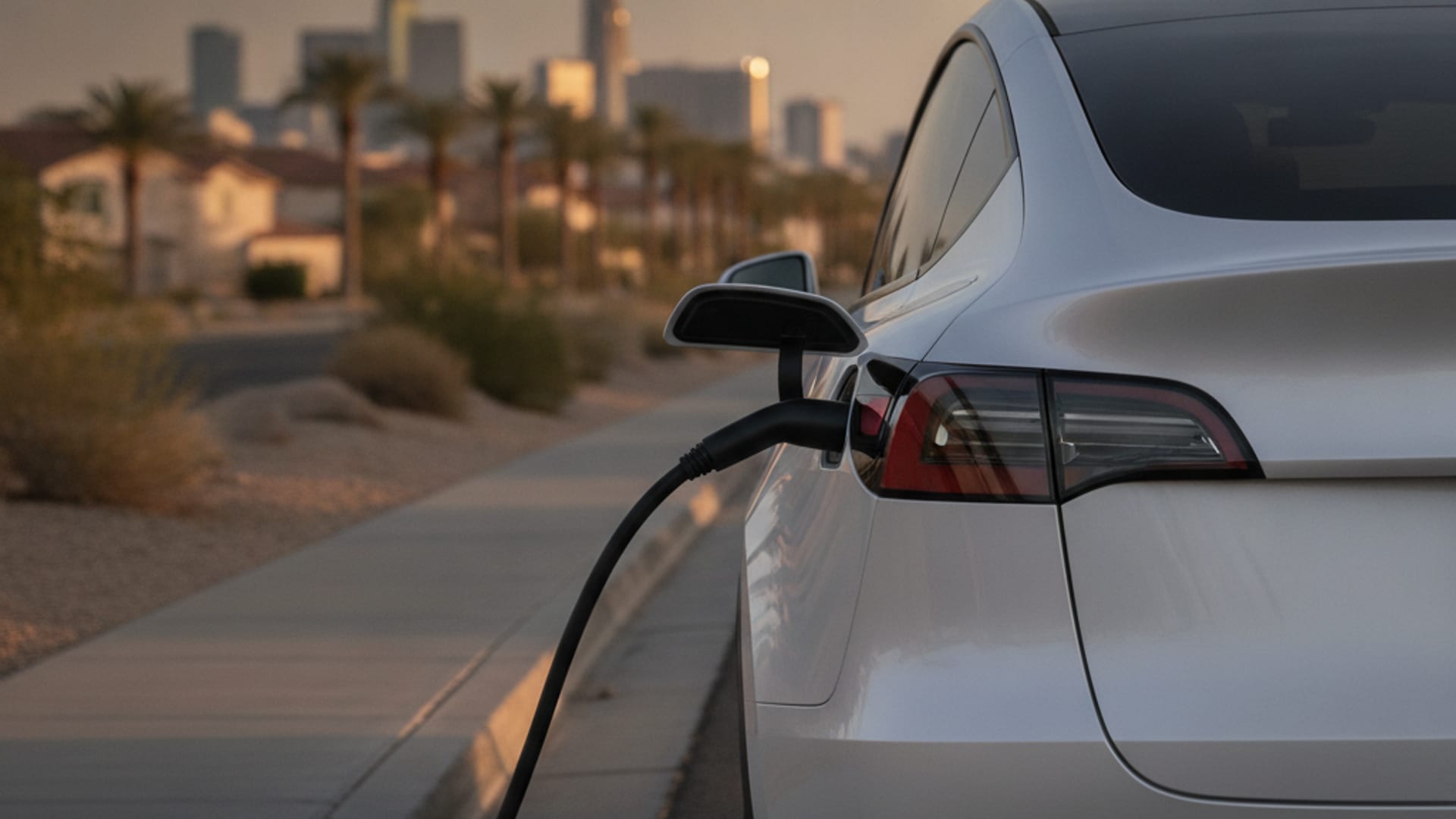
A Model S in a Green Valley driveway sat through a 105F Saturday. The owner came out Sunday morning and pressed the door handle. Nothing. No lights. No chimes. The big screen stayed black. The traction pack was at 60 percent on the Friday screenshot. The 12V had been on the car for four years. Heat had finished it.
The 12V is the first place to look
The Model S uses a 12V lead-acid battery to run accessories, the touchscreen, the door handles, and the wake-up handshake. The traction pack is a separate, high-voltage system that powers the motor and the heat pump.
The 12V has no thermal management. It sits in a service area under the front trunk. Heat cooks it. The NWS Las Vegas climate record puts the average July high at 104.5F, with about 78 days a year at or above 100F. The east valley and Henderson can run several degrees warmer than the airport. Green Valley sits in that warmer band.
A lead-acid 12V on a Model S that lives in the valley has a calendar life of two to three years. Some owners get four years with careful use. The cell degrades faster in heat. Eventually, voltage sags below the wake threshold and the car won’t unlock.
The signature failure pattern
A 12V failure on a Model S has a recognizable shape.
The car sat for a few days. The temperature was high. The owner pressed the door handle and got no response. The phone key failed. The Tesla app showed “vehicle offline.” The key fob did nothing.
The owner tried the in-app wake command. The app showed no response. The owner opened the frunk manually using the mechanical release. The 12V was below safe voltage.
A different failure pattern shows the car briefly awake, then dead. The screen flickered. The car asked for the key fob. Then everything went dark. That’s a 12V at the edge, not fully dead yet.
Tesla 12V battery failure in desert heat walks through the symptom list. The summary: any combination of “won’t unlock, won’t wake, app offline” with a charged traction pack points at the 12V.
What to try before you call
Work in a safe spot. Pull off the road, set hazards, and stay out of traffic.
Open the frunk using the mechanical release. Look for the 12V service panel near the front of the car. A green LED means the battery is healthy. No LED or a red light means the cell is below safe voltage.
Try the in-app wake command. The app tries a low-energy cellular handshake. If the 12V is at the edge, the wake may take it. If it doesn’t, leave the car alone for ten minutes. The BMS sometimes resets on its own.
Check the key fob battery. A weak fob battery looks like a dead car. The fob battery is a separate CR2032 cell. Replace it before assuming the car’s 12V is dead.
Do not try to jump the Model S 12V from another running car. The procedure uses a dedicated low-voltage jump point. Hooking it up wrong will throw faults and may damage the BMS.
What the matched operator does
The operator brings a low-voltage booster rated for the Model S 12V. The booster connects to the under-hood jump posts. The posts are part of the inrush-limiting circuit. A direct connection to the 12V terminals can weld a relay.
In most cases the car wakes on the first try. The DC-DC converter takes over. The 12V charges from the traction pack. The operator leaves the booster connected for five to ten minutes to top off the cell. The car runs a self-check and resumes normal operation.
If the 12V is beyond recovery, the operator carries a replacement lead-acid 12V rated for the Model S. The swap happens in the same lot. The car relearns the 12V serial number in a few drive cycles.
Tesla 12V battery jump covers the full procedure. The matched operator quotes the job before starting.
Why a tow is the wrong first move
A flatbed will move the car but won’t fix the 12V. The shop will charge or replace the pack. The owner pays for the tow and the shop work. The car spends days off the road.
A mobile 12V jump, in contrast, fixes the symptom on the spot. The owner pays for one call. The car drives away under its own power. Charge Pro LV Tesla roadside rescue covers the full flow.
For the cases where the car needs dealer diagnostics, the operator will say so. They won’t promise a result they can’t deliver.
How to extend 12V life
Three habits help.
Park in the shade or in a garage. Even a covered carport makes a difference. Direct sun adds 20 to 30F to the cabin and the 12V surface.
Avoid leaving the car sitting for more than a week. Multi-week sits at a Henderson resort or at Harry Reid long-term parking are hard on the 12V. A battery tender helps for long sits.
Replace the 12V proactively at the three-year mark. A planned swap beats an unplanned failure on a Saturday night in the resort corridor.
Related guides
For another angle on the same valley stall, see Tesla Model X won’t start in valley heat. · Tesla Model S with no power on Nevada roads
Frequently asked questions
Where is the 12V located on a Tesla Model S?
The 12V sits in a service area under the front trunk. Open the frunk and remove the maintenance panel on the back wall. The 12V is inside. The jump posts are next to it.
Can the operator replace the 12V on the spot?
Yes, in most cases. The operator carries lead-acid 12V packs rated for the Model S. The swap takes about thirty minutes. The car relearns the new pack’s serial number within a few drive cycles.
Why does the Model S use a lead-acid 12V instead of lithium?
The Model S predates Tesla’s move to lithium 12V packs. Older Model S cars continue to ship with lead-acid. Aftermarket lithium swaps are available but require a BMS reset.
Will a 12V jump damage the car?
A proper jump through the under-hood posts will not damage the car. A direct connection to the 12V terminals can weld a relay or throw a BMS fault. The matched operator knows the difference.
What if the traction pack is also at zero?
The matched operator can add 10 to 20 miles of Level 2 charge in 15 to 30 minutes after the 12V is awake. That gets the car to a charger. The combined 12V jump and Level 2 charge is a normal valley call.