A Model 3 from 2018 parked at a Spring Valley townhouse has crossed 100,000 miles and now shows a real-world range that is about 12 percent lower than it was when new. A 2024 Model Y parked at the same address in the same climate will lose less per year. Hot-climate packs age faster than mild-climate packs, and a Tesla pack replacement shows up sooner in this valley. The decision is not when to expect one. It is when to plan for one.
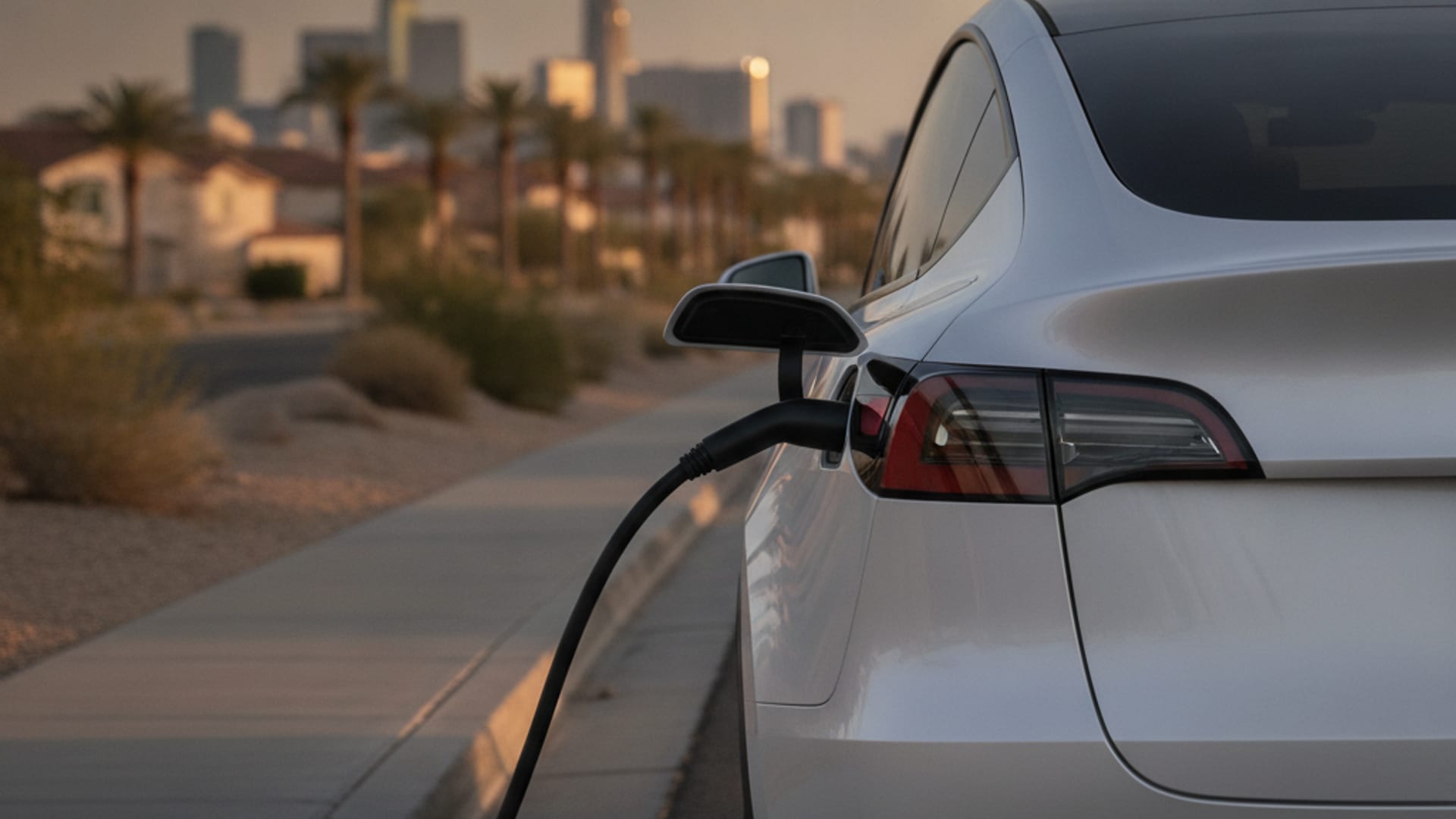
What “pack replacement” actually covers
A Tesla traction pack is the high-voltage battery that drives the wheels. On a Model 3 and Model Y, the pack sits under the floor between the axles. On a Model S and Model X, the pack is similar in position but with a different cooling architecture. On a Cybertruck, the pack uses a structural 4680 architecture. The pack itself is the assembly of modules, cells, the battery management module, the high-voltage wiring, and the cooling loop.
A full pack replacement removes the pack, replaces it with a remanufactured or new unit, and re-seats it under the car. A partial pack repair addresses a single module that has failed inside the pack. Tesla service centers and authorized body shops do both, but full pack replacement is the path that gets a car back to a like-new range figure.
The terminology matters when a driver asks about cost. A “battery” quote can mean a single 12V auxiliary battery, a single failed module, or a full pack replacement. Each is a different job with a different scope. Charge Pro LV is a referral line, and the operators we connect drivers with handle 12V jumps and on-site Level 2 charging. A pack replacement is a shop job, not a roadside call. Knowing that difference up front saves a wasted tow.
What hot climate does to a Tesla pack
Geotab studied battery degradation across climates and found hot-climate packs degrade about 0.4 percent per year faster than mild-climate packs. Phoenix-style desert heat was the worst case in their study. That sounds small, but the percentage compounds. A pack that loses 0.4 percent more per year for ten years is 4 percent below a milder-climate peer of the same age and miles.
NWS Las Vegas puts the average July high at 104.5F. About 78 days a year reach 100F or more. About 9.4 days reach 110F or more. The all-time record is 120F, set on July 7, 2024. The Las Vegas airport weather station runs 5 to 15F warmer than outlying areas, and the east valley and downtown can run up to 11F hotter than the rim. A car parked at a Winchester apartment or a downtown garage lives with that heat on every summer afternoon.
Heat ages a pack in three layers. Calendar aging, which is the slow loss of capacity from time and storage temperature. Cycle aging, which is the loss from charge and discharge cycles. And thermal stress, which is the mechanical stress on cell connections from repeated hot-cool cycles. A car that lives outside in Henderson sees all three. A car that lives in a Summerlin garage with moderate temperatures sees mostly calendar aging.
Recurrent Auto found that about 5 percent of range disappears at 90F and 17 to 18 percent at 100F during the drive itself. That is a temporary hit from heat, not a permanent capacity loss. Permanent capacity loss comes from the long-term heat exposure described above. Drivers often conflate the two, which leads to the wrong decision on pack replacement.
When a pack replacement is the right call
A pack replacement becomes the right call when the permanent capacity loss is large enough to change the daily pattern of the car. Most Tesla drivers can absorb a 10 percent permanent loss without changing anything. A 15 to 20 percent loss starts to matter on long loops. A 25 percent or more loss changes the car’s job description.
Geotab’s data put average degradation around 2.3 percent per year across all climates and Tesla models. Hot climates like the Las Vegas Valley trend higher. A ten-year-old Tesla in the valley might show 20 to 30 percent permanent capacity loss depending on miles, charging pattern, and parking situation. That is the window where a replacement conversation starts to make sense.
Tesla has its own published high-voltage battery warranty, typically 8 years or 150,000 miles with a capacity retention clause. The exact terms depend on the model and year. A driver who suspects a pack fault should start with the warranty before pricing a replacement. A pack that fails under warranty is a warranty job, not an out-of-pocket job.
A driver who is past the warranty and seeing a real-world range drop that changes daily life can ask Tesla service for a pack replacement quote. Independent shops also handle pack replacements, and a Tesla service center is not the only option. Pricing varies by year, model, and source of the replacement pack. We do not publish prices here. Confirm with the shop that will do the work.
What a replacement pack means in the valley
A Tesla pack replacement in the Las Vegas Valley starts with the tow. Nevada tow law under NRS 706 requires an NTA-certified operator, and a still-hooked vehicle can be released at the original location for the operator’s set release fee. For a Tesla that cannot drive, that means Tesla roadside rescue to load it properly and a flatbed that knows how to handle a Tesla without driving it onto a two-wheel dolly.
After the replacement, the car needs a couple of weeks of normal driving to settle the battery management module’s state-of-charge estimate. The range number on the dash will move during that period. Drivers sometimes mistake the early estimate drift for a fault. It is normal.
Plan the timing. A pack replacement takes the car out of service for several days. A driver who lives at a Henderson townhouse without a second car will need a loaner or a rental. The replacement is not a same-day swap. Ask the shop for the timeline in writing before authorizing the work.
Why “battery cost” is the wrong question to ask first
The question “how much is a Tesla battery” almost always misses the real decision. The right question is which battery the driver actually needs. A 12V auxiliary battery is a small job. A single failed module is a moderate job. A full pack replacement is a large job. Each has its own price range and its own timeline.
The next right question is whether the car is in or out of warranty. A car inside the high-voltage warranty goes through Tesla service at no charge beyond the deductible. A car outside the warranty goes through a quote process. The quotes vary by source of the replacement pack, so it pays to ask more than one shop.
The final right question is whether the car’s daily job justifies the replacement. A second-car garage queen with low daily miles does not need a new pack the same way a daily-driver commuter does. A driver with low daily miles and a real range loss problem can sometimes solve it with a 12V health check, a tire pressure check, and a software reset. None of that is a pack replacement.
A desert-climate Tesla is on a faster pack-aging curve than a milder-climate Tesla. Plan for the conversation, not for an emergency. When the daily range stops fitting the daily life, start the conversation with Tesla service and a second independent shop. When the car cannot drive at all, the path is out of charge recovery for the immediate stall and a flatbed for the trip to the shop. Call (702) 935-4699. We connect you with an independent operator who quotes the job before starting.
Frequently asked questions
How long does a Tesla pack last in valley heat?
Geotab found hot-climate packs degrade about 0.4 percent per year faster than mild-climate packs. The Las Vegas Valley’s 78 days a year at or above 100F and the urban heat island on the east side push that number higher than the national average. A pack that goes 10 years in Seattle might go 8 to 9 years in Winchester.
Does Tesla warranty cover pack replacement?
Tesla’s high-voltage battery warranty typically runs 8 years or 150,000 miles, with a capacity retention clause that varies by model and year. The exact terms are in the warranty book for the specific car. Start with the warranty before pricing a replacement.
Can a Tesla pack be replaced with a used pack?
Used packs exist, but the cell health of a used pack is unknown unless the shop measures it. New and remanufactured packs from Tesla service and authorized shops carry a warranty. A used pack from a third party is a higher-risk path. Always ask the shop to measure cell health before authorizing a used-pack replacement.
Can a roadside operator replace a Tesla pack?
No. A pack replacement is a shop job, not a roadside call. A roadside operator can jump a 12V, deliver a Level 2 charge to the traction pack, or load a Tesla for flatbed tow. The pack swap itself happens at a service center or an authorized shop.