Your Model Y sits at a Strip hotel garage with 1 percent state of charge and the doors will not release. The Tesla app’s roadside button says help is on the way. A Las Vegas stall still needs a local operator with a Level 2 truck. Tesla roadside assistance is a national program. It does not include a 240V Level 2 mobile charger in every valley.
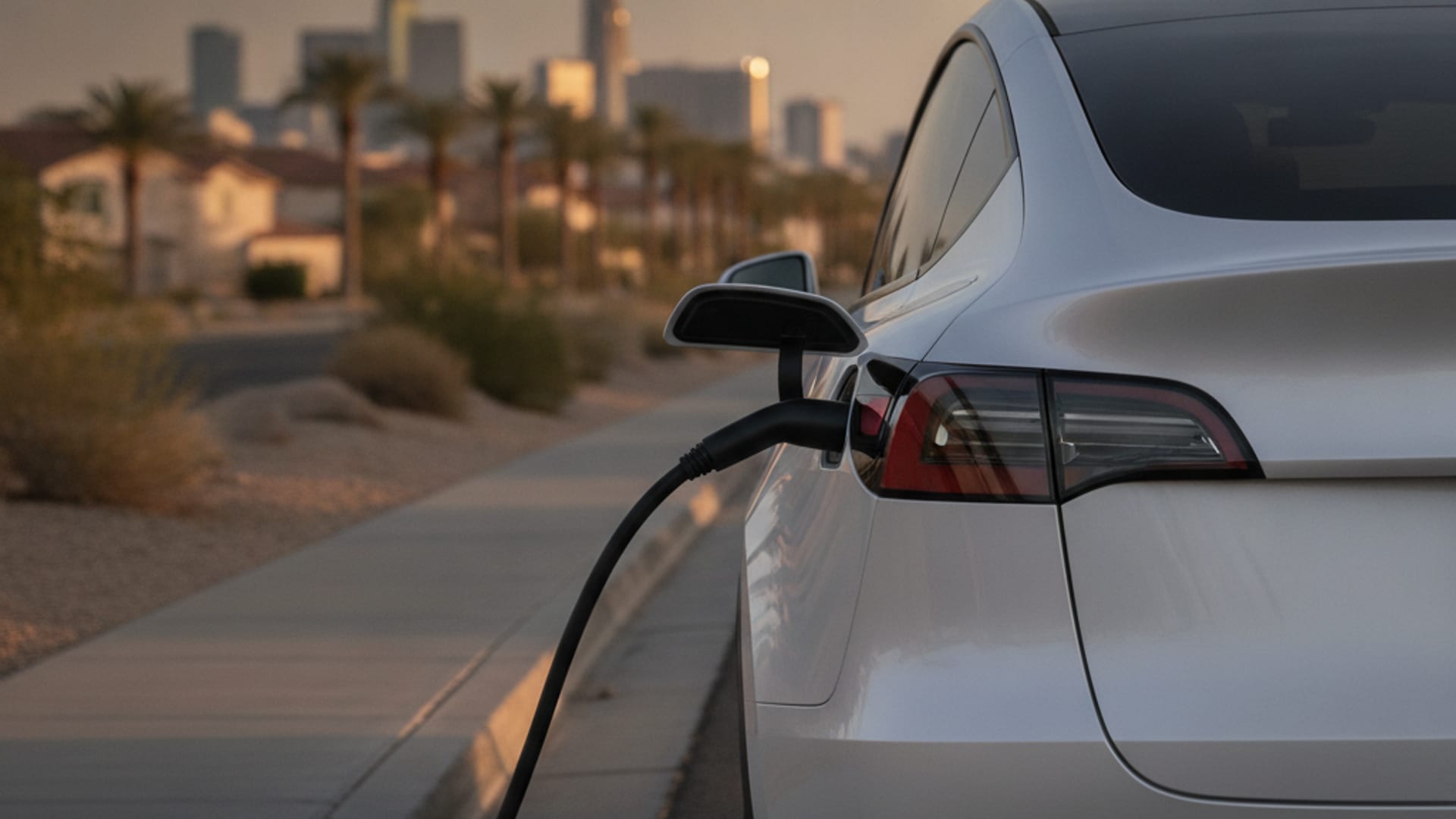
What Tesla’s program covers nationally
Tesla’s roadside assistance is built into the Tesla app for the life of most new vehicles. The program is run by a third-party administrator that dispatches a tow truck or a mobile service van based on the failure. The administrator works off a national network, which means a Las Vegas stall still routes through the same call center a Sacramento stall routes through.
The administrator’s published scope covers flatbed tow for a vehicle that cannot drive, lockout help, a 12V jump when the 12V fails, and tire changes for the cars that carry a spare. Tesla’s mobile service program covers some on-site diagnostics and repairs, but only for cars in the active service catchment.
What the program does not cover is a 240V Level 2 mobile charge. A Tesla that has run out of range on the road is a tow, not a charge. The administrator will dispatch a flatbed and load the car. The car goes to a Supercharger or a service center, not to a Level 2 truck on the shoulder.
That gap is the structure of the national program. A Las Vegas stall that needs range added at the curb is not what Tesla’s administrator was designed to handle. The administrator’s answer is a tow.
What a Las Vegas stall usually needs
A Las Vegas stall usually needs a 240V Level 2 charge at the curb. The hotel garage, the Strip resort, the Town Square lot, the Sun City Anthem driveway, the Boulder City residence with no home charger, and the Convention Center garage all share one feature. The car is in a place a flatbed cannot reach easily. A flatbed also does not put energy in the pack. A Level 2 mobile charger does.
Charge Pro LV is a referral service that connects stranded EV drivers with independent local mobile rescue operators. The operators carry a 240V Level 2 source and the right adapter for the car. Tesla drivers get a native NACS plug. Other brands get a CCS or J1772 adapter. A typical session adds 10 to 20 miles of range in 15 to 30 minutes of charging time.
The on-site Level 2 is what a stalled valley Tesla often needs. It is also what Tesla’s national program does not include. The two services solve different problems. Drivers who understand that do not waste time waiting for a tow that does not charge.
How the two programs stack up on a real stall
A driver with a dead Model Y at a Strip hotel garage calls both. Tesla’s app routes to the national administrator. The administrator dispatches a flatbed to tow the car to a Supercharger. The dispatch window depends on traffic, tow availability, and the administrator’s queue. The driver waits.
A driver with the same Model Y at the same garage calls (858) 925-2775 no, wait, that’s (702) 935-4699. We connect the driver with a local independent operator. The operator calls back, quotes the job, and dispatches a truck with a 240V Level 2 source. The truck arrives, plugs in at the stall, and adds 10 to 20 miles of range in 15 to 30 minutes of charging time. The driver drives the car out of the garage to a Supercharger or to home.
The two outcomes are different. The first ends with the car on a flatbed. The second ends with the car driving away. The decision is not which is cheaper. It is which fits the stall. A Model Y that has hit 0 percent and cannot roll at all is a flatbed job no matter what. A Model Y that can roll to the garage door is a mobile Level 2 job.
When Tesla’s program is the right call
Tesla’s program is the right call when the car cannot roll. A pack that has gone to true zero, a high-voltage isolation fault, or a software lockup that locks the wheels are all tow situations. The Tesla administrator knows how to load a Tesla without driving it onto a two-wheel dolly. That is a meaningful skill.
Tesla’s program is also the right call when the failure is covered by the active warranty. A 12V fault, a charging port failure, or a drive unit issue under warranty goes to Tesla service. The administrator arranges the tow. The repair is warranty work.
Tesla’s program is the right call when the car is far from a working charger and the driver does not want to handle the dispatch. The administrator’s call center is set up for that job. The driver makes one call and waits.
When a local Level 2 truck is the right call
A local Level 2 truck is the right call when the car can roll but is short on range. A driver who pulled into a Resort World garage with 4 percent state of charge and no charging stall in sight needs a Level 2 at the curb. The car drives away under its own power afterward.
A local Level 2 truck is also the right call when the stall is somewhere a flatbed cannot reach easily. A tight parking structure, a Sun City garage with a low ceiling, a behind-the-gate Convention Center spot, or a locked resort lot are all bad flatbed sites. A mobile operator with a compact Level 2 rig can reach all of them.
A local Level 2 truck is the right call when the driver wants the car charged in place and not at a Supercharger. The cost of the mobile session is comparable to a tow plus a Supercharger session, and the convenience of staying put is real. The driver picks.
What the two programs cost
Tesla’s roadside program is included with most new Teslas. The driver does not see a separate bill for the tow. The cost is in the original vehicle purchase.
A local mobile EV charging operator in the valley charges the driver directly at the curb. The operator quotes the job before starting. The quote covers the truck, the equipment, and the operator’s time. We do not publish the quote. The operator on the call sets the number.
Nevada does not add a state-level EV surcharge or registration fee. The Nevada DMV fee schedule confirms that. The driver is paying the operator’s price for the work, not a state levy.
Drivers who hold AAA in addition to Tesla’s program have a third option. AAA covers flatbed tows for EVs but, like Tesla’s program, does not include a 240V Level 2 mobile charger. AAA’s program also relies on a third-party administrator and a national tow network. The Las Vegas math fits a mobile Level 2 truck.
What a Las Vegas Tesla driver should plan for
Build a habit of plugging in whenever the car is parked at a known stall. NV Energy’s REVRR window runs 10:01pm to 8:00am. The Supercharger network covers the valley. A driver with both options rarely runs out of range.
Keep the Tesla app’s roadside button live and the AAA card handy for the days a flatbed is the right answer. Save (702) 935-4699 in the phone for the days a local Level 2 truck is the right answer. The two paths cover different stalls.
Tesla roadside assistance is a national tow and 12V program. A Las Vegas stall often needs a local Level 2 truck. The two are not in conflict. They cover different stalls. Drivers who understand the split pick the right path on the first call. When the path is a Level 2 at the curb, call (702) 935-4699 and we connect you with an independent operator who quotes the job before starting.
Frequently asked questions
Does Tesla roadside include a 240V mobile charge?
No. Tesla’s national roadside program dispatches a flatbed for an out-of-range car. The car goes to a Supercharger or a service center, not to a Level 2 truck on site. A driver who needs a Level 2 charge at the curb needs a local mobile EV charging operator.
Does Tesla roadside charge a fee?
Tesla’s roadside is included with most new vehicles. The driver does not see a separate bill for the tow. The cost is in the original purchase. Out-of-warranty drivers may see a fee depending on the policy.
Can AAA handle a Las Vegas EV stall?
AAA covers flatbed tows for EVs through a national network. AAA does not include a 240V Level 2 mobile charger. AAA’s program is a tow, not a charge at the curb.
Can I just wait for a tow and charge at a Supercharger?
Yes, when the car is drivable. A driver who can roll the car to the garage door and onto a flatbed can charge at a Supercharger on the other end. A driver who cannot reach the garage door needs a Level 2 at the stall, not a tow.