Your Model Y died on Paradise Road near the Sphere, hazards on, and the dash will not wake. You call Tesla roadside through the app. A contractor shows up twenty minutes later in a flatbed. You sign the work order on a phone screen. The bill goes to you, not to Tesla. The phrase “Tesla roadside” covers the dispatch desk, not the truck. The truck belongs to a contracted towing company, and that company bills you.
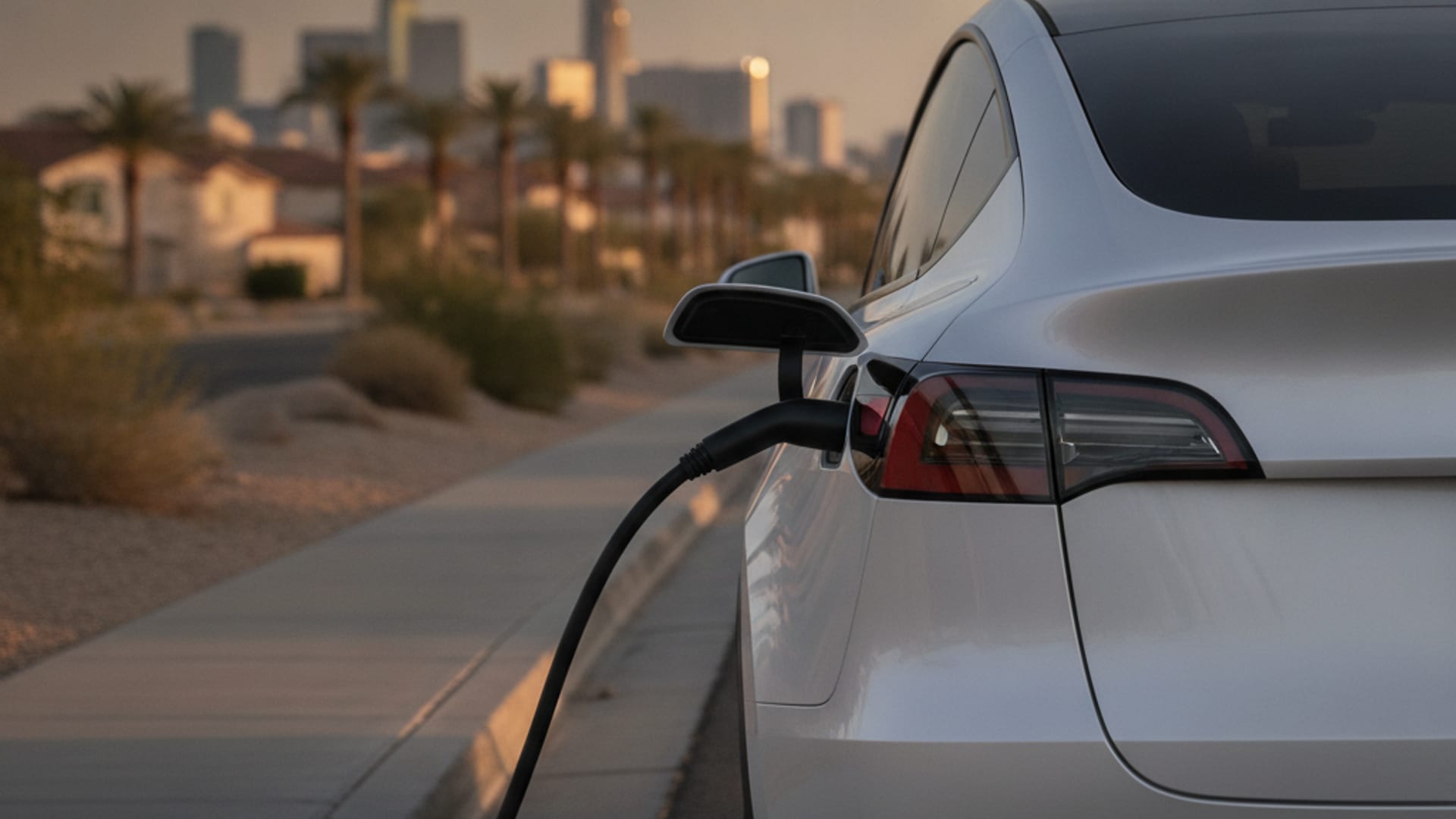
A separate question is who does the work when the failure is an empty pack, not a flat or a 12V. Tesla’s published help for an empty high-voltage pack is most often a tow toward a Supercharger. A mobile Level 2 truck is a different truck, from a different company, on a separate quote. Charge Pro LV connects Tesla drivers in the Las Vegas Valley with that second truck. We don’t set the price. The operator on scene does.
The two bills that show up in 2026
Tesla’s published roadside terms live in the Tesla app and on Tesla’s site. A new Tesla usually includes roadside through the warranty window. Confirm that window in the app. Outside the included window, Tesla’s published model is that the driver pays the contractor. The desk at Tesla collects the job. The contractor writes the ticket. Tesla does not publish a 2026 flat price, because every job is contractor-bid and tariff-based. We won’t invent one either.
A second bill belongs to a different channel. Charge Pro LV is a referral line. We match drivers with independent, licensed Nevada mobile EV rescue operators. The operator brings a 240V Level 2 source and a NACS connector. They quote you before they start. They bill you on the spot. Charge Pro LV does not bill you, and we don’t take a cut of the operator’s fee. That line is published at mobile EV charging.
Two private channels, two separate invoices, two separate trucks. That is the model.
What the contractor’s bill covers on a Tesla call
A Tesla-dispatched contractor on a Paradise curb typically handles a 12V jump, a flat tire, an out-of-charge tow, or a lockout. The bill is the contractor’s, posted on the operator’s tariff. NAC 706.408 regulates non-consent tow rates as flat-rate, operator-filed tariffs. There is no single statewide maximum published by the Nevada Transportation Authority. We don’t print a Las Vegas tow rate. The contractor’s tariff is the number that actually applies.
An empty high-voltage pack is the failure Tesla’s published help most often treats as a tow toward a Supercharger. A tow toward a Supercharger still leaves the car in a lot when it gets there. It doesn’t put miles in the pack. That’s the gap a Level 2 mobile operator fills.
What the Level 2 operator’s bill covers
A mobile EV rescue operator brings a 240V source and a NACS plug to the bumper. A typical session adds about 10 to 20 miles of range. That takes 15 to 30 minutes of charging time. The clock is charging time only. It isn’t how long anyone takes to arrive. The operator quotes you first, on the phone or on scene. You can decline.
Charge Pro LV is not the operator. We hold no trade license. We own no truck. We employ no technician. We do not set prices and we don’t promise when anyone arrives. The matched operator is licensed and insured. They decide what their truck and their time cost. The 10-to-20-mile figure came from the donor brand’s published brandStory and stays unchanged for the Las Vegas Valley ledger. For a 12V that won’t wake, the same operator brings a portable booster. They jump the small battery and let the pack talk to the car again. That’s Tesla roadside rescue, and the bill still comes from the operator.
What NDOT’s patrol bills (hint: nothing)
NDOT’s Freeway Service Patrol covers the most-traveled Las Vegas Valley freeways. Hours run 5:00am to 8:30pm, seven days a week. Quality Towing operates it. GEICO sponsors it. The stop is free to the motorist. The patrol changes tires, jumps a 12V, and adds fuel. None of NDOT’s published patrol materials mention electric vehicles or EV charging. So no bill arrives at all, but no charge shows up either. Treat the patrol as a free 12V and tire stop on a freeway shoulder. Don’t treat it as a mobile charge.
After 8:30pm the published patrol hours are over. Nevada State Police Highway Patrol can dispatch a rotation tow through Autura. The cell shortcode is *647. Southern Command is (702) 486-4100. We won’t write a 2026 bill for any of this.
Why the model matters for the valley
Valley heat is the reason a healthy pack still stalls here. The official NWS Las Vegas climate record (NWS Las Vegas / NOAA, KLAS) puts the average July high at 104.5F. About 78 days a year reach 100F or more. About 9.4 days reach 110F. The all-time record is 120F on 2024-07-07. The east valley and downtown can run up to 11F hotter than the rim. Sunrise Manor sits in that hotter bowl. The airport runs 5 to 15F warmer than outlying ground. Recurrent Auto measured about 5% range loss at 90F. At 100F that rose to about 17 to 18%. AAA’s May 2026 test measured 8.5% loss at 95F. Tesla hasn’t published its own range-loss figure we can cite. So we don’t.
A Model 3 that leaves Summerlin with a comfortable buffer can sit down on the Strip loop. Henderson sits near 1,867 ft. The valley floor is about 2,000 to 2,920 ft. Grade plus heat plus cabin cooling is how a Sunday morning stall happens in Winchester. The two-bill model is built around exactly that pattern.
The contract math behind two invoices
Read the contract you signed at delivery. Tesla’s published roadside is the dispatch desk, not a Tesla-owned truck. The truck is a contracted operator on its own tariff. The driver pays the operator on completion. That’s why a Tesla call can produce a line item that doesn’t look like a Tesla number.
A separate mobile EV rescue operator is a separate legal entity. They bill on their own invoice. The two bills may both land in your email the same night if both companies are involved. Charge Pro LV does not bundle them. We pass the driver’s number to one operator, and the operator passes the bill back. For a third-party referral line that ends at a Nevada Transportation Authority-certified tow, see who actually shows up after you call Tesla roadside in Nevada.
Make the call that fits the failure
A flat tire is a tire job. The Tesla-dispatched contractor changes tires. A dark screen and dead locks are usually the 12V. The Tesla contractor or a local operator can jump it. A car that powers up and shows zero miles is an empty pack. The Tesla path is most often a tow toward a Supercharger. The local operator path is a Level 2 charge in the lane. Don’t treat those as substitutes.
Confirm your Tesla roadside window in the Tesla app. If you need miles in the pack on a Paradise curb, call (702) 935-4699. Charge Pro LV connects you with an independent mobile EV rescue operator. The operator quotes before they start. The bill comes from the operator on scene.
Frequently asked questions
Who actually sends the truck when I call Tesla roadside?
Tesla dispatches through a contractor network. The contractor is the entity that bills you. Tesla collects the job. The truck is rarely a Tesla-owned vehicle.
Does Tesla roadside include EV charging in 2026?
Tesla’s published help for an empty pack is most often a tow toward a Supercharger. Mobile Level 2 charging at the car is not what Tesla’s channel publishes.
Will the Las Vegas Valley operator match a Tesla-dispatched price?
The operator sets their own quote. Charge Pro LV doesn’t bundle, split, or compare. Ask the operator on scene before work starts. Decline if the quote doesn’t fit.
Is NDOT’s patrol really free to the driver?
Yes. NDOT’s Freeway Service Patrol is free to the motorist for tire changes, jump starts, fuel, and minor fire suppression. NDOT’s published patrol materials don’t list EV charging.