Tesla’s published roadside policy in 2026 is the same model it published in 2025. Tesla dispatches. A contractor arrives. The contractor bills you for the work, on the operator’s tariff. The warranty window is set by Tesla. Nevada law (NRS 706) requires the contractor to hold an NTA certificate. That hasn’t changed. What hasn’t changed for valley drivers is the gap that an empty high-voltage pack still creates, especially in summer heat.
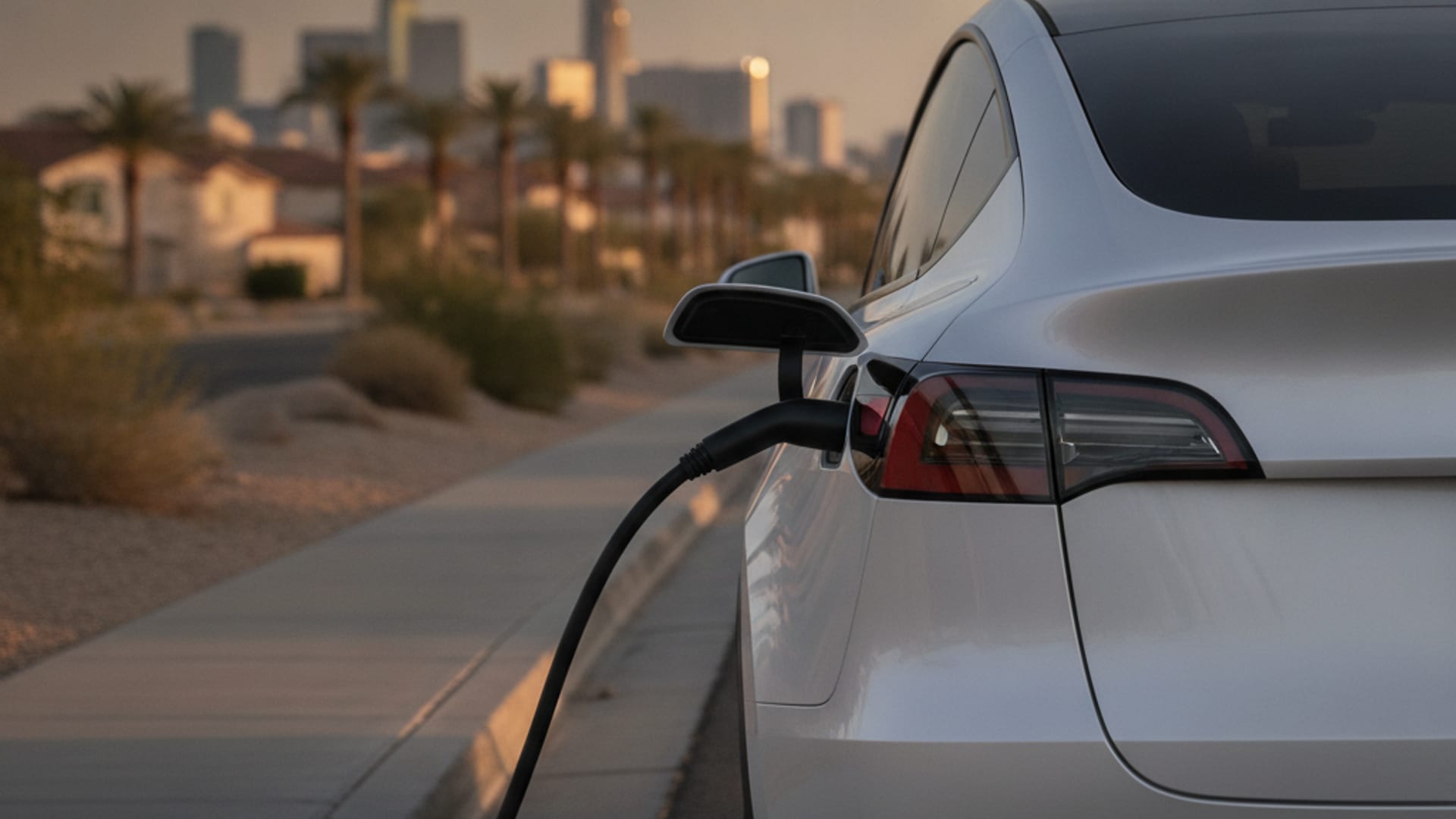
The policy is the policy. The contractor is the operator on the operator’s tariff. The dead pack is a separate job, and Tesla’s published help for it is most often a tow toward a Supercharger. A Las Vegas Valley operator on a Level 2 truck is a different truck.
Tesla still dispatches; the contractor still bills
Tesla’s published 2026 policy is that Tesla roadside is the dispatch desk, not the truck. The truck is a contractor on Tesla’s network. The contractor writes the ticket. The driver pays the operator. The price is set by the operator’s tariff, filed with the Nevada Transportation Authority under NAC 706.408. There is no single statewide maximum on this site. We don’t print a Las Vegas tow rate.
The included window is published in the Tesla app. Confirm your window before you need it. Outside it, every job is paid. Inside it, the four covered services are tire, 12V, lockout, and tow toward a service destination.
The Nevada side: NTA certificates and tariffs
A tow operator in Nevada needs an NTA certificate (NRS 706). NAC 706.408 regulates non-consent tow rates as flat-rate, operator-filed tariffs. The contractor Tesla dispatches in Las Vegas holds an NTA certificate. They post their own tariff. We don’t publish that tariff here. The contractor tells you the number on scene, before work starts.
A second Nevada rule is the release-fee rule (NRS 706.4463 / 4467 / 4469 / 4477 / 4479). If a truck has hooked your car and you want it back at the original location, the operator must release it for their set release fee. That rule protects drivers from being charged for a tow they didn’t authorize. It also means a tow is a tariff event, not a flat-rate event.
NDOT’s patrol is still free and still doesn’t advertise EV charging
NDOT’s Freeway Service Patrol covers the most-traveled Las Vegas Valley freeways. Quality Towing operates it. GEICO sponsors it. The published hours are 5:00am to 8:30pm, seven days a week. Statewide the patrol clears about 55,000 incidents a year. About 31,500 are in Las Vegas. The published service list is tire changes, jump starts, fuel, minor fire suppression, and traffic control. The patrol does not advertise EV charging. None of NDOT’s published materials mention electric vehicles or a NACS plug.
Use the patrol for what it covers. Don’t expect a charge. After 8:30pm the patrol is off duty. Nevada State Police Highway Patrol can dispatch a rotation tow through Autura. The cell shortcode is *647. Southern Command is (702) 486-4100.
Why the policy gap matters in valley heat
The official NWS Las Vegas climate record (NWS Las Vegas / NOAA, KLAS) puts the average July high at 104.5F. About 78 days a year reach 100F or more. About 9.4 days reach 110F. The all-time record is 120F on 2024-07-07. The east valley and downtown can run up to 11F hotter than the rim. Sunrise Manor sits in that hotter bowl. The airport runs 5 to 15F warmer than outlying ground. Recurrent Auto measured about 5% range loss at 90F. At 100F that rose to about 17 to 18%. AAA’s May 2026 test measured 8.5% loss at 95F. Tesla hasn’t published its own range-loss figure we can cite. So we don’t.
A Model Y that leaves Henderson at sunrise can sit down on the Strip loop by lunch. A Model 3 that leaves Summerlin with a 60-mile estimate can arrive in downtown Las Vegas with 22. The included tow toward a Supercharger becomes the right call only if a Supercharger is convenient. On a Winchester garage ramp, it’s a quarter-mile walk in 105F heat.
What the local Level 2 operator does
Charge Pro LV is a referral line. We match stranded Tesla drivers with independent, licensed mobile EV rescue operators in the Las Vegas Valley. The operator brings a 240V Level 2 source and a NACS connector to the car. They quote you before they start. They bill you directly. A typical session adds about 10 to 20 miles of range. That takes 15 to 30 minutes of charging time. That number is charging time only. It isn’t an arrival time.
The matched operator is licensed and insured. They decide what their truck and their time cost. We don’t bundle or split. The bill comes from the operator on scene. For a 12V that won’t wake after a hot Henderson park, the same operator brings a portable booster. That’s Tesla roadside rescue, and the bill still comes from the operator.
Tesla’s policy on a 12V
A 12V that won’t wake looks identical to a dead traction pack. The dash won’t light. The locks won’t release. The phone won’t connect. Tesla’s published help is a 12V jump. A contractor or the NDOT patrol during published hours can do that. Once the small battery wakes, the traction pack often has plenty of range. That finding is the cheapest win on a hot day.
Tesla’s published help on a dead traction pack is most often a tow toward a Supercharger. The policy hasn’t shifted that in 2026. For a Winchester garage ramp, a tow is the wrong tool. For a Kyle Canyon Road shoulder above 6,000 ft, a tow may also be wrong if a Level 2 truck can reach you.
Make the call that fits the failure and the location
A 12V jump on a covered freeway during published hours: NDOT’s patrol, free. A flat on a covered freeway during published hours: NDOT’s patrol, free. A lockout or a long mechanical tow: Tesla-dispatched contractor. An empty pack on a resort curb or a garage ramp: local Level 2 operator at (702) 935-4699. An empty pack on a freeway shoulder after 8:30pm: Tesla-dispatched contractor.
For a 12V that won’t wake in Winchester heat, see Tesla 12V failure in valley heat. For a flat on a freeway shoulder, see Tesla flat tire on a Las Vegas Valley freeway: coverage and next steps. For the regional hub, see EV charging in the Las Vegas Valley.
Frequently asked questions
What does Tesla’s 2026 policy change?
Tesla’s published model is the same. Tesla dispatches. A contractor arrives. The contractor bills on its tariff. The included window is set in the Tesla app.
Are Tesla-dispatched contractors licensed in Nevada?
Yes. Tow operators in Nevada need an NTA certificate. The contractor on Tesla’s network holds one. The contractor’s tariff is filed with the Nevada Transportation Authority.
Does Tesla’s policy cover EV charging at the car?
Tesla’s published help for a dead pack is most often a tow toward a Supercharger. Mobile Level 2 charging at the car is not on Tesla’s published help list.
Does NDOT’s patrol publish a 2026 change for EVs?
NDOT’s published patrol materials still do not mention EV charging. Tire, jump, fuel, and minor fire suppression remain the published list.