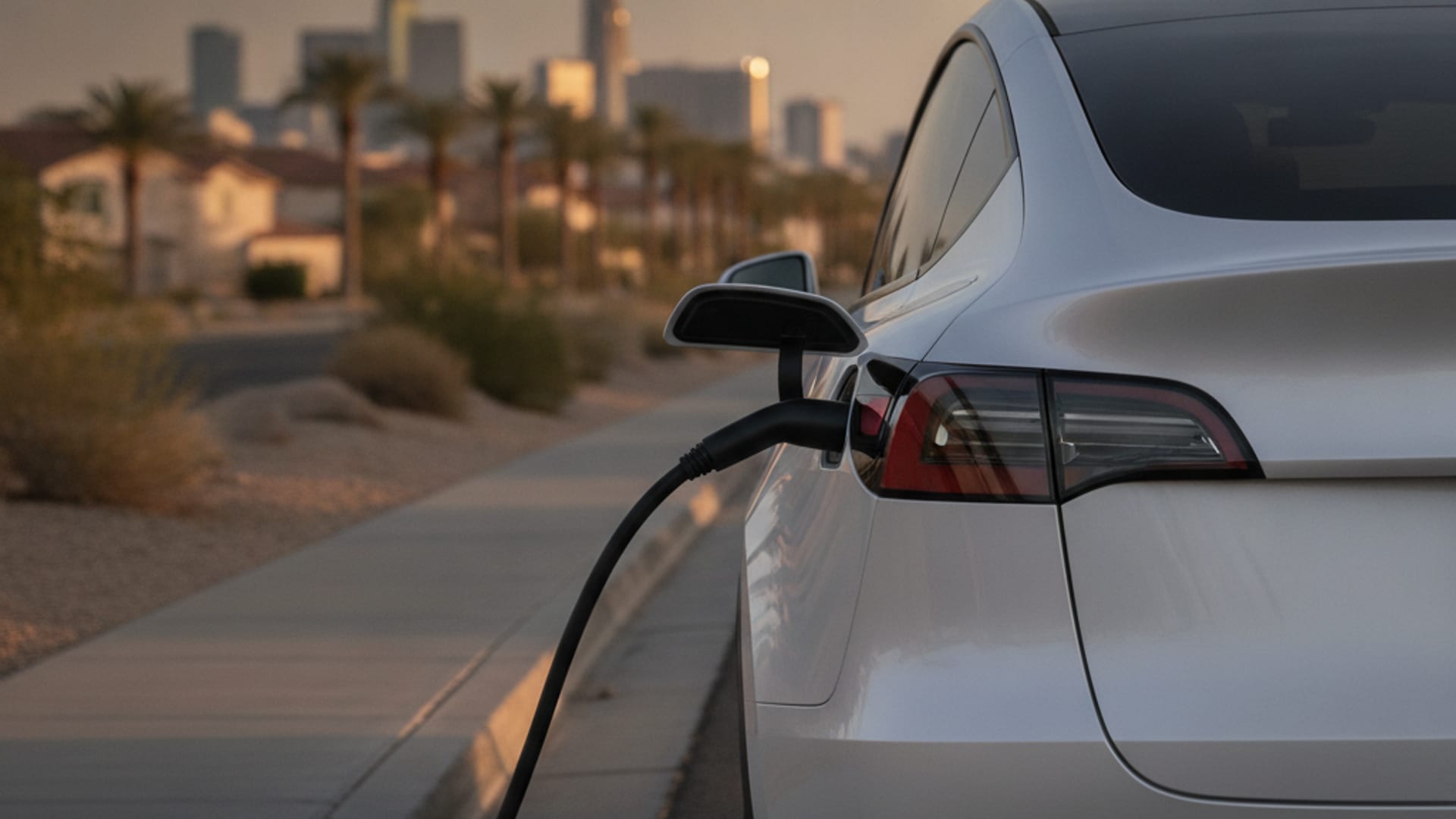
Your Model Y pulled 42 kWh on a Henderson home charger during an overnight REVRR window. The bill moved by less than the cost of a fast-food combo. The same 42 kWh at a Supercharger a mile off the Strip would be a much larger number. The Tesla charging bill in the Las Vegas Valley depends on three things: where you charge, when you charge, and whether Nevada adds anything on top of the kWh. Nevada does not.
What NV Energy charges for a home kWh
NV Energy is owned by Berkshire Hathaway Energy and serves about 90 percent of Nevada’s electricity market. In the Las Vegas Valley, NV Energy (the Nevada Power Company side) serves Las Vegas, North Las Vegas, Henderson, Paradise, Winchester, Spring Valley, Enterprise, Sunrise Manor, Summerlin, and Whitney. The utility also serves Goodsprings, Jean, Primm, Mount Charleston, and Searchlight in outlying Clark County.
NV Energy’s Residential Electric Vehicle Recharge Rider (REVRR) is a time-of-use rate designed for home EV charging. The charging window runs from 10:01pm to 8:00am, seven nights a week. The rate structure gives the lowest per-kWh price during that window. It is the cheapest published way to charge a Tesla in the Las Vegas Valley.
The exact per-kWh price for REVRR varies with the residential tier, the season, and any rider or fuel adjustment in effect. NV Energy publishes the current rate card on its clean energy page. Always confirm the current rate before you plan a bill. That page is the only authoritative source, and the rate can move with regulatory filings.
Boulder City has its own municipal utility, Boulder City Utilities. It is not NV Energy. The utility runs largely on Hoover and Glen Canyon hydro. Boulder City EV drivers get a Boulder City Utilities rate, not the NV Energy REVRR. Blue Diamond, Indian Springs, and Sandy Valley are served by Valley Electric Association, a co-op. Moapa Valley, Overton, Logandale, Moapa, Bunkerville, and Mesquite are served by Overton Power District No. 5. Coyote Springs is served by Lincoln County Power District No. 1. Each utility sets its own rates. The REVRR window applies to NV Energy customers only.
What the Supercharger charges for the same kWh
Tesla’s Supercharger network uses a published per-kWh price in Nevada. Tesla publishes the active price in the car’s navigation system before the session starts. The price varies by site, by time of day, and by membership tier. Off-peak Supercharger rates are typically lower than peak rates.
A Model Y that pulls 42 kWh at home inside the REVRR window will move the bill by a small amount. The same 42 kWh on a peak Supercharger session can be several times higher per kWh. The math flips for drivers who do not have a home charger. A Supercharger bill becomes the only option for that driver, and the rate applies on every kWh pulled.
The Nevada DMV does not charge an EV-specific vehicle registration surcharge. Nevada is one of a handful of states without one. The state also has no EV purchase rebate or tax credit. AFDC and the Governor’s Office of Energy both confirm that. Nevada does not put a state-level charge on top of the energy bill, so the Tesla charging bill here is shaped by the utility rate and the network rate, not by a registration penalty.
Where the bill moves the most
Three variables move the bill more than anything else on a Tesla in this valley.
The first is the time of day at home. NV Energy’s REVRR window is the cheapest published rate. A Tesla that pulls 80 percent of its weekly energy inside that window pays substantially less than the same car pulling energy during the 4 to 9 pm peak window. The overnight window also lines up with cooler pack conditions, which improves the charge curve.
The second is where the kWh comes from. A home charger uses the residential rate, which is the lowest published option. A workplace stall, where available, is often free to the driver. A public Level 2 stall on the ChargePoint or EVgo network runs a per-kWh or per-session price set by the property owner and the network. A Tesla Supercharger runs the per-kWh price Tesla publishes. The same 42 kWh can mean four different bills on the same day.
The third is the session’s charge curve. A Tesla that pulls 42 kWh from a 250 kW Supercharger peak takes less time than the same 42 kWh from a home Wall Connector. The bill is for the same kWh, not the same time. Time matters to the driver, but the bill is for energy delivered.
Why there is no state surcharge on top
Nevada voters rejected Question 3 in 2018, which would have opened retail electric choice. The decision kept NV Energy as the default supplier across most of the state. A side effect is that the state does not have an EV surcharge structure layered on top of the utility rate. Other states add a registration fee, a road-use fee, or both for EVs. Nevada does not.
Clean Cars Nevada is active. The state adopted the regulation in 2021, adopting LEV III plus ZEV from model year 2025. That is a sales-side rule. It does not add a fee to a Tesla charging bill in the Las Vegas Valley.
NV Energy’s own EV programs include Residential EV Charging Station Incentives, Multifamily Charging, and Public Charging programs. The Interstate Corridor Charging Depot, Outdoor Recreation, and Public Agency programs fund fast charger deployment. The Lower Income EV Rebate closed on June 30, 2023. None of these programs adds a fee to a Tesla charging bill.
A planning approach for the bill
Start with the overnight home rate. NV Energy’s REVRR window is the cheapest published path. A driver with a home Wall Connector who charges inside the window will see a much smaller bill than the same car driven the same miles on a Supercharger.
Plan Supercharger stops for the days a home charge is not enough. A long loop to Primm at highway speeds, a Mesquite run, or a Death Valley drive all sit outside the home plan. A peak Supercharger stop is the right answer for those days. Watch the per-kWh price on the car’s screen before you commit.
Build a buffer for the unexpected. A Supercharger stall can be busy or out of service. A back-up plan keeps a stranded car from becoming a billing surprise. Out of charge recovery is the on-site answer for the days the plan does not work. Mobile EV charging brings a Level 2 source to the parking stall and adds 10 to 20 miles of range in 15 to 30 minutes of charging time.
The Tesla charging bill in the Las Vegas Valley is shaped by where and when you charge, not by the state. Overnight home charging on the REVRR window is the cheapest path. Superchargers fill the gaps. Nevada does not add a surcharge on top.
For the daily-driver math, the right number is the rate card on the NV Energy clean energy page, not the EPA sticker or a forum post. That page is the only source we cite for the home rate. The Tesla in-car screen is the only source we cite for a Supercharger rate. Both move over time, so confirm before you plan a bill.
Frequently asked questions
Does Nevada add a state fee on top of the charging bill?
No. Nevada has no EV-specific vehicle registration surcharge and no state EV purchase rebate. The Nevada DMV fee schedule and AFDC both confirm this. The bill is shaped by the utility rate and the network rate, not by a state surcharge.
What is the cheapest way to charge a Tesla in the Las Vegas Valley?
Charging a Tesla at home on the NV Energy Residential Electric Vehicle Recharge Rider window, 10:01pm to 8:00am, is the cheapest published option for NV Energy customers. The exact rate is on the NV Energy clean energy page. Boulder City Utilities customers have their own rate. Valley Electric Association, Overton Power District No. 5, and Lincoln County Power District No. 1 customers have their own co-op rates.
Are Tesla Supercharger prices higher than the home rate?
Yes, in most cases. Tesla publishes the active per-kWh price in the car’s navigation screen before the session. Supercharger rates vary by site, time, and membership tier. A peak Supercharger session is typically several times the overnight home rate.
Is the Supercharger rate the same at every site?
No. Tesla sets rates by site, time of day, and membership tier. The car’s navigation screen shows the active price at the chosen stall before you commit. That screen is the only source we cite for a Supercharger rate in this valley.