A gas car dies on an I-15 shoulder, and your EV is next to it. The traction pack looks big enough to crank anything. It isn’t a jump box, because a jump only uses the small 12-volt battery. That 12V isn’t built to spin a gas starter. Clip the cables on a valley shoulder and you can strand both cars.
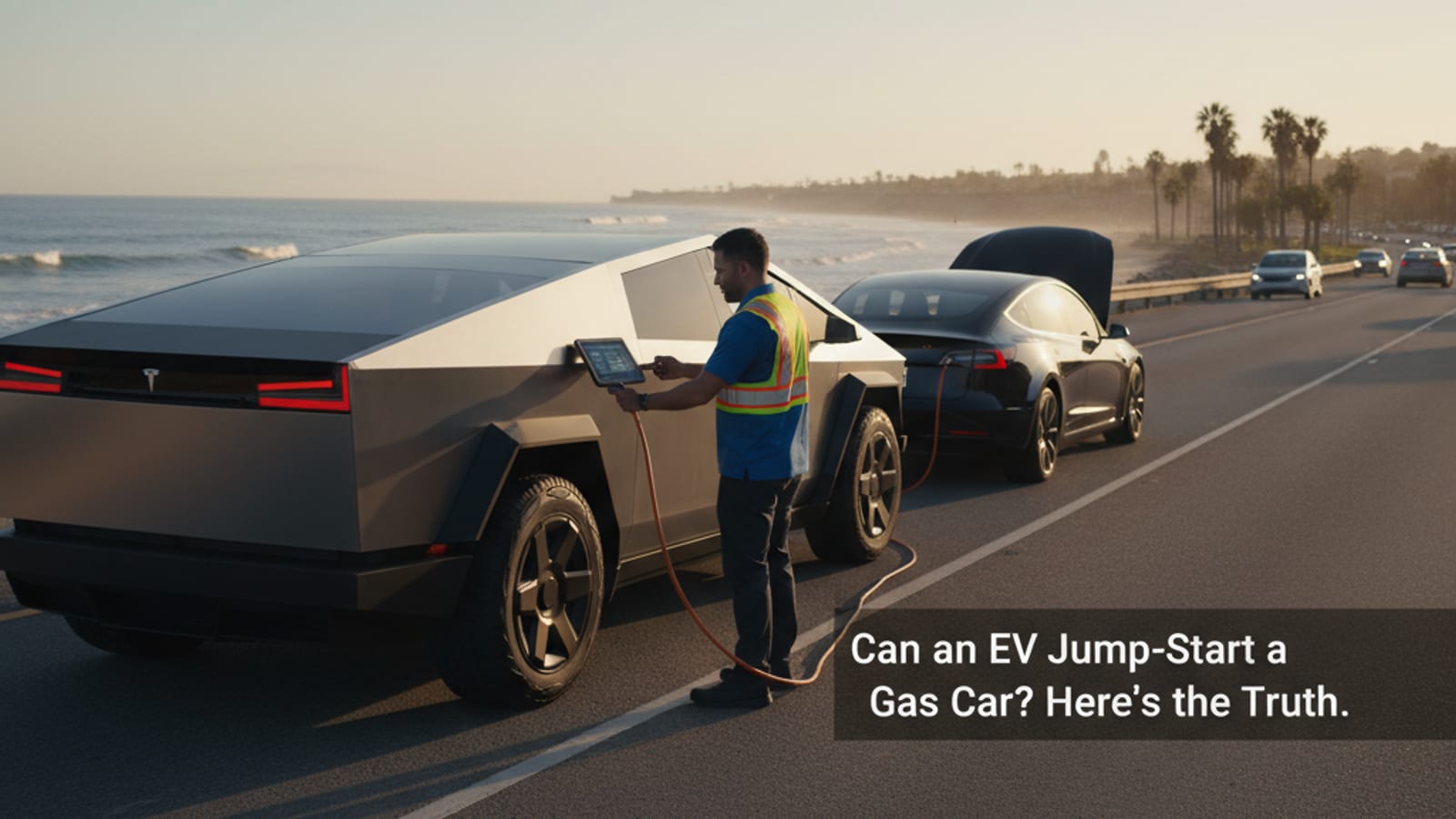
The big pack never feeds the jumper cables
People see the traction pack and treat it like a generator. The jumper cables never touch that pack. They clamp to the 12-volt system, like a compact gas car. That small battery runs locks, screens, lights, and the computers that wake the car. It doesn’t crank an engine.
In a gas car, the 12V fires the starter, then the alternator takes over. In an EV, the 12V only boots the car. A DC-DC converter then tops it up from the traction pack. That happens once the car is already awake. If the 12V is weak, a full pack still won’t move you. That’s a common stall after a hot sit in Paradise. Winchester side streets see the same 12V fade after a Strip day.
What a jump actually asks of that 12V
A gas starter wants a short, hard surge from the donor 12V. The donor has to supply that without collapsing. An EV 12V is sized for computers and accessories, not a starter. Lead-acid 12V packs in many EVs look familiar. Newer Teslas and some other EVs use a lithium 12V instead. Lithium cells often trip protection under a starter-level draw. Either chemistry can sag, overheat, or shut down.
Wrong polarity or a spark at the post can hit the EV’s electronics. The DC-DC converter sits in that path. A spike there is a shop problem, not a shoulder fix. NHTSA publishes jump-start safety steps for any vehicle. Follow those if you must use cables at all. Tesla’s published guidance generally tells owners not to use the car as a donor. Confirm the wording on Tesla’s support pages for your model.
Valley heat already leans on that small battery
July in the Las Vegas Valley averages 104.5°F. About 78 days hit 100°F or more. About 9.4 days reach 110°F. The all-time record high is 120°F, set on July 7, 2024. The airport heat island runs 5 to 15 degrees hotter than outlying areas. Downtown and the east valley can run 11°F hotter than the rim. That heat sits in the 12V in Strip traffic or on I-215. A tired 12V has less headroom for a friend’s starter.
Summerlin sits around 3,500 feet and climbs toward Red Rock. Henderson sits lower, near 1,867 feet. The same heat that cuts range also cooks the small battery. Don’t add a starter surge on top of that.
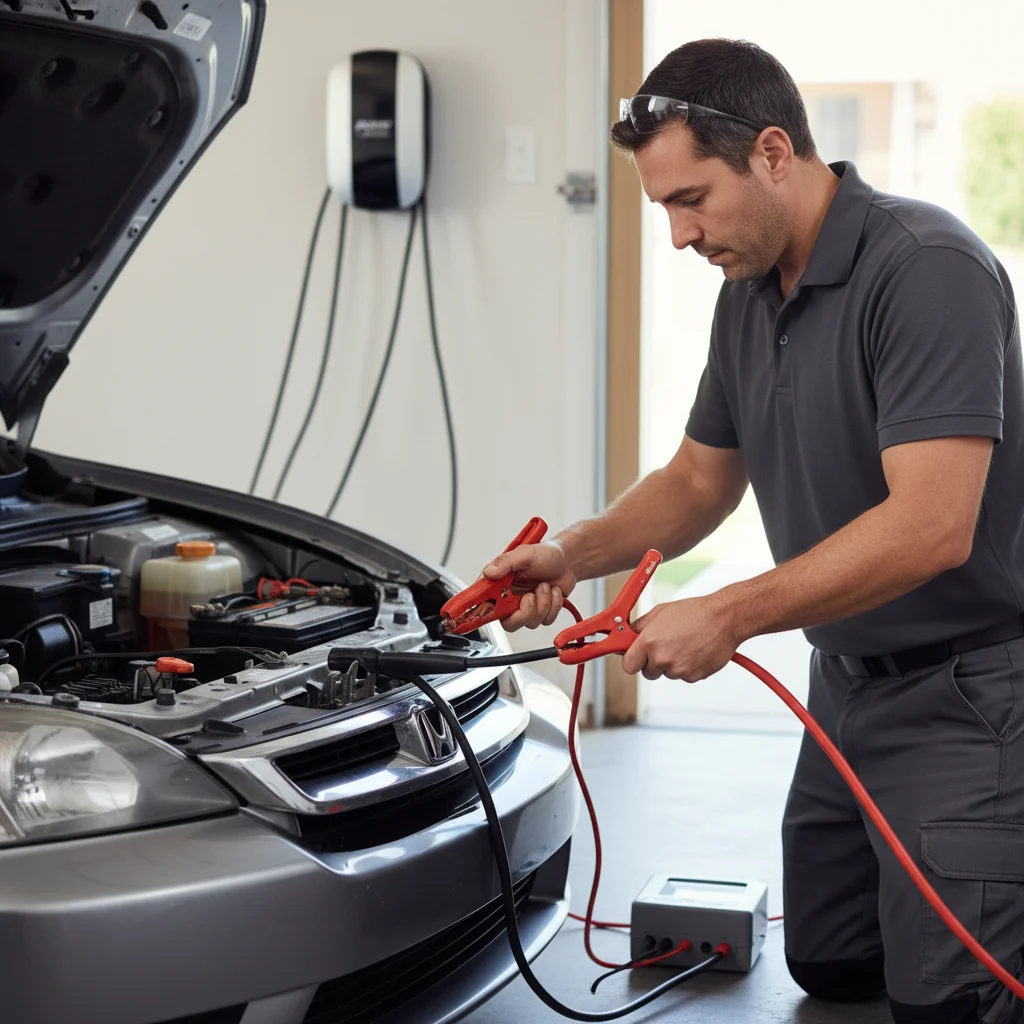
If you’re stopped, Nevada still has a gas-car jump
A disabled car that can’t avoid stopping is exempt under NRS 484B.440. Law enforcement may still remove it. NRS 484B.443 treats a car as abandoned after 24 hours on freeways and primary highways. On other roads it’s 72 hours, and the owner pays removal. Stay with the cars and stay off the travel lanes. Use Nevada 511 at nvroads.com for closures and cameras.
The NDOT Freeway Service Patrol covers the valley’s busiest freeways. Hours run 5:00am to 8:30pm, seven days a week. Quality Towing operates it, GEICO sponsors it, and it’s free to motorists. The patrol lists tire changes, jump starts, fuel, minor fire suppression, and traffic control. NDOT’s published materials don’t advertise EV charging or EV-specific service. For a gas car with a dead 12V, use that patrol jump. Don’t make your EV the donor while you wait.
Nevada State Police Highway Patrol takes rotation tows on *647. Southern Command answers at (702) 486-4100.
What to do instead of clipping onto an EV
Call a roadside service that jumps gas cars. Use the freeway patrol if you’re on a covered freeway during its hours. In a private lot, a general roadside operator can still jump a 12V. Harry Reid parking in Paradise offers free battery jump starts at (702) 261-5122. That’s airport staff on a 12V, not your EV. Keep your EV in park with the 12V unloaded.
If your own EV is the one that won’t wake, that’s a different job. A dead 12V in a Tesla often looks like a dead pack. Screens stay black, and doors may not release even with a fine traction pack. Operators we match you with can jump or replace that 12V on site. They also bring a 240-volt Level 2 source with a native NACS plug. CCS or J1772 adapters cover non-Tesla EVs. A typical charge adds 10 to 20 miles in 15 to 30 minutes. That’s charging time, not an arrival time. They quote you before they start and bill you directly.
Charge Pro LV is a referral line. We don’t own trucks, hold a license, or set prices. We connect stranded drivers with independent local operators across the Las Vegas Valley.
When the other car is an EV, don’t jump the pack
Jumping one EV from another still hits the 12V, not the traction batteries. You can’t charge an empty pack through jumper cables. If both cars are low, you need a mobile charge or a tow. See how that split works when roadside assistance tries to jump an EV. A Tesla still shouldn’t jump the car next to you. The risks of jumping a gas car with a Tesla start with that small 12V.
For a Tesla that won’t wake after a hot park, check the 12V first. How to jump start a Tesla 12V in the valley walks through that. Operators we connect you with handle Tesla 12V battery jumps. There’s also a fuller EV roadside assistance in Las Vegas guide. If the pack is empty instead, mobile EV charging is the path, not cables.
On a valley shoulder, leave your EV out of a gas-car jump. Call (702) 935-4699 if your EV is the one that won’t start. An operator will quote the work before they begin.