A Tesla left Whitney Ranch at dawn with a full pack. By the time the driver aimed home from a Lake Las Vegas lunch, the dash showed twelve miles. The community sits south of Henderson, and Inspirada sits just east of it. The climb back from the lake spends what the dash still treats as flat. The car rolled to a stop on the access road with the gate closed behind it. Range at the start never covered the hill and the lunch loop.
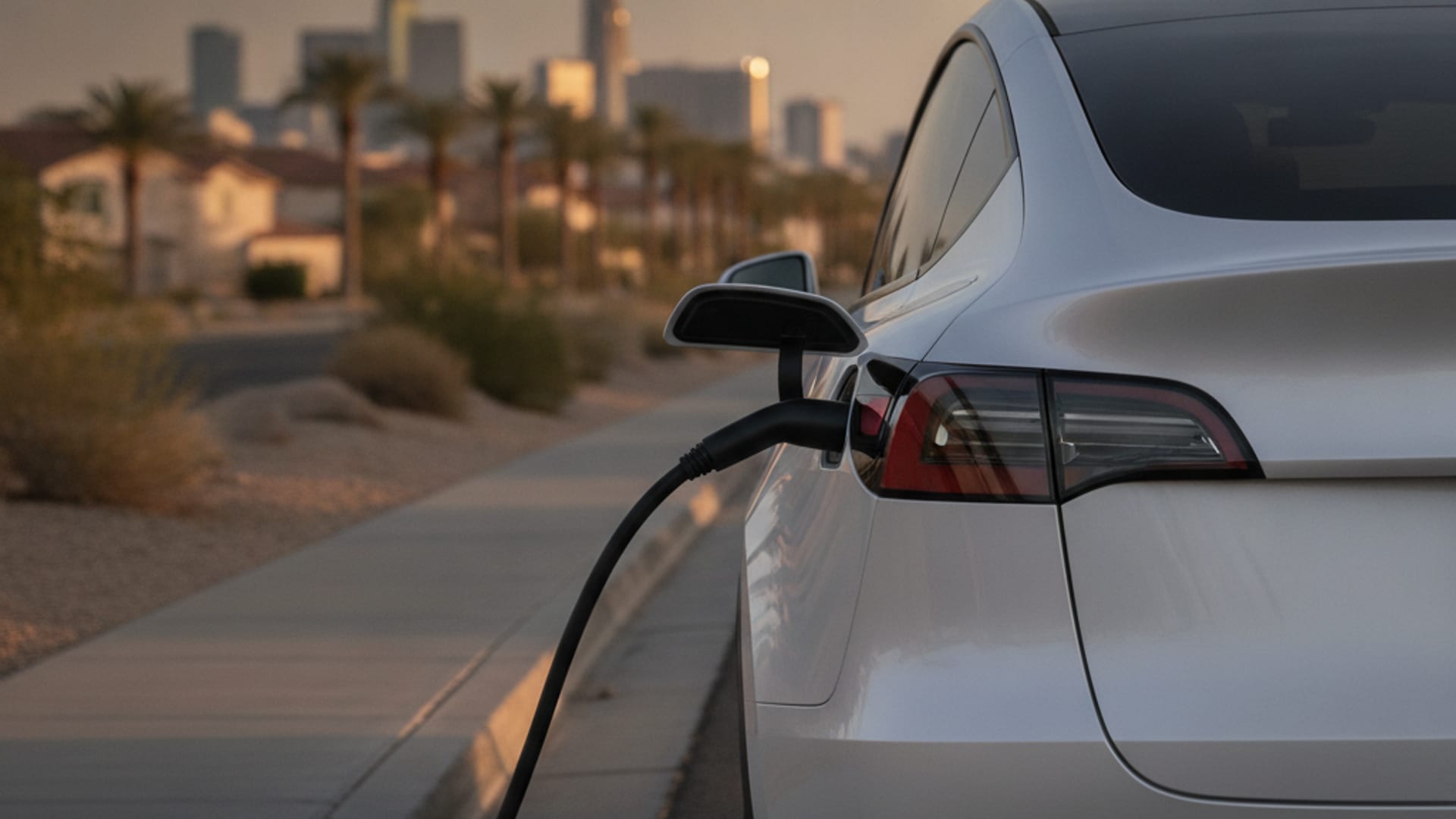
Whitney Ranch and Inspirada are master-planned streets south of Henderson
Whitney Ranch and Inspirada are newer master-planned streets south of Henderson. Homes here often charge in the garage overnight. The calls still come from the climb toward the hills. A long errand with a thin buffer runs the same way. The dash looks fine on the floor, then the grade spends it. Cars also sit in lots through a hot afternoon. A Tesla or another EV may not wake after that dwell.
The NWS Las Vegas reading at KLAS lists an average July high of 104.5F. About 78 days a year reach 100F or more. About 9.4 days reach 110F or more. The record is 120F, set on 2024-07-07. South Henderson sits about 1,867 feet, on the floor toward the hills. The climb into these hills spends pack faster than a flat errand.
Recurrent Auto measured about 5 percent range loss at 90F and 17 to 18 percent at 100F on a hot cabin. Cooling a soaked cabin drew 3 to 5 kW in that study. AAA, in May 2026, measured 8.5 percent loss at 95F. Those are fleet numbers, not a Tesla figure. The pack that looked fine at the start of the day spent the climb in the afternoon heat.
For the community overview, see EV roadside assistance in Whitney Ranch / Inspirada. For the empty-pack call at the bumper, see mobile EV charging.
Why home-charged cars stall here
Home charging creates a habit. Drivers plug in overnight, wake to a full pack, and assume the next morning is the same. A weekend with two long errands can break that assumption. The dash looks fine at the start of the day. A lunch loop into Lake Las Vegas adds 35 miles and a grade. The pack that was full at 7am is short by 2pm.
Event lots are the second pattern. A long afternoon at a Henderson event leaves a car sitting in the heat. A 12V that was marginal at dawn drops below threshold before the next start. The cabin looks dead. The traction pack still holds range. That is the dead-12V job, not the empty-pack job. The operator handles both.
For the broader community pattern, see EV roadside assistance in Henderson. For the dead-12V job at the same location, see Tesla 12V battery jump.
What the operator brings to the driveway
The operator brings a 240V Level 2 source to the driveway or shoulder. Native NACS covers Tesla on the spot. CCS or J1772 adapters cover other major EV brands on the same call. A typical session adds 10 to 20 miles of range. That happens in 15 to 30 minutes of charging. That window is charging time, never an arrival time.
Ten to twenty miles is enough to clear the climb and roll into the garage. It is enough to reach a working public charger on the valley floor. It is enough to cover a lunch loop without stopping on the rim. The session happens at the curb or in the driveway. The car rolls out under its own power.
For the broader call type on this line, see EV roadside assistance. For the empty-pack job across brands, see out-of-charge recovery.
Stay at the curb, not on the access road
Do not roll out on a thin pack hoping to clear the climb. The grade has already done the work on your range. A 3 to 5 kW cabin cooldown is range the dash doesn’t subtract. A stopped car on a Henderson shoulder is a different job than a session in the driveway.
Pull into a legal stall. Set hazards. Call from a safe spot. Confirm whether the car will wake. Tell the operator what the dash shows and what the pack shows. That split decides jump versus charge. The operator brings both tools and quotes you on site.
NDOT’s Freeway Service Patrol covers I-15, I-215, US-95, and US-93 within the valley. Hours are 5:00am to 8:30pm, seven days a week. Quality Towing runs it under a GEICO sponsorship. It is free to motorists on those routes. None of NDOT’s published patrol materials mention electric vehicles or EV charging. A private driveway is also not a freeway shoulder. That patrol won’t appear in a master-planned community.
For conditions on the valley freeways, Nevada 511 and nvroads.com show closures and cameras. They will not authorize a charge.
Heat sits on the pack even on a mild day
Heat is a longer story than the afternoon. NV Energy serves the Las Vegas Valley, including Henderson and the south side. The utility publishes home EV rates and a managed charging program for owners who can plug in overnight. Their Residential EV Recharge Rider time-of-use window runs 10:01pm to 8:00am. That helps at home. It doesn’t put a working outlet in a long event lot.
A car that sits in a south-facing driveway through afternoon heat is an oven. Modules and telematics keep sipping the 12V while the car sits. A weak 12V can drop below threshold before the next start. The cabin looks dead. The traction pack still holds range. That is the dead-12V job, not the empty-pack job. The operator handles both.
For the broader community pattern, see EV roadside assistance in Whitney Ranch / Inspirada. For the heat-and-pack work, see EV battery care in Las Vegas Valley heat.
What to do before the next south-Henderson day
Top up before you leave the community. A full pack at the start is margin for the climb home. Plan the day’s stops around chargers on the valley floor. A car that leaves the driveway at 50 percent is a different car than one that leaves at 12.
If you live in Whitney Ranch or Inspirada, ask about a 240V outlet in the garage. NV Energy’s Residential EV Charging Station Incentive program applies to homes. A home plug is the right answer for residents. The garage is the right answer for overnight charging.
If the day ran long and the dash is short, do not gamble on the climb. Pull into the driveway. Call. The operator quotes you on site. The session adds the miles you need to clear the rim.
Frequently asked questions
What does a mobile charge cost in Whitney Ranch or Inspirada?
Charge Pro LV doesn’t set prices on any job. The independent operator quotes you before starting and bills you directly. Confirm the rate with the operator on the call. There is no published rate card on this site.
How many miles of range does a mobile charger add?
A typical 240V Level 2 session adds 10 to 20 miles of range in 15 to 30 minutes of charging. That window is charging time, not an arrival time. It is enough to clear the climb or reach the next public charger on the valley floor.
Will the operator meet me in a master-planned driveway?
Yes, operators work gated driveways in Whitney Ranch and Inspirada. The truck brings a native NACS plug plus CCS or J1772 adapters. Tesla and most non-Tesla EVs are covered on the same call.
Why does a home-charged car stall here?
Home charging creates a habit. Drivers wake to a full pack and assume the day is covered. A long errand with a thin buffer breaks that assumption. The grade from Lake Las Vegas spends range the dash still treats as flat. Heat accelerates the drain on a hot afternoon.
Call (702) 935-4699 when you want us to match you with a local operator who can charge the car in the Whitney Ranch or Inspirada driveway.