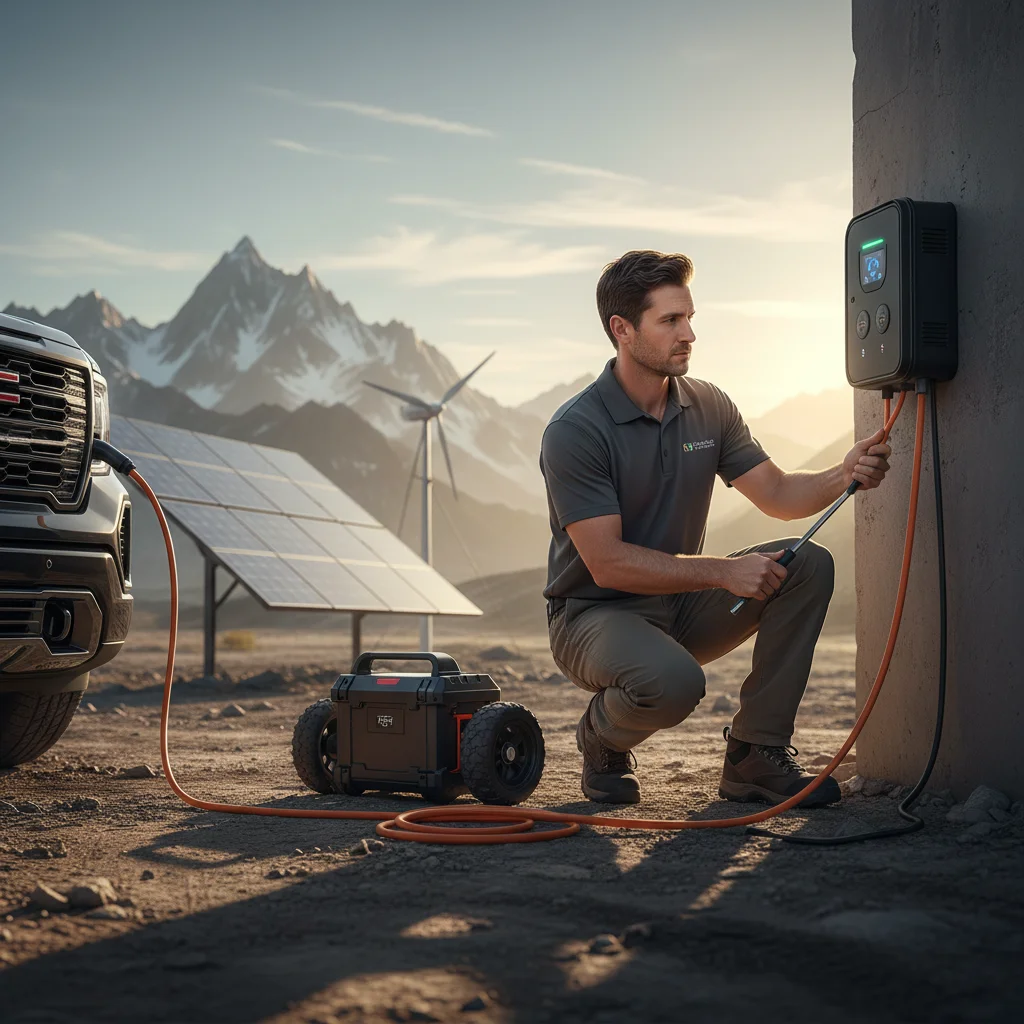
A delivery van EV dead on a Strip dock needs a mobile charge there. Towing pulls the cargo, the driver, and the rest of the route with it.
Why a Strip dock kills a delivery van
The Strip sits in unincorporated Clark County, in Paradise and Winchester. It’s not inside the City of Las Vegas. Las Vegas Boulevard from Sahara to the airport connector is a wall of docks. Valet decks, self-park garages, and loading bays line that stretch. Delivery vans wait there while kitchens and shops take the cargo. That’s the heat sit that kills the van.
A van can sit on a dock through a full Paradise afternoon. NWS Las Vegas lists an average July high of 104.5F. About 78 days a year reach 100F or more. The all-time record hit 120F on July 7, 2024. Harry Reid International Airport sits in Paradise too. The airport often runs 5 to 15F warmer than outlying areas. Downtown and the east valley can run up to 11F hotter than the rim.
Recurrent Auto found about 5% range loss at 90F. That loss rose to 17 to 18% at 100F. Cabin cooling draws 3 to 5 kW in that heat. AAA, in May 2026, measured 8.5% range loss at 95F. None of those range figures come from Tesla itself.
Docks behind the Forum Shops at Caesars see the same long sit. Event nights near Sphere stack more vans in the same bays. Winchester sits east of the Strip around Sunrise Hospital. A van that idles there isn’t on a freeway shoulder. It’s boxed in by other trucks, valet traffic, and a dock clock.
Two ways the van can look dead
Most stalled vans fail in one of two ways. The first failure is usually the 12-volt battery. It wakes the computers, locks, liftgate, and telematics. After a long sit, that small battery can drop. The dash stays dark and the fob does nothing. A jump or a 12V swap on site can wake the van. That matches a Tesla left three days in a resort garage.
The second failure is an empty high-voltage pack. The van powers on but range shows near zero. Stop-and-go work, cargo weight, and all-day HVAC spend the pack. A 240-volt Level 2 source at the stall adds range on site. Operators typically add 10 to 20 miles in 15 to 30 minutes of charging. That’s charging time at the van, never an arrival time. It’s enough to reach a depot plug the fleet already uses.
Operators the network sends bring a native NACS plug. They carry CCS or J1772 adapters for non-Tesla vans. They handle Tesla and every major EV brand. If the van won’t wake, start with the 12V. If it wakes and won’t move, treat the pack. What happens when an EV 12V dies in the valley walks through that split.
Why a flatbed is a poor fit here
A loaded delivery van isn’t a passenger car on a hook. The cargo stays aboard and the dock stays blocked. A tow still leaves the van needing a charge after the drop. The Nevada Transportation Authority sets non-consent tow rules. Those rates are operator-filed tariffs under NAC 706.408. This site doesn’t publish those tow tariff figures.
A resort dock is private property, not a highway shoulder. Resort security and property tows follow posted signs. Confirm those rules with the property before you wait. NRS 484B.440 covers a vehicle that can’t avoid stopping. A dock still follows the property’s own tow signs. The NDOT Freeway Service Patrol covers valley freeways. Published patrol materials don’t advertise EV charging at all. A Strip loading dock also isn’t a freeway shoulder. Mobile charging or a tow walks through that choice.
Charge the van where it stalled
Charge Pro LV’s a referral line for the Las Vegas Valley. It matches a driver or dispatcher with an independent local operator. It doesn’t own trucks, and it employs no technicians. It doesn’t set prices or promise an arrival time. The operator quotes the job before any work starts. That operator bills the driver or the fleet directly.
The operator comes to the dock where the van sat. They jump or replace a dead 12V, or they add roadside range. Packages stay in the van while the charge runs.
For the service itself, see mobile EV charging. For valet decks and self-park stalls, see EV roadside assistance on the Strip. Local notes live on the Strip charging page.
What to do at the dock
Get the van as legal and as clear as the dock allows. Leave hazards on if you’re on a public curb. Call the fleet line first if the van is under a contract. Then request a mobile charge with the make and the stall. Say whether the dash is dark or the pack reads empty.
Tell the operator if the van is Tesla, Rivian, Ford, or another brand. Ask for a quote before they start any work. How a mobile EV charging quote works explains that step.
Nevada’s an all-party consent state for phone calls. You should expect a recording notice on the line. The operator may find a fault that isn’t a 12V or pack issue. They should say so instead of selling a charge that won’t help.
Heat on the Strip doesn’t wait for a depot slot. Charge it at the dock, then finish the route.
Call Charge Pro LV at (702) 935-4699 when you need a local operator.
Frequently asked questions
Can a loaded delivery van stay packed during a charge?
A 12V jump and a range top-off both happen at the stall. The driver doesn’t need to unload the cargo first.
How much range does a mobile charge usually add?
Most roadside sessions add 10 to 20 miles. That’s typically 15 to 30 minutes of charging at the van. It’s meant to reach a depot or a charger the fleet already uses.
What if the van shows a fault instead of a dead battery?
Ask the operator to stop if the fault isn’t a 12V or range issue. An honest no-fix is better than a wasted charge.