Your BMW i5 or i7 won’t start after a night in the heat. That’s almost always a dead 12V, not an empty pack. The drive battery can still show plenty of range. Screens stay dark, handles don’t move, and you can’t shift. You’re locked out by the battery that wakes the computers.
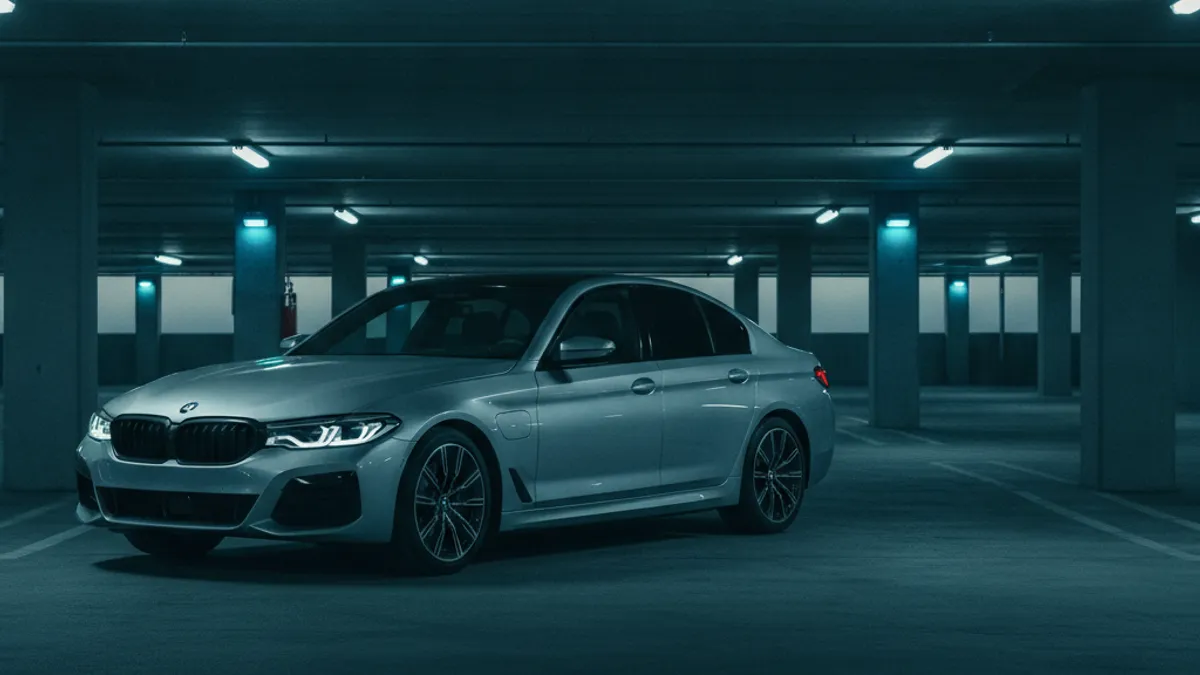
Dark screens with range still on the pack
Treat a silent i5 or i7 as a 12V failure first. That small AGM battery runs the low-voltage network. It closes the contactors to the high-voltage pack. It also boots iDrive and releases the shifter. When the 12V falls too far, none of that works. A full drive pack doesn’t override a dead 12V.
The i5 G60 and i7 G70 share the same 12V layout. They fail the same way after a long hot sit. The i7 sips more power while it sleeps. Power-latch doors, the theater screen, and rear executive seats all draw. So do the cellular modem and the alarm. Park either car with a tired 12V, and morning is the test.
A jump can bring the computers back online. A worn 12V often dies again within a few days. A second dark morning means replacement, not another clip. See what happens when an EV 12V dies in the valley for the same cascade on other EVs.
Why a hot night here finishes a weak 12V
The National Weather Service at KLAS puts the average July high at 104.5F. About 78 days a year reach 100F or more. About 9.4 days reach 110F or more. The all-time record is 120F, set on July 7, 2024. A 12V that felt fine in March doesn’t like that stretch.
Heat isn’t even across the Las Vegas Valley. The airport area runs 5 to 15F warmer than outlying spots. The east valley and downtown can run up to 11F hotter than the rim. A car in Paradise or Winchester baked harder overnight than one in Summerlin. Summerlin sits about 3,500 feet, and it rises toward 4,400 feet near Red Rock. The valley floor sits roughly 2,000 to 2,920 feet. Those gaps matter at 2 a.m.
Range studies describe the drive pack, not this 12V. Recurrent Auto found about 5% range loss at 90F and 17 to 18% at 100F. AAA, in May 2026, measured 8.5% range loss at 95F. That’s pack load after you move. It isn’t the lockout before the car wakes. No Tesla-published range-loss figure turned up in the sources used here.
The replace-battery message isn’t the drive pack
If iDrive has been asking you to replace the battery, it means the 12V. It doesn’t mean the big drive battery. The usual wording talks about increased discharge when stationary. It also says continued driving possible, and replace battery. That last phrase is the one that matters.
Continued driving possible is true while you’re moving. The high-voltage system tops up the 12V as you go. The trap shows up on the next overnight park. A weak 12V can dump overnight and leave the car dark. No iDrive, no powered handles, and no shift. You can finish today’s trip, then deal with the 12V. Don’t treat the warning like background chatter.
Once the car has already gone dark, the message isn’t a heads-up. It’s the reason you’re in the lot with a dead fob. BMW’s other EVs throw the same kind of warning. The BMW i4 replace-battery message is the sibling failure.
A shop should confirm the current 12V procedure for your VIN. This site couldn’t verify a published parts price or labor time. Ask a BMW dealer or an independent shop what the new battery needs.
Where the car sits when it won’t wake
These lockouts happen where the i5 and i7 sit hot for hours.
Harry Reid International Airport sits in Paradise, unincorporated Clark County. That’s not the City of Las Vegas. Long Term, Economy, and Remote Lot are multi-day sits. The i7 gets left there through a whole trip. Power-latch doors, the modem, and the alarm keep drawing. A tired 12V can finish dying while you’re gone. Airport parking advertises free battery jump starts for stalled cars. It doesn’t publish an EV-specific jump procedure. Ask whether they’ll use the underhood jump posts.
The Strip and most resort valet sit in Paradise and Winchester. Those unincorporated areas aren’t the City of Las Vegas either. Sphere, T-Mobile Arena, and Allegiant Stadium fill event decks for hours. So does the Las Vegas Convention Center on show days. A dead 12V in a structure kills the powered tailgate. Power-latch doors quit, and you’re working by phone light.
Downtown and the east valley run hotter than the Summerlin rim. Sunrise Manor and Winchester take more overnight heat. A sit near North Las Vegas is a different night than a west-rim garage. The car cooked in place. That’s the whole story.
If you’re on a freeway shoulder, Nevada gives you some room. NRS 484B.440 exempts a disabled vehicle from the no-stopping-on-highway rule. The statute sets no time limit on how long it may remain. NRS 484B.443 lets law enforcement remove a disabled or abandoned vehicle. On freeways and primary highways, abandoned is 24 hours. On other roads the window is 72 hours. The owner pays that removal.
Non-consent tow rates are operator-filed tariffs at the Nevada Transportation Authority under NAC 706.408. There’s no single statewide maximum on this site. Confirm any tow quote before a hook goes on. I-15, I-215, CC-215, US-93, US-95, and I-11 are all free.
Private-property tows follow extra rules under NRS 706. Tow operators need a Nevada Transportation Authority certificate. Private-property tows need posted signs and a 48-hour warning sticker. Confirm the lot’s process before you walk away from a dark BMW.
You won’t find the 12V under the hood
BMW put the 12V AGM in the rear on both cars. It sits in the luggage compartment behind a trim panel.
The trunk release is electronic, so a dead 12V blocks it. Use the physical key blade hidden in the fob. That blade works in the driver’s door with no 12V at all. From the cabin you can fold the rear seatback. Then you can reach the battery from inside.
You rarely need that rear battery to wake the car. BMW put a dedicated jump terminal under the hood for this.
Wake it from the red-capped post
The interior hood release is mechanical, so it works with zero 12V. Pull it, pop the hood, and look for a red cover or cap. It’s near the strut tower or the fuse box. That’s the positive jump terminal, marked with a red cap. For ground, use unpainted metal on the chassis. A bracket or a bolt on the chassis is enough.
Connect positive to positive first, then the negative to chassis ground. Let it sit two to three minutes before you try to wake the car. Give iDrive another 30 to 45 seconds after the 12V comes back. The safety walkthrough is in how to jump start an EV in desert heat.
If you don’t carry a pack, don’t start yanking trim in a dark structure. A mobile operator can jump from those same underhood posts. Charge Pro LV is a referral line, not a shop with trucks. It matches stranded drivers with independent local operators. It doesn’t own trucks, employ techs, or set a price. The operator quotes you before work starts and bills you directly.
Those operators handle Tesla and every major EV brand. They also carry a CCS or J1772 adapter for non-Tesla EVs. For this no-start, the job is usually the 12V. They can jump it or replace it on site. If the pack were actually empty, they’d bring a 240V Level 2 source and typically add 10 to 20 miles of range in 15 to 30 minutes of charging. That window is charging time, never an arrival time. A dark i5 with range still showing isn’t that job. Use non-Tesla EV rescue when the car isn’t a Tesla.
Signs the 12V is already failing
The i7 loads the 12V hard at rest. The i5 is quieter, but it isn’t innocent. Watch for these before the car goes fully dark.
The fob unlocks from an inch away, then nothing powers on. That’s low 12V, not a dead pack. Power-latch doors stop finishing their cycle under load. Handles don’t present, and warning lights flicker before the screens quit. The car comes up, then resets right away. All of those point at a 12V that can’t hold load.
If the car has died twice in six months, stop collecting jumps. Signs your EV 12V needs replacement matter more than another clip.
After it wakes, get the battery tested
A successful jump means the computers booted, not that the AGM recovered. Drive it if you can do so safely. The high-voltage system will try to recharge the 12V while you move. Then get that battery tested at a shop. A unit that already stranded you in July heat will likely do it again. If it dies again on the same outing, don’t keep driving it.
NDOT’s Freeway Service Patrol covers the busiest Las Vegas Valley freeways. Quality Towing operates it, and GEICO sponsors it. Hours are 5:00 a.m. to 8:30 p.m., seven days a week. The patrol is free to motorists on those hours. Published help includes tire changes, jump starts, fuel, minor fire suppression, and traffic control. It clears about 31,500 Las Vegas incidents a year.
None of NDOT’s published FSP materials mention electric vehicles, EV charging, or EV-specific service. That’s an advertising silence, not a published ban on helping an EV. A jump start is on the list they do advertise. EV charging isn’t on that published list. After 8:30 p.m. the patrol isn’t on the clock. This site doesn’t publish an arrival promise for anyone.
First moves when nothing responds
Stand close to the handle and try the fob again. The passive-entry antenna often fades before the 12V is fully dead. A few inches can be the difference. If the fob still does nothing, pull the key blade and open the driver’s door.
Don’t keep mashing the start button. That only drags a weak 12V lower. Don’t assume you need a flatbed before anyone checks the 12V. A tow is the last step, not the first. Don’t let a passerby clamp onto random underhood hardware. Use the red-capped positive post and a chassis ground.
If you’re on I-15, I-215, or US-95, put on the hazards. Stay out of traffic. The NDOT patrol can jump from its published list during its hours.
If you’re in a resort garage in Paradise, you’re on private property. Watch for posted tow signs. Don’t assume the valet will wait. Ask the stand what they do with a dead EV before you go upstairs.
If you’re flying out of Harry Reid, check the replace-battery warning first. A two-week sit with a tired 12V is a bad pair. Replace the 12V before you fly if the car already threw that warning.
Frequently asked questions
Why won’t my BMW i5 start if the pack still has range?
The pack you’re watching is the high-voltage drive battery. It can be nearly full and the car still won’t start. The 12V auxiliary battery is what boots the computers. It also closes the contactors to the drive pack. If that 12V is dead or too low, nothing wakes. Range left in the pack doesn’t matter until those contactors close. A jump on the underhood posts usually brings iDrive back.
Can I keep driving with the replace-battery message on?
For the rest of this drive, you can keep going. The car can keep the 12V topped up while you’re moving. The risk is the next overnight park in valley heat. A degraded 12V can drain by morning and lock you out. Finish the trip, then replace the 12V before another hot sit. This site couldn’t confirm a published BMW parts price. Ask a shop for the current figure and the VIN registration step.
Where is the 12V in a BMW i7, and how do I jump it?
It sits in the rear luggage compartment, not under the hood. If the trunk won’t open, use the key blade in the driver’s door. Then fold the rear seat and reach the battery from the cabin. For a revive, skip the trunk path. Use the mechanical hood release, then find the red-capped positive post. Ground the negative clamp to unpainted chassis metal. Wait two to three minutes, then wake the car. Give iDrive 30 to 45 seconds.
If the i5 or i7 is dark and the fob does nothing, call Charge Pro LV. The number is (702) 935-4699. An independent operator can quote a 12V jump or replacement on site before any work starts.