Your Chevy Equinox EV won’t start after a hot park because the 12V died. The Ultium pack can still hold plenty of energy. The small battery under the hood has to wake every computer first. Until it does, the fob, the dash, and drive mode stay dead. That’s a 12V failure, not an empty pack.
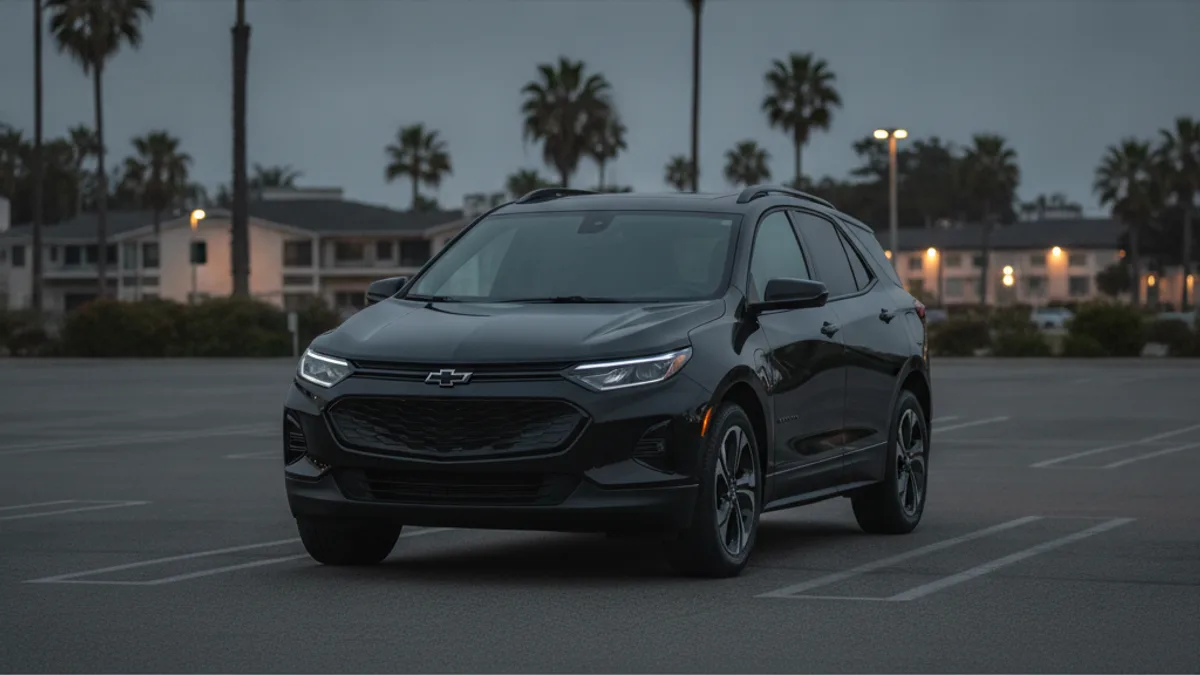
That’s the stall you see across the Las Vegas Valley after a long sit. A Paradise resort lot can bake that small battery all afternoon. A Winchester driveway or an I-15 shoulder feels the same from the seat. You assume the pack is empty, and it usually isn’t.
Two power systems, and only one wakes the car
The Equinox EV is two electrical systems in one body. A high-voltage Ultium pack turns the wheels. A separate 12V AGM battery boots the computers that let that pack work. Maintenance-free doesn’t mean heat-proof, only that you don’t add water.
A dead 12V means a dead car, and last trip’s range number doesn’t matter here. Without the 12V, the Equinox EV won’t power on. It won’t go into drive, and the fob won’t talk to the doors.
Some cars give a dash warning first, which is a gift if you still have motion. You might still roll to a Chevrolet dealer. Others go silent after a hot park. The car’s fine on one errand, then it won’t even shift to neutral. Both patterns point at the small battery, not the Ultium pack.
This isn’t the same fault as a car that wakes and then refuses a plug. If the Equinox EV powers on but charging fails, that’s a different checklist. Use the Chevy Equinox EV won’t charge guide for that path. For the stall across brands, read what happens when an EV 12V dies in the valley.
Why a hot park in this valley knocks the 12V down
The Equinox EV reached U.S. dealers in May 2024. The earliest ones have now sat through more than one Las Vegas summer. That’s enough time for a first 12V to get tired. Desert heat is what speeds that up.
NWS Las Vegas records an average July high of 104.5F. About 78 days a year hit 100F or more. About 9.4 days reach 110F or more. The all-time record is 120F, set on July 7, 2024. An AGM 12V sitting at a low charge ages faster in this heat.
The valley isn’t one temperature either. The airport runs 5 to 15F warmer than outlying areas. The east valley and downtown can run up to 11F hotter than the rim. A car parked in Sunrise Manor takes a harder bake than one in Summerlin. Fremont Street and downtown heat do the same. Summerlin sits around 3,500 feet and rises toward 4,400 near Red Rock. Henderson sits lower, around 1,867 feet. Valley floor elevations run about 2,000 to 2,920 feet. You feel that gap on a July afternoon.
Short trips don’t help the 12V recover. A hop down Las Vegas Boulevard rarely gives the 12V a full cycle. A loop through Spring Valley can do the same. The 12V slowly sags, then you park in open sun. Heat soaks the bay under the hood. You come back from dinner, and nothing answers.
NV Energy serves most of the Las Vegas Valley. Its Residential Electric Vehicle Recharge Rider sets an EV charging window from 10:01pm to 8:00am. That overnight window is for the pack, and it doesn’t replace a failed 12V. If the car can’t wake, it often can’t handshake with a home plug either. Boulder City has its own municipal utility. Blue Diamond, Indian Springs, and Sandy Valley sit in Valley Electric Association territory. A roadside 12V job isn’t a utility call anyway.
There’s a software layer on top of the heat. Some Equinox EV no-starts trace to a module that quietly drains the 12V. Dealers have replaced the battery and then reprogrammed the car to make the fix stick. An interrupted software update can leave the car unresponsive in a similar way. A jump might wake it, but the drain still needs the dealer.
The Equinox EV shares GM’s Ultium platform with the Blazer EV. The Blazer has the same 12V no-start pattern. If you’re comparing notes across Chevrolet’s EVs, see why the Chevy Blazer EV won’t start.
How a dead 12V looks different from an empty pack
Sort this before you call a tow. An Equinox EV that’s only low on range usually still wakes up. You’ll get a low-battery warning, and you can often shift into drive. You just won’t go far.
A dead 12V is a brick: no chime, no dash, and no courtesy lights. The fob is just a piece of plastic. That contrast is the diagnosis. If the car is awake and you’re only short on miles, that’s the other job. A mobile Level 2 charge at the car covers that case. The operators Charge Pro LV connects you with typically add 10 to 20 miles of range. That takes 15 to 30 minutes of charging. That’s charging time, never an arrival time.
Don’t mix the two calls. Jumping a 12V doesn’t fill an empty pack. Filling the pack doesn’t wake a dead 12V. After a jump, read the range again before you roll. Recurrent Auto found about 5% range loss at 90F and 17 to 18% at 100F. AAA, in May 2026, measured 8.5% range loss at 95F. Those figures describe the pack while you drive, not a Tesla-published number. No Tesla-published range-loss figure turned up for this page. After a hot park, a freshly woken Equinox EV can still run short.
Getting into a locked Equinox EV
This is where the Equinox EV differs from a lot of other EVs. When the 12V is dead, the fob can’t unlock the doors. There’s a mechanical key blade hidden in the fob. On this car, that blade isn’t for the driver’s door. It’s for the liftgate.
Press the release on the fob and pull the blade free. Walk to the rear of the car. Use the blade in the liftgate’s mechanical lock. Once the liftgate is open, climb in from the back. Pull the interior hood release so you can reach the 12V under the front hood.
People waste time at the front door because most EVs put the override there. The Equinox EV doesn’t. Know that before you’re in a dark garage or a Paradise resort lot. An uncovered driveway in Whitney is the same problem. The liftgate is the way in. If the blade won’t turn, stop and don’t force the lock. That’s when you call for a person who does this work.
Where the 12V sits, and how to jump it
The 12V AGM battery sits under the front hood. After you pop the hood from inside, you’ll see designated 12V terminals. A metal cage or bracket sits over the battery. Owners commonly describe four 10mm nuts holding that cage. It partly blocks the negative terminal. You don’t need to pull the cage for a normal jump.
Use the positive terminal. Ground the negative jumper clamp on bare, unpainted metal. Never clamp negative to the battery’s own negative post. That’s the safe pattern on this car.
A small portable jump pack can struggle if you include the car’s own positive lead at the start. Some drivers keep that lead out of the circuit first. Then they finish the connection once the pack has a chance. Once the car is running, the DC-DC converter takes over. It recharges the 12V from the high-voltage pack while you drive.
If the car feels glitchy rather than fully dead, try a reboot before a jump. Disconnect the 12V negative terminal. Wait about 10 minutes so every module can power down, then reconnect. That has cleared some no-power complaints without a jump or a new battery. For the full jump sequence on any EV, use how to jump start an EV in desert heat. If the 12V itself is worn out, don’t keep jumping it. Signs your EV 12V needs a replacement walks through that next step.
Work in a safe spot. A vehicle disabled so it can’t avoid stopping is exempt from Nevada’s no-stopping-on-highway rule. That’s NRS 484B.440, and it sets no time limit on that exemption. Law enforcement may still remove a disabled or abandoned vehicle under NRS 484B.443. On freeways and primary highways, a vehicle is treated as abandoned after 24 hours. On other roads it’s 72 hours, and the owner pays removal. If you’re on I-15, I-215, CC-215, or US-95, don’t treat the shoulder as a workshop. Put on hazards and stay out of the travel lane.
When the 12V dies again after you jump it
A clean jump that fails again in a day or two isn’t a battery you keep shocking. That pattern points at the DC-DC converter, or at the software drain dealers already know about. Repeated jumps in a Town Square lot or a Summerlin garage won’t fix a module that’s eating the 12V. Take it to a Chevrolet dealer for diagnosis. They may replace the 12V and reprogram the vehicle.
If you have no jump pack and no donor car, stay with the vehicle. A public charger needs a car that can handshake, and a dead 12V often can’t. Call for help at the car.
What to check at the car
Work this list in order. Don’t skip to a tow. Does the fob do anything at all. If it’s silent, think 12V. Any chime or dash light points at range, not a brick 12V. Use the key blade at the liftgate, not the front door. Pop the hood from inside and jump positive to a chassis ground. If it wakes, read the range before you leave the lot. If it dies again, stop jumping and go to a dealer.
Where these no-starts actually happen in the valley
Cars sit, and that’s the local fact that matters. Uncovered parking around the Strip sits in Paradise and Winchester. Those are unincorporated Clark County, not the City of Las Vegas. Resort lots and event parking at Allegiant Stadium bake through 100-degree afternoons. T-Mobile Arena, Sphere, and Las Vegas Convention Center lots do the same when a show runs long. Harry Reid International Airport’s long-term and economy lots sit in Paradise too. Airport parking offers free battery jump starts and tire inflation. Confirm the current contact on the airport’s own site. Whether those lots have EV charging isn’t published there, so it isn’t confirmed here. A 12V no-start doesn’t need a charger. It needs the small battery awake.
Downtown and the east valley run hotter than the rim. Sunrise Manor, Whitney, and the basin near downtown take that extra heat island. North Las Vegas sees cars that sat through the day and then wouldn’t wake. The I-15 run through Enterprise has the same evening stall. A dead car in a Paradise resort lot is the same 12V story in a different wrapper.
NDOT’s Freeway Service Patrol covers the busiest valley freeways. Hours are 5:00am to 8:30pm, seven days a week, and it’s free to motorists. Quality Towing operates it, and GEICO sponsors it. Published services include tire changes, jump starts, fuel, minor fire suppression, and traffic control. NDOT’s FSP materials don’t mention electric vehicles, EV charging, or EV-specific service. That’s an observed absence, not a claim that the patrol can’t help an Equinox EV. Ask on scene what they can do. Nevada 511 and nvroads.com report closures and cameras. Nevada State Police Highway Patrol Southern Command dispatches rotation tows, and the cell shortcode is *647.
Statewide, Nevada had about 85,600 EVs registered in 2025 vintage AFDC/NREL figures. The Nevada DMV said over 80,000 EVs in May 2026. A Clark County Equinox EV count isn’t published. After the car wakes, don’t aim it at a climb until you’ve read the range. Mount Charleston town sits about 7,506 feet. Stay in the basin until the 12V is stable and the pack has real miles.
When to stop turning wrenches
Stop if the liftgate blade won’t turn. Stop if you can’t get the hood open. Stop if a correct jump leaves the car dark. Stop if you’re on a live shoulder with traffic at your back. Forcing a lock can turn a 12V job into body damage. A jumper on the wrong metal can do the same. You don’t need to prove anything under a hot hood.
Charge Pro LV is a referral line. It doesn’t own trucks, employ technicians, or do the work. It matches stranded EV drivers with independent local mobile rescue operators. Those operators handle Tesla and every major EV brand. For an Equinox EV, that means non-Tesla EV rescue. They can bring a CCS or J1772 path if you also need range. They can also jump or replace the 12V at the car. The operator quotes you before starting and bills you directly. They don’t promise an arrival time on this page. If you’re already on a freeway during patrol hours, a patrol jump might be the first conversation. If you’re in a garage, a lot, or a driveway, a mobile operator is the usual path. Either way, the Equinox EV needs the 12V awake before the Ultium pack can do its job.
Frequently asked questions
Why won’t my Chevy Equinox EV start after a hot park?
The usual cause is a dead or weak 12V AGM battery, not the Ultium pack. The 12V has to boot the computers before the high-voltage system can engage. A full pack with a dead 12V still looks like a brick. Valley heat, short trips, and some software drains all wear that small battery. Some cars warn first, and many don’t.
How do I unlock an Equinox EV when the fob is dead?
Use the mechanical key blade hidden in the fob. Take it to the liftgate, not the front door. Turn it in the liftgate’s mechanical lock. Climb in from the rear and pull the interior hood release. That’s how you reach the 12V. If the blade won’t turn, stop and call for help.
Can I jump a Chevy Equinox EV, and where’s the 12V?
Yes. The 12V sits under the front hood. Jump the positive terminal and a bare-metal chassis ground. Don’t use the battery’s negative post. You don’t need to remove the metal cage for a standard jump. Once it runs, the DC-DC converter recharges the 12V from the pack. If it dies again fast, that’s dealer territory.
If your Chevy Equinox EV is dark after a hot sit, call Charge Pro LV at (702) 935-4699. We’ll connect you with a local operator who can quote the 12V jump or a charge at the car. The operator confirms the work and the bill with you directly.