Las Vegas Boulevard between Sahara and the airport connector is a slow, hot, linear crawl. Your EV isn’t dying because you planned a long trip wrong. It’s dying because the car sat in a valet deck for three days. Or you idled between rideshare fares while the cabin fought the pavement heat. That’s the stall pattern on this corridor. EV roadside assistance on the Strip is about that dwell and that crawl.
Two failures that look the same from the curb
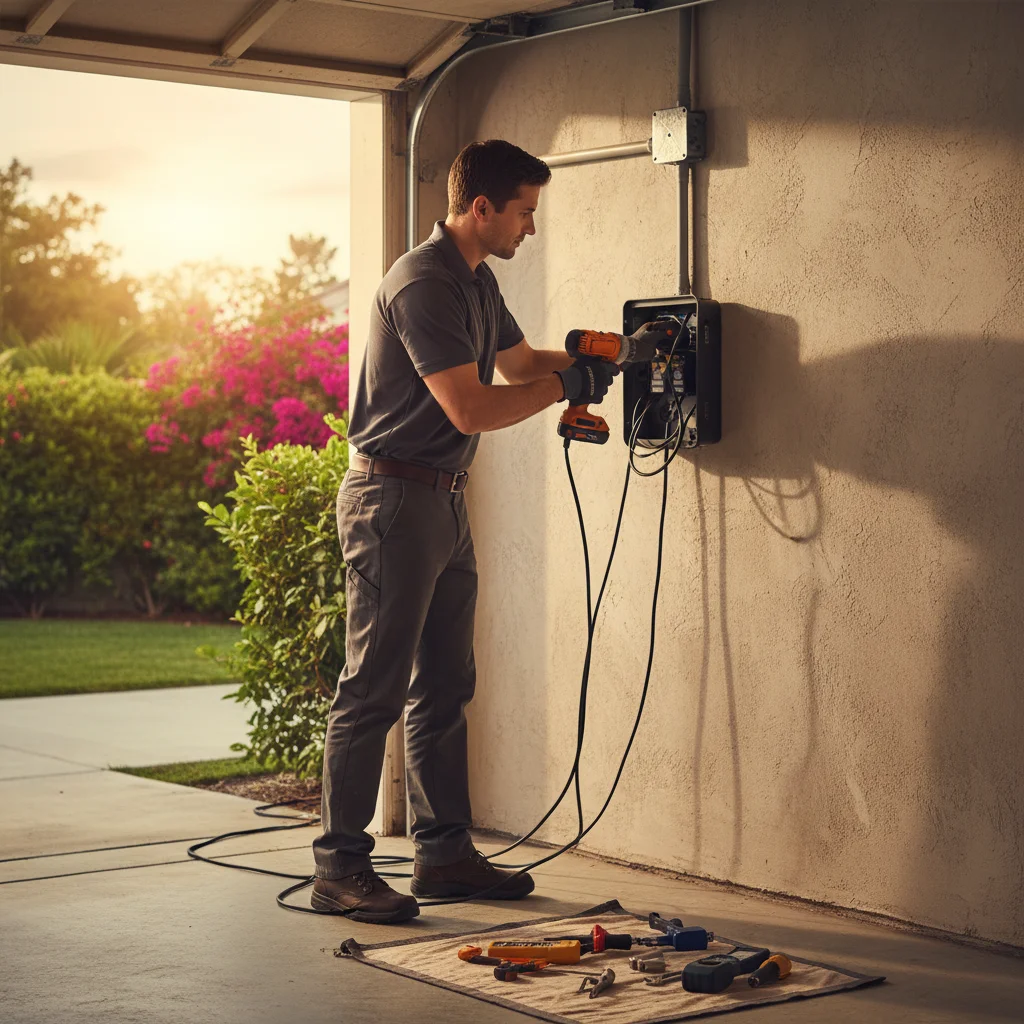
Most stalls on the Strip are one of two problems. From the sidewalk, the car just isn’t moving.
A dead 12-volt battery leaves the car dark. Doors may not unlock, and the screen stays black. The high-voltage pack can still hold range, but the car won’t wake. A Tesla left three days in a resort garage is the signature call. That’s the self-park and valet pattern here.
An empty traction pack is the other pattern. Rideshare drivers work this corridor all day. Between fares the pack can sit at four percent. The cabin stays cold while the car creeps. You aren’t on a mountain grade. You’re in traffic that never quite stops.
The valley-wide guide is EV roadside assistance in Las Vegas for a dead Tesla. This corridor still has its own stall pattern.
Why resort traffic spends both batteries
July here averages a 104.5F high. About 78 days a year hit 100F or more. About 9.4 days hit 110F. The airport’s all-time record, 120F, landed on July 7, 2024. The airport itself runs 5 to 15F warmer than the rim. The east valley and downtown can run up to 11F hotter than the rim.
That heat isn’t scenery. It’s electrical load on both batteries.
Recurrent Auto measured about 5% range loss at 90F. It measured 17 to 18% at 100F. Cabin air conditioning can draw 3 to 5 kW to cool a hot interior. Holding a temperature you already reached takes about 1 kW. AAA, in May 2026, measured 8.5% range loss at 95F. None of those figures come from Tesla. Tesla hasn’t published a range-loss number we could cite. Geotab found hot-climate packs degrade about 0.4% per year faster. Phoenix-style desert heat was the worst case.
Idle time is the other tax. Creeping from a light at Sahara toward a porte-cochere near Sphere is stop-and-go. Same crawl past T-Mobile Arena and the Forum Shops at Caesars. Climate control stays on the whole time. The car works while it barely moves.
Then the car sits. The Strip and Harry Reid International Airport both sit in unincorporated Clark County. That’s Paradise and Winchester, not the City of Las Vegas. This is a corridor of parking structures. Valet decks, self-park garages, rideshare staging, and long-term airport lots all hold cars still. A car stays still for hours or days. The 12-volt system keeps it ready. After a long sit in heat, that small battery is what fails first.
A dark car in a concrete garage isn’t a mystery. The structure holds heat after sunset. Cabin electronics keep a low drain going. Three days later the 12-volt is done. That’s true even if you left with a healthy pack.
Where the stall actually happens
Don’t picture a desert shoulder. Picture a structure, a curb, or a pickup lane. ZIP codes on this stretch are 89109 and 89158. The stall is almost always in one of four settings.
Valet and self-park decks
You handed the fob over at the porte-cochere. You were inside for a show at Sphere. Or a Golden Knights night at T-Mobile Arena. Or a stay that ran long at a property along the Boulevard. When you come back, the screens are dark. The pack may still have miles. The 12-volt is done.
The garage version is Dead in a Paradise resort lot: why the car won’t wake.
Rideshare staging and the crawl itself
The second pattern is a driver between fares. Short hops on Las Vegas Boulevard spend the pack in small bites. Cabin cooling never really stops. Four percent looks fine until the next light. Then it isn’t. You aren’t out of town. You’re between two properties and you can’t roll.
Event nights make this worse. Sphere, T-Mobile Arena, and Allegiant Stadium all dump cars back onto this crawl already low. Michelob ULTRA Arena at Mandalay Bay feeds the same south-end crawl.
The south end, toward the airport connector
Harry Reid sits in Paradise, same township as most of this corridor. Airport parking offers free battery jump starts and tire inflation at (702) 261-5122. That’s the airport’s own number for a 12-volt jump in its lots. It isn’t a pack charge. Whether those lots have EV charging isn’t something the airport publishes. Treat it as unconfirmed.
East of the Boulevard, in Winchester
East of the Strip, around Sunrise Hospital, the housing is denser. The older Winchester blocks are part of that. About 53.1% of Winchester’s housing predates 1980. Many renters there have no home plug. Convention crowds fill the same garages. The stall is often a car that already started the night low.
What to do in the first minutes
The moment the car won’t make the next block, hazards on. That’s always the first move.
If you still have motion, coast out of the travel lane. A valet lane is better than a live lane. So is a self-park stall. So is a side street off the Boulevard. A driveway the property will let you sit in works too. Don’t stop in a crosswalk if you can still roll. Don’t stall in a rideshare pickup box either.
Stay with the car if you’re in moving traffic. Standing on Las Vegas Boulevard with a phone out is how people get hit. If you’re already in a garage stall, step out and make the call.
Nevada law is clearer than it feels in the moment. NRS 484B.440 covers a vehicle that’s disabled so it can’t avoid stopping. It’s exempt from the no-stopping-on-highway rule. The statute doesn’t set a time limit on how long it may remain. NRS 484B.443 is the one that starts a clock. Law enforcement may remove a disabled or abandoned vehicle. On freeways and primary highways, a vehicle is treated as abandoned after 24 hours. On other roads, that’s 72 hours. The owner pays removal.
There aren’t toll roads in Nevada. I-15, I-215, US-95, US-93, and I-11 are free. That doesn’t help you on the Boulevard. It does mean a later hop onto a freeway isn’t a transponder problem.
Nevada 511 and nvroads.com show closures and cameras. The Nevada State Police Highway Patrol Southern Command is (702) 486-4100. The cell shortcode is *647. They dispatch rotation tows through Autura. NDOT’s Freeway Service Patrol covers the busiest valley freeways. Hours are 5:00am to 8:30pm, seven days a week. Quality Towing runs it. GEICO sponsors it. The patrol handles tire changes, jump starts, fuel, minor fire suppression, and traffic control. NDOT’s published materials don’t advertise EV charging or EV-specific service. It isn’t a claim the patrol can’t help an EV. On Las Vegas Boulevard itself you may never see that truck.
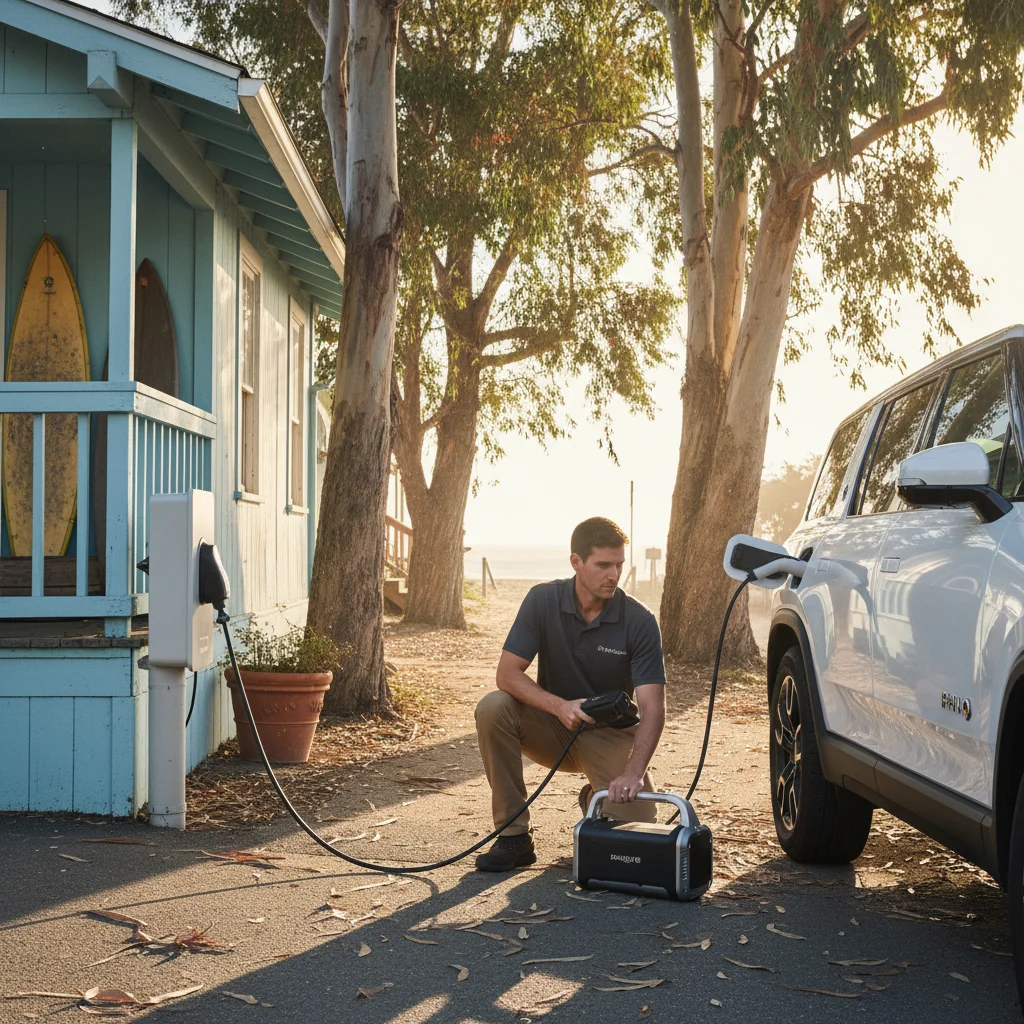
If an officer wants a plan, have one. Waiting on a friend is how a rotation tow gets called. A clearer plan is a mobile charge or a 12-volt jump at the car. Then you’ll move it under its own power.
Charge at the car, or take a flatbed off the Boulevard
A tow off this corridor is often a lane-clearing problem, not a repair. Tow operators in Nevada need a Nevada Transportation Authority certificate. Non-consent tow rates are operator-filed tariffs under NAC 706.408. There’s no single statewide maximum. This site doesn’t publish a rate. Private-property tows have posting and sticker rules under NRS 706.4463 and related sections. If a still-hooked vehicle can be released at the original location, that happens. The operator charges that operator’s set release fee. If a resort garage wants the car gone, that clock is theirs.
A flatbed also doesn’t finish the job. It moves a silent EV somewhere else. You still need a charge, a 12-volt wake, or both. On a tight valet ramp, a hook can be the wrong tool.
The operators we connect you with bring a 240-volt Level 2 source. Native NACS for Tesla. CCS or J1772 adapters for other brands. Typical charging time is 15 to 30 minutes. That adds about 10 to 20 miles of range. That’s charging time, never an arrival time. They can also jump or replace a dead 12-volt on site. Mobile EV charging is the service page for that bumper charge.
The decision is charge, jump, or tow. The longer split is Your electric car died: should you charge, jump, or tow. A delivery van on a Strip dock is the same physics with worse dwell. The dock version is A delivery van EV died on a Strip dock: charge it there.
How a Strip call actually works
Charge Pro LV is a referral line for the Las Vegas Valley. We match a stranded driver with an independent local mobile rescue operator. We don’t hold a trade license, own trucks, or employ technicians. We don’t set prices, promise an arrival time, or publish hours. The operator quotes you before starting and bills you directly.
That matters here because the work is local and the billing is local. Tesla roadside, an insurer, or a national club may still be in the mix. None of them change the physics in a valet stall. Someone still has to wake the 12-volt or add range at the bumper.
Tell the operator which failure you think you have. Dark screens and a car that won’t unlock point at the 12-volt. A car that’s awake with a single-digit pack points at a mobile charge. If you aren’t sure, say so. The first check on site is usually the 12-volt anyway. Heat is hard on that battery. A jump that dies again the same week isn’t the fix.
Give a location a local driver can find. Name the property, the cross street, and the garage level. Sahara and the airport connector are different ends of a long crawl. If a valet has the fob, say that up front.
When the car won’t move
If the car won’t wake or the pack is empty, call. If a 12-volt jump didn’t hold, call too. We connect you with a local operator. They can charge at the bumper or wake the 12-volt on site.
Call (702) 935-4699. Tell them you’re on the Strip corridor. Name the property or cross street. Say whether the car is dark or just empty.