You pulled out of a Summerlin garage on a full overnight charge. Then the estimated miles fell on the climb toward Red Rock. That’s the usual west-rim pattern. Summerlin sits near 3,500 ft. The land keeps rising toward about 4,400 ft at the escarpment. EV charging in Summerlin is mostly a home plug. The grade is what still strands people.
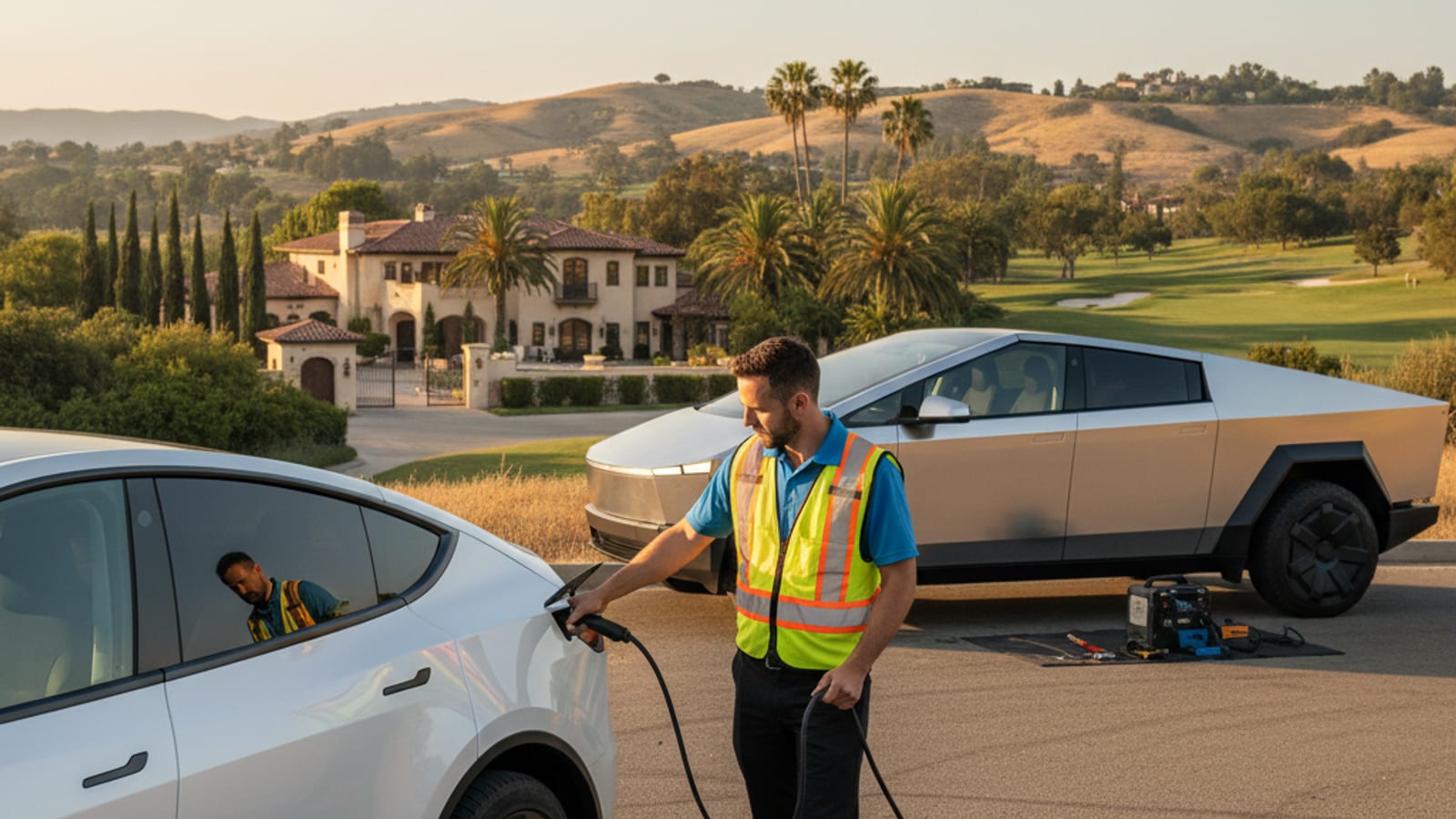
The west rim isn’t the valley floor
The Las Vegas Valley floor sits roughly 2,000 to 2,920 ft. Summerlin is already higher than that before you leave the villages. USGS figures put the community near 3,500 ft. From there the land climbs toward Red Rock Canyon National Conservation Area. You’re not starting a flat errand from a 2,000-ft garage. You’re starting a hill.
That hill includes the 13-mile Scenic Loop. It also includes the approach on SR-159 through Blue Diamond. Regenerative braking can give some energy back on the way down. It doesn’t pay the climb in advance. A pack that looked fine at the house can read thin at the loop.
Downtown Summerlin and the Las Vegas Ballpark sit in that same high west pocket. A long afternoon at the shops is a long dwell with climate control running. An Aviators game does the same thing. Then you still have to climb. Or you roll home on what’s left.
The villages feel local and slow. Village streets don’t spend a pack the way a sustained grade does. That’s the mismatch. Owners plan around grocery loops and the 215 Beltway. They don’t always budget the escarpment as a separate trip.
Heat still shows up on the rim
The rim can run cooler than the east valley and downtown. NWS and NOAA figures for Las Vegas still apply. The airport averages a July high of 104.5F. About 78 days a year hit 100F or more. About 9.4 days hit 110F or more. The all-time record is 120F, set on July 7, 2024. The airport can run 5 to 15F warmer than outlying areas. The east valley and downtown can run hotter than the rim. NWS puts that gap at up to 11F. Summerlin is on that rim. It’s not a cool-climate drive.
Recurrent Auto found about 5% range loss at 90F. The same work found 17 to 18% loss at 100F. Cabin cooling drew 3 to 5 kW to cool a hot cabin. Holding an already-cool cabin took about 1 kW. AAA, in May 2026, measured 8.5% range loss at 95F. Those are independent studies. We didn’t find a Tesla-published range-loss figure. We don’t pin one on Tesla.
Air conditioning on the Red Rock climb stacks with elevation. You’re asking the pack for grade and for cooling at once. A home charge can look tight by lunch. That same pack felt generous at 8 a.m. Precondition the cabin on the wall plug if your car allows it. That spends house power, not pack miles, before you roll.
Monsoon season is July and August. Flash flooding hits washes and underpasses. That doesn’t drain a battery by itself. It does change a return route. A detour on a thin pack is how a planned loop becomes a stall.
What a Summerlin home plug actually covers
Most Summerlin houses have a garage and room for a 240-volt circuit. Home charging is near universal in this master-planned west-side community. Clark County Title 30 requires EV-ready wiring in new construction. A Level 2 home charger still needs an electrical permit. The electrician you hire handles that panel and that permit. Charge Pro LV doesn’t install chargers. It doesn’t own equipment. It doesn’t hold a licence.
NV Energy serves Summerlin. The Residential Electric Vehicle Recharge Rider is called REVRR. It sets a charging window from 10:01 p.m. to 8:00 a.m. The Residential Managed Charging Program is active. NV Energy revised that handbook on July 29, 2026. Confirm current program rules on nvenergy.com before you change a schedule. This site doesn’t print a per-kilowatt-hour figure. NV Energy sets those rates, and they change. If a number isn’t on this page, treat it as unconfirmed and check the utility.
A night on Level 2 usually covers village errands. It usually covers a Beltway commute. It can cover a stop at Downtown Summerlin. It doesn’t automatically include a full Scenic Loop with air conditioning and a late return. Plan the mountain as its own budget of miles. Home charging and a roadside charge aren’t the same tool. There’s more in When 240-volt charging at home isn’t an option.
Nevada has no state EV purchase rebate or tax credit. The Governor’s Office of Energy and the AFDC both confirm that absence. Nevada also has no EV-specific registration surcharge at the DMV. Those facts help a buyer. They don’t add range on SR-159.
A 120-volt convenience cord is still a trickle. It’s fine for a short village day if the car sat plugged in. It’s a poor way to rebuild a pack you emptied on the escarpment. Don’t treat a garage outlet as a recovery plan for a mountain return.
Where Summerlin cars actually sit empty
West-valley stalls keep repeating the same settings. None of them require a story about a missing public plug. They require a trip that spent the buffer.
A long dwell at Downtown Summerlin is the first. Climate control runs while the car sits. You leave with less than you remembered.
The Las Vegas Ballpark is the second. Aviators games run long. Parking lots bake. The car wakes up hotter than it went to sleep.
The steady grade toward Red Rock is the third. You started full. The estimated range dropped faster than the map suggested.
The Blue Diamond Road launch toward the Scenic Loop is the fourth. Spring Valley feeds that launch too. The last settlement before the loop is Blue Diamond, a tiny village on SR-159. Valley Electric Association serves Blue Diamond, not NV Energy. If you’re already on that road with single digits, recovery is the question. Which utility prints the home bill isn’t.
Red Rock Canyon NCA is BLM land. Timed-entry reservations run October 1 through May 31. The loop is 13 miles. That’s a known, mapped drive. It isn’t a claim about charging stalls along it. Zero on the loop is covered in Dead EV on the Red Rock scenic loop.
Summerlin South has the same west-rim geometry around the Ballpark and Red Rock Casino. Housing there is new. Home charging is near universal. The stall is still the climb, or the errand that ran long. Summerlin South sits on that same grade. A home battery in the garage is a different tool. It doesn’t move a car that’s already empty on the hill. That’s the split in Summerlin home batteries don’t replace a roadside charge.
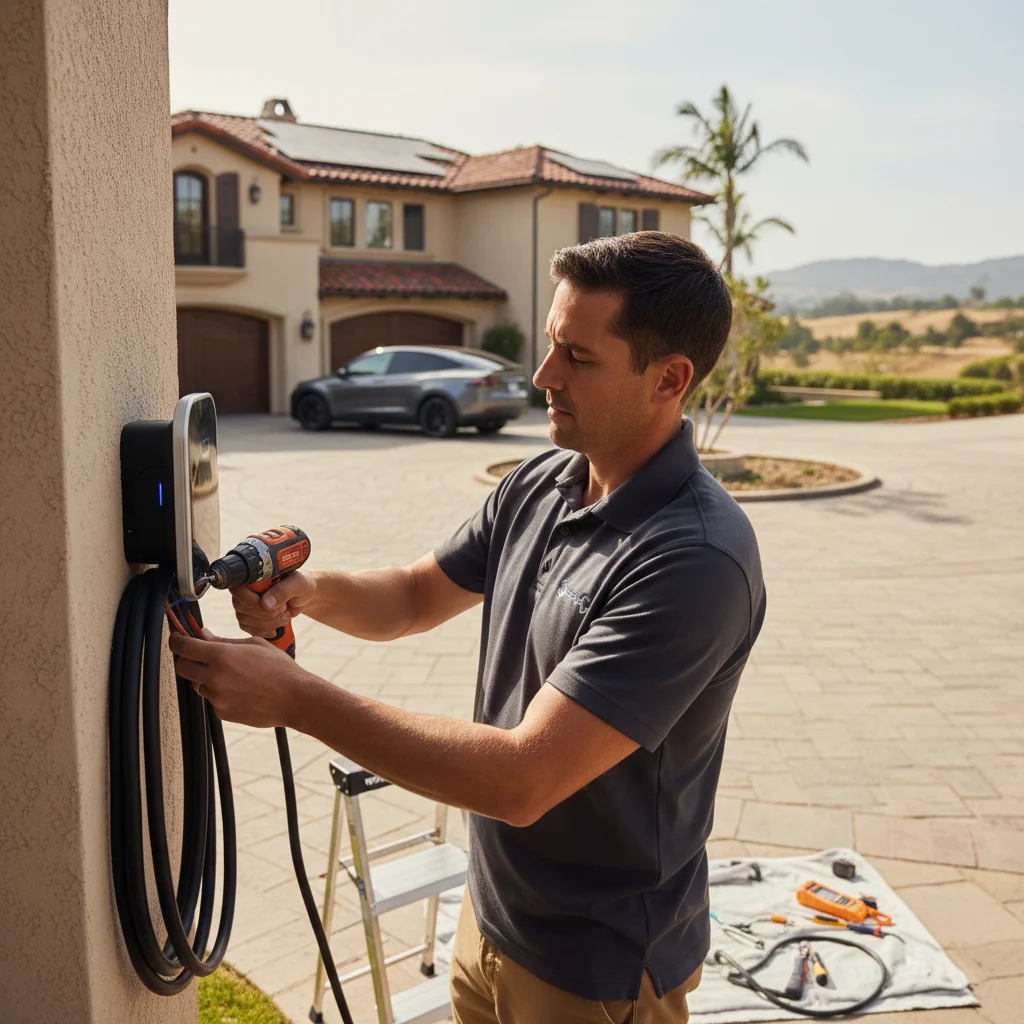
Empty pack or a dead 12V
Not every dead EV in a Summerlin driveway is an empty high-voltage pack. The 12-volt battery still wakes the computers, the locks, and the contactors. Valley heat wears that small battery. A car that won’t unlock after a day at the shops may need a jump. It may not need a charge.
Operators in the network can jump or replace a dead 12V on site. They can also bring a 240-volt Level 2 source to the car. Teslas take a native NACS plug. Other brands use a CCS or J1772 adapter. Typical charging time is 15 to 30 minutes. That session adds about 10 to 20 miles of range. That’s time on the cable at the car. It isn’t an arrival time. Charge Pro LV doesn’t promise one.
If the car is truly empty, that roadside charge often gets you rolling. It’s often enough to reach the villages. It can also be enough to reach a charger you already trust. If the 12V is the problem, charging the pack won’t wake the car. Say what the dash showed when you call. The operator quotes you before any work starts. Then the operator bills you directly.
A dark dash after a hot park at Downtown Summerlin is a 12V-shaped story. A live dash with zero miles on SR-159 is a pack-shaped story. Don’t guess if you don’t have to. Describe both, and let the operator sort it.
Who actually shows up
Charge Pro LV is a referral line. It matches stranded EV drivers with independent local mobile rescue operators. It performs no work. It owns no trucks, no chargers, and no parts inventory. It employs no technicians. It holds no licence. The operator you get is a local pro. The pros in the network are licensed and insured.
If you want the charging truck itself, that’s mobile EV charging. Tesla and every major EV brand are in scope. The operator brings the plug that matches the port.
A conventional tow is a different job. Nevada Transportation Authority rules cover non-consent tows under NAC 706.408. Those are operator-filed tariffs. This site doesn’t print those numbers. If the car only needs miles, charge it where it sits. That usually beats a hook. Confirm that with the operator on the call. They see the shoulder. You see the dash.
NDOT’s Freeway Service Patrol runs 5:00 a.m. to 8:30 p.m. It covers the busiest valley freeways. Quality Towing operates it. GEICO sponsors it. The published materials cover tire changes, jump starts, fuel, minor fire suppression, and traffic control. They don’t advertise EV charging or EV-specific service. That’s an observed silence in NDOT’s own pages. It isn’t a claim that a patrol truck can’t stop. Nevada 511 and nvroads.com remain the place to check closures and cameras.
If you’re disabled on a highway, NRS 484B.440 applies. A vehicle that can’t avoid stopping is exempt from the no-stopping rule. The statute sets no time limit. NRS 484B.443 lets law enforcement remove a disabled or abandoned vehicle. On freeways and primary highways, abandoned means 24 hours. On other roads it’s 72 hours. The owner pays removal. Get off the travel lane if you can, then call.
Spring Valley, Blue Diamond, and the rest of the west side
Summerlin doesn’t sit alone. Spring Valley runs from the Chinatown corridor on Spring Mountain Road. It continues out toward the 215 Beltway. Dense apartments near that eastern edge change the pattern. Fewer homes there have a dedicated plug. More cars already left low. The Blue Diamond Road launch toward Red Rock still starts in that district. Spring Valley is the mixed west-valley neighbor. It isn’t a copy of the master-planned villages.
Blue Diamond counted 270 residents in the ACS 2019-2023 figures. It’s the last settlement before the Scenic Loop. If a visitor underjudged the climb, the day often ends there. EV roadside assistance in Blue Diamond is the page for that approach.
Mountains Edge sits farther southwest. Newer housing there also means more home charging. The leftover-range problem still shows up. Calls shift to the errand that ran long. They also shift to the I-215 Beltway commute that finishes on single digits. Mountains Edge isn’t a separate Census place. We don’t publish a population for it.
Nevada has no toll roads, express lanes, or transponder systems. I-215 and the rest of the beltway are free. That doesn’t change the physics of the grade. It only means you’re not using a transponder while the pack drops.
Summerlin Hospital sits in this same west-side fabric. The Resort at Summerlin is another long dwell on the west rim. Those are real local anchors. They’re not charging-inventory claims. If you stall in a lot there, the car still needs a wake or miles.
What moves a mobile charging quote
Charge Pro LV doesn’t set prices. The operator quotes you before starting. What usually moves that quote is distance to the car. Time of day matters. So does how long the charging session needs to run. So does how many miles you need to get off the grade. A car at Downtown Summerlin is one dispatch. A car already on the Scenic Loop is another. A 12V jump is a different job from a Level 2 session.
Ask for the quote first. If the number doesn’t work, say so before they unroll a cable. Nobody on this line bills you for work you didn’t accept.
Public DC fast charging still exists in the valley. This site doesn’t publish a station inventory. The NREL station database was down when we checked on September 18, 2026. We won’t guess stall counts. We won’t name a closest charger. Use the apps you already trust before you leave the garage. If you’re already stopped, a plug at the car is the useful option. A map pin you can’t reach isn’t.
Electrify America publishes a statewide roll-up, not a Clark County list. Tesla’s public map is something you check in the car. This page won’t invent station names. If we can’t verify a station, we don’t list it.
Before you point the car at Red Rock
Leave Summerlin with a real buffer, not a hopeful one. Heat, grade, and cabin cooling all spend miles at once. Timed entry at Red Rock doesn’t add range. It only times the start. A queue with climate control on spends miles too. We don’t have a verified wait-time figure, so we won’t invent one. Watch the estimated range while you sit.
Keep speeds steady on SR-159. Hard launches feel easy in an EV. They still spend range on a climb. The window-sticker range assumed a test cycle. It didn’t assume a 3,500-ft start with a hot cabin.
If the car is already sitting, stay with it if it’s safe. Hazards on. Call the referral line. Tell the operator whether the car is unlocked. Tell them whether the dash is dark. Give a place a local would recognize. Village street, Beltway shoulder, SR-159, or the loop. They’ll tell you what they can do. They’ll tell you what they’ll charge before they start.
There’s no published Clark County EV count we could confirm. Nevada statewide had about 85,600 EVs registered in 2025 AFDC/NREL figures. Plug-in hybrids added about 16,100. The Nevada DMV said over 80,000 EVs statewide in May 2026. Summerlin is one of the valley’s highest-adoption pockets. That doesn’t make the grade shorter.
For a west-rim stall, Charge Pro LV is at (702) 935-4699. That’s the number to request a local operator. It’s not a promise of when someone arrives.
Frequently asked questions
Does a full home charge cover the Red Rock grade from Summerlin?
Not by default. Summerlin already sits near 3,500 ft. The approach keeps climbing toward about 4,400 ft near Red Rock. Heat and air conditioning spend more miles on the same road. Treat the loop as its own trip budget. Do that even if the garage showed a full pack at breakfast.
If my Summerlin EV dies, is it always an empty pack?
No. Valley heat often kills the 12-volt battery first. A car that won’t wake or unlock may need a jump on site. An empty high-voltage pack needs a mobile Level 2 charge. Say what the car is doing when you call. Then the operator brings the right gear.
What do I do if I stall on the way to Red Rock?
Get out of the travel lane if you can. You’re allowed to remain when the car can’t keep moving, under NRS 484B.440. Call for a mobile charge. Don’t wait on a tow you may not need. The operator quotes you before any cable goes on the car.