Your EV has sat in a Las Vegas Convention Center lot for days. Load-out is when a lot of those cars finally fail. Heat has been working on the 12V the whole week. The pack that looked fine on arrival may not cover the crawl out. You need EV roadside assistance at the stall. Don’t plan to push the car across the lot.
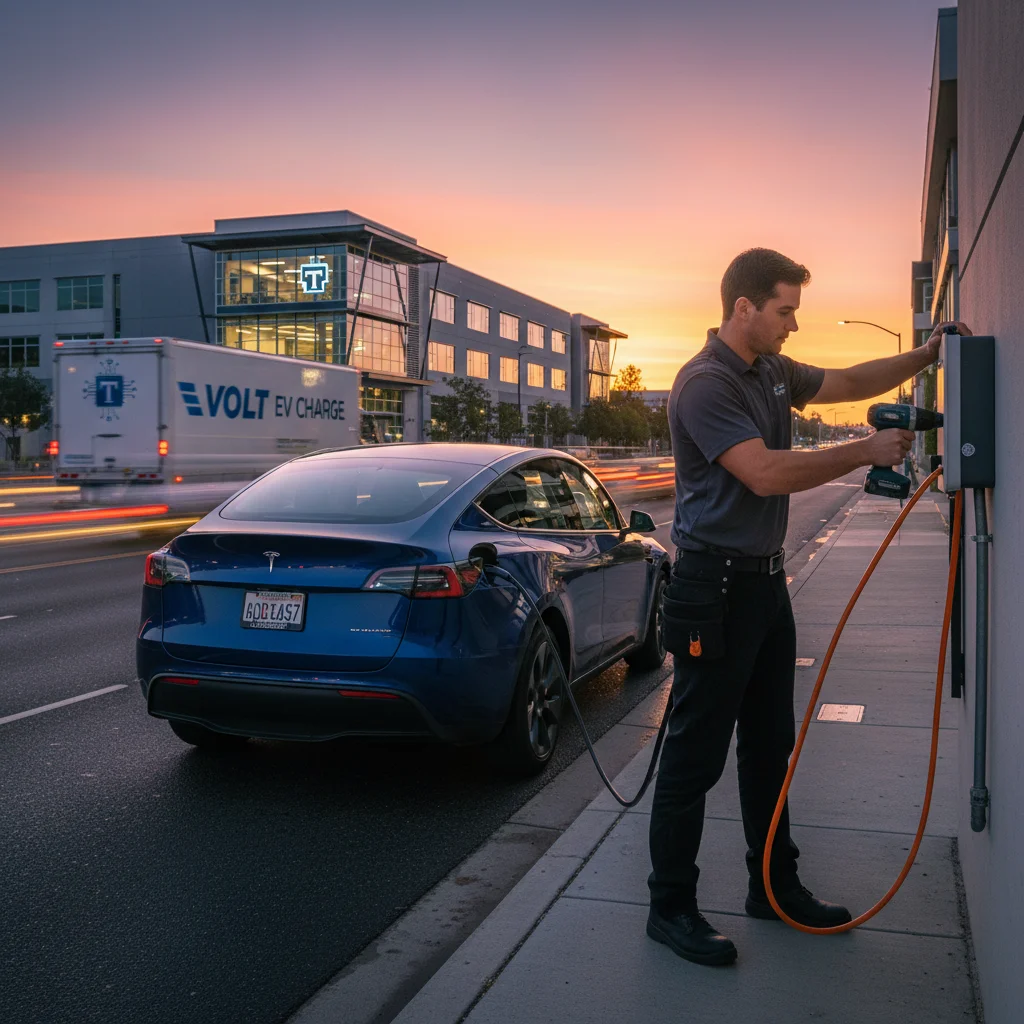
Why a show-week sit drains the 12V
Convention week parks cars at the Las Vegas Convention Center and West Hall. Those stalls hold vehicles for days while the show runs. It’s pavement on the valley floor, about 2,000 to 2,920 ft. That isn’t a rim lot in Summerlin at about 3,500 ft.
NWS Las Vegas puts the average July high at 104.5F. About 78 days a year reach 100F or more. About 9.4 days reach 110F or more. The urban heat island makes the airport 5 to 15F warmer than outlying areas. The east valley and downtown can run up to 11F hotter than the rim. Event lots on the valley floor sit in that hotter band.
Your 12V is the small battery that wakes locks, computers, and contactors. It isn’t the drive pack, and days of heat still keep it working. The car looks asleep, but sensors, apps, and thermal logic don’t. Tesla’s cabin overheat protection can keep drawing power so the cabin doesn’t bake. Other brands run similar climate holds through a long sit. It’s rough on a 12V that’s already sat through a show.
If the car won’t unlock, treat it as a 12V fault first. Dark screens and a low-voltage warning point the same way. What happens when an EV 12V dies in the valley covers that fault. A convention stall just gives it more days. NV Energy serves Las Vegas, Paradise, Winchester, and the rest of the valley. House charging windows don’t help a car that’s already at West Hall.
Load-out around West Hall
Load-out dumps everyone into the same exits at once. You’re crawling, then you’re pointed at the Strip, I-15, or Harry Reid in Paradise. Regenerative braking doesn’t give much back in a parking-row creep. The dash estimate from Monday doesn’t know this traffic.
Cabin cooling is the quiet drain on that last run. Recurrent Auto found cooling a hot cabin can draw 3 to 5 kW. Holding an already-cool cabin is about 1 kW. The same research found about 5% range loss at 90F. At 100F the loss was 17 to 18%. AAA measured 8.5% range loss at 95F. None of those numbers are Tesla-published. Don’t treat the dash range as a promise after a week in the sun.
Nevada has no toll roads and no express lanes. I-15, I-215, US-95, and I-11 are all free. HOV lanes on I-15 still need two-plus occupants during posted weekday hours. The federal single-occupant EV exemption expired on 2025-09-30.
Allegiant Stadium in Paradise has the same sit-then-leave pattern after a game. See Your EV died in Allegiant Stadium parking after the game for that version.
Empty pack or dead 12V
A dead 12V and an empty pack look alike from the aisle. The car won’t go, and the fix isn’t the same.
Start with the 12V when screens stay black. An app that can’t reach the car, and doors that won’t undock, point there too. Operators the line sends can jump or replace that battery on site. They don’t need a marked EV stall, only a path to your row.
If the car wakes and shows zero miles, the drive pack is empty. A turtle icon and a car that won’t shift mean the same thing. Don’t push toward a plug you haven’t confirmed. Mobile EV charging brings a 240V Level 2 source to the bumper. Operators typically add 10 to 20 miles of range. That takes 15 to 30 minutes of charging. That’s time on the cable, not an arrival time.
Tesla owners get a native NACS plug. Other brands use a CCS or J1772 adapter. The operators handle Tesla and every major EV brand. You stay with the car and don’t have to roll it to a painted space.
A jump won’t fill an empty pack, so don’t mix the two jobs. A Level 2 session won’t wake a 12V that can’t close the contactors. Tell the operator which signs you see. Dark screens versus a live dash at zero miles is the split that matters.
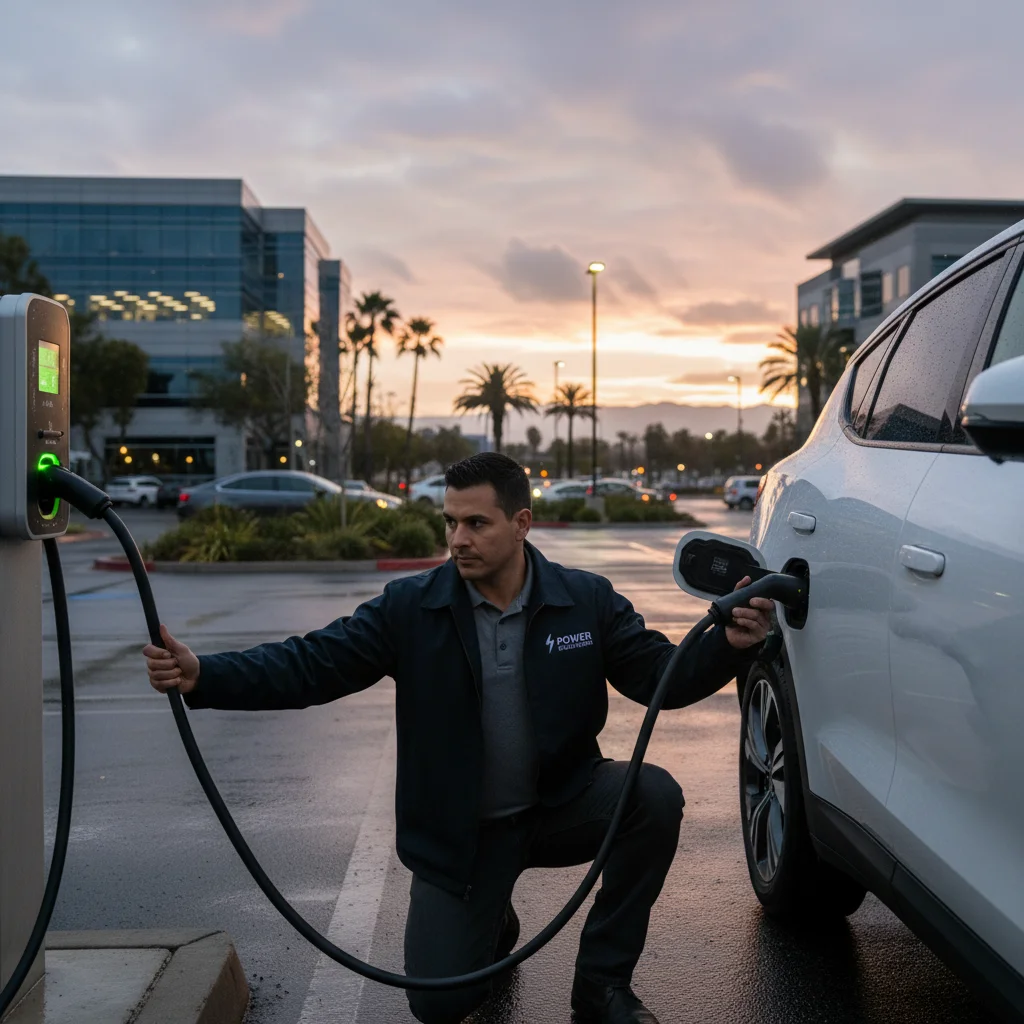
Help at the stall, not a yard
Charge Pro LV is a referral line. It matches stranded EV drivers with independent local mobile rescue operators. It doesn’t own trucks, employ technicians, or set prices. The operator quotes you before starting and bills you directly. The pros we connect you with are licensed and insured.
That structure fits a packed hall lot. An operator can pull into the same row you used. A flatbed still has to thread load-out traffic. Then it loads the car and drops you somewhere else. If the car only needs energy or a 12V, moving it is extra work.
NDOT’s Freeway Service Patrol covers the busiest valley freeways. Hours are 5:00am to 8:30pm, seven days a week. Quality Towing operates it, and GEICO sponsors it. The patrol is free to motorists on those freeways. None of NDOT’s published patrol materials mention electric vehicles or EV charging. That’s an advertising silence, not a claim the patrol can’t help an EV. A Convention Center stall also isn’t a freeway shoulder. If you’re still in the lot, that patrol isn’t the number for this.
Towing from a private event lot
Many insurance roadside plans default to a tow. That’s a weak first move when the car only needs a charge or a 12V. You still leave with the truck and have to get back from the drop. Ask what the plan actually covers for EVs before anyone hooks up.
Private-property tows in Nevada fall under NRS 706.4463 and related sections. Tow operators need a Nevada Transportation Authority certificate. Private-property tows require posted signs and a 48-hour warning sticker. Don’t guess the facility’s vendor or its clock. Read the signs in the lot you used, then confirm the rule with the hall. Public-road abandon clocks under NRS 484B.443 don’t set a convention lot’s policy.
Non-consent tow rates are operator-filed tariffs under NAC 706.408. There’s no single statewide maximum on this site. Ask the number before anything is hooked. NRS 706 also says a still-hooked vehicle must be released at the original location. The tow operator sets that release fee. If a truck arrives and you’d rather charge on site, say so. Do that before it leaves the row. No dollar figure for that fee is published here. Confirm it with the tow operator.
Once you can roll
After a mobile charge, most drivers head to a Strip hotel. Others go to a Winchester stay or a Paradise resort. Harry Reid in Paradise is the airport run. Paradise and Winchester are unincorporated Clark County, not the City of Las Vegas.
Airport parking offers free battery jump starts and tire inflation. Whether those lots have EV charging isn’t published on the airport’s own site. Treat charger availability there as unconfirmed. A show car in long-term parking can sit the same way. The 12V story matches the West Hall sit. Tesla dead in Harry Reid long-term parking walks through that version.
Don’t plan a long grade on a minimum top-up. Summerlin sits about 3,500 ft and rises toward 4,400 ft near Red Rock. Mount Charleston town sits about 7,506 ft. A 10 to 20 mile add is for leaving the lot. Use it to reach a place you already know.
How to request a local operator
Stay with the vehicle if you can do so safely. Note whether you’re at West Hall or the rest of the Convention Center. Write down any lot name on your pass. Photograph nearby signs so the operator can find you. Say whether screens are dark or the pack is at zero. Say the make: Tesla, Rivian, Hyundai, Ford, or whatever you drove in.
If you’re in a rental, you still pay the operator directly. Ask the rental desk what it covers for a 12V or a charge. That desk policy isn’t published here, so confirm it before you assume it’s included.
Charge Pro LV serves the Las Vegas Valley. Call (702) 935-4699 and the line will match you with a local operator. That operator quotes before work starts, and this page doesn’t promise when someone arrives. Charging time at the car is typically 15 to 30 minutes. That usually adds 10 to 20 miles. If the lot is still dumping traffic, say that too.