EV roadside assistance in Boulder City means help on the dam run. Charge Pro LV matches stranded drivers with independent local operators. Those operators bring a 240-volt charge to the car. The city sits on US-93 and I-11. It’s the gate to Hoover Dam and Lake Mead. The Railroad Pass return is a long dispatch from the valley.
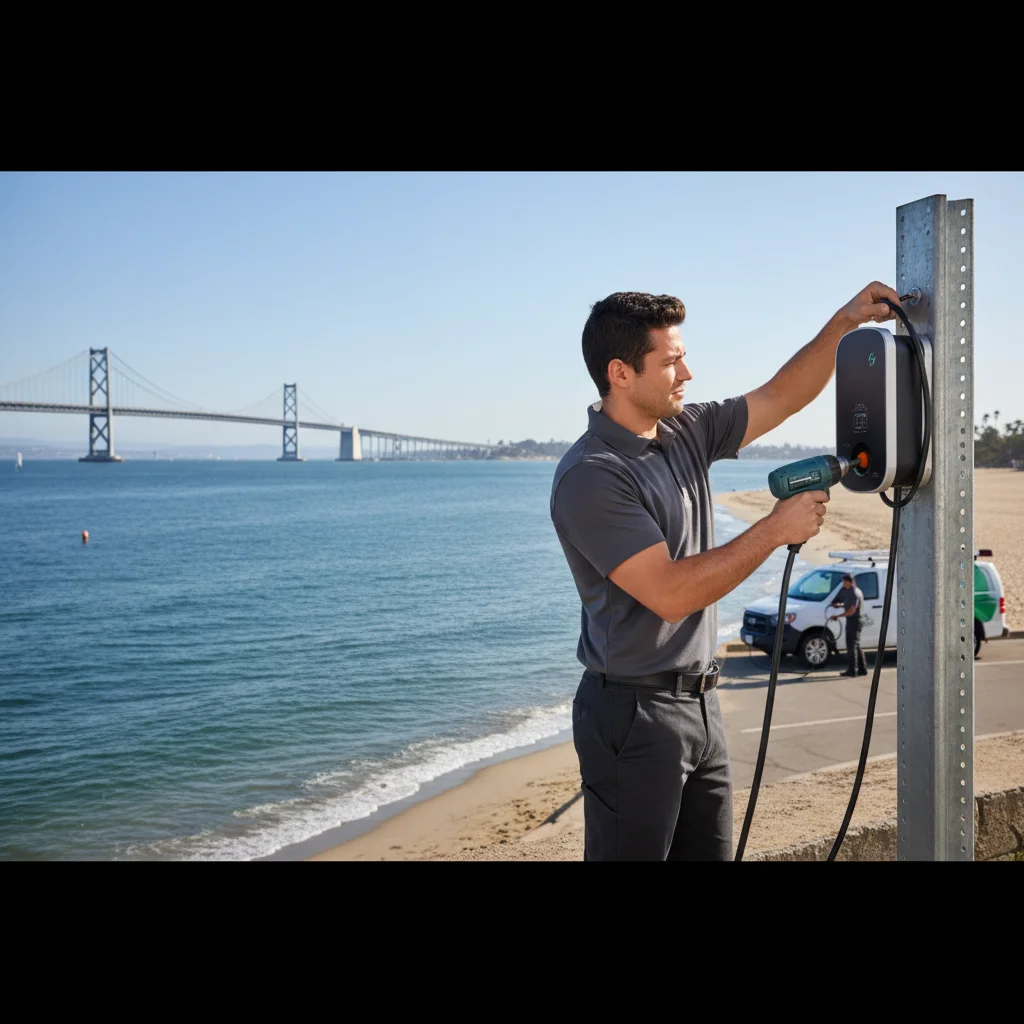
The dam gate sits on its own power
Boulder City isn’t a valley-floor suburb on NV Energy. Boulder City Utilities runs the city’s electric service. That power comes largely from Hoover and Glen Canyon hydro. NV Energy’s overnight EV window doesn’t apply at these meters. Confirm any home charging rate with the city utility before you plan around it.
The Census 2024 estimate puts the city at 15,029 people. About 48.5 percent of the housing was built before 1980. Older garages often weren’t wired for a dedicated EV circuit. A Level 2 home charger in Clark County still needs an electrical permit. Residents who stall at home can start with this Boulder City backup-power note. Day-trippers leave Henderson or the rest of the valley with a partial pack. They tour Hoover Dam, then they still have to climb back.
The city itself sits near 2,510 feet. The dam crest sits at 1,232 feet. You drop more than a thousand feet on the way in. You pay that elevation back on the way out. Cabin cooling on a July afternoon spends range on top of the grade.
NWS Las Vegas lists an average July high of 104.5F. Recurrent Auto found about 17 to 18 percent range loss at 100F. AAA’s May 2026 test measured 8.5 percent range loss at 95F. Air conditioning can draw 3 to 5 kW to cool a hot cabin. None of those range figures come from Tesla. Keep extra pack in reserve for the return.
Railroad Pass is where the return spends the pack
Between Henderson and Boulder City, US-93 and I-11 climb toward Railroad Pass. The pass itself tops out around 2,360 feet. The Henderson side sits at about 1,867 feet. Drivers headed to the dam commit to that grade here. A lot of them misjudge what the climb costs, especially with the A/C running.
Nevada has no toll roads, so you won’t hit a plaza. You will hit a sustained grade in desert heat. If the car is already low, read our Railroad Pass out-of-charge guide. EV roadside assistance on this corridor is range delivered at the bumper.
Pull out of the travel lanes if you can. Keep your hazard lights on while you wait. Stay with the vehicle if you’re still in traffic. Call 911 first when you’re blocking a lane. Nevada State Police Highway Patrol can take that call on *647. The Southern Command number is (702) 486-4100. Check Nevada 511 or nvroads.com for closures and cameras. Do that before you start the dam run.
If you’re stopped on I-11 or US-93
A disabled car that can’t keep moving is exempt under NRS 484B.440. The statute doesn’t set any time limit. That doesn’t mean you should sit in a lane. Law enforcement may still remove a disabled or abandoned vehicle under NRS 484B.443. On freeways and primary highways, a vehicle can be treated as abandoned after 24 hours. On other roads the window is 72 hours. The owner pays for that removal, not the state. Confirm current tow rules with the Nevada Transportation Authority. Non-consent rates are operator-filed tariffs under NAC 706.408. There’s no single statewide cap on this site.
NDOT’s Freeway Service Patrol covers the valley’s busiest freeways. Quality Towing runs it, and GEICO sponsors it. Hours are 5:00am to 8:30pm, seven days a week. The patrol advertises tire changes, jump starts, fuel, and traffic control. None of NDOT’s published patrol materials mention EV charging. If a patrol truck stops, ask what they can actually do. Don’t assume a 240-volt charge is part of that stop.
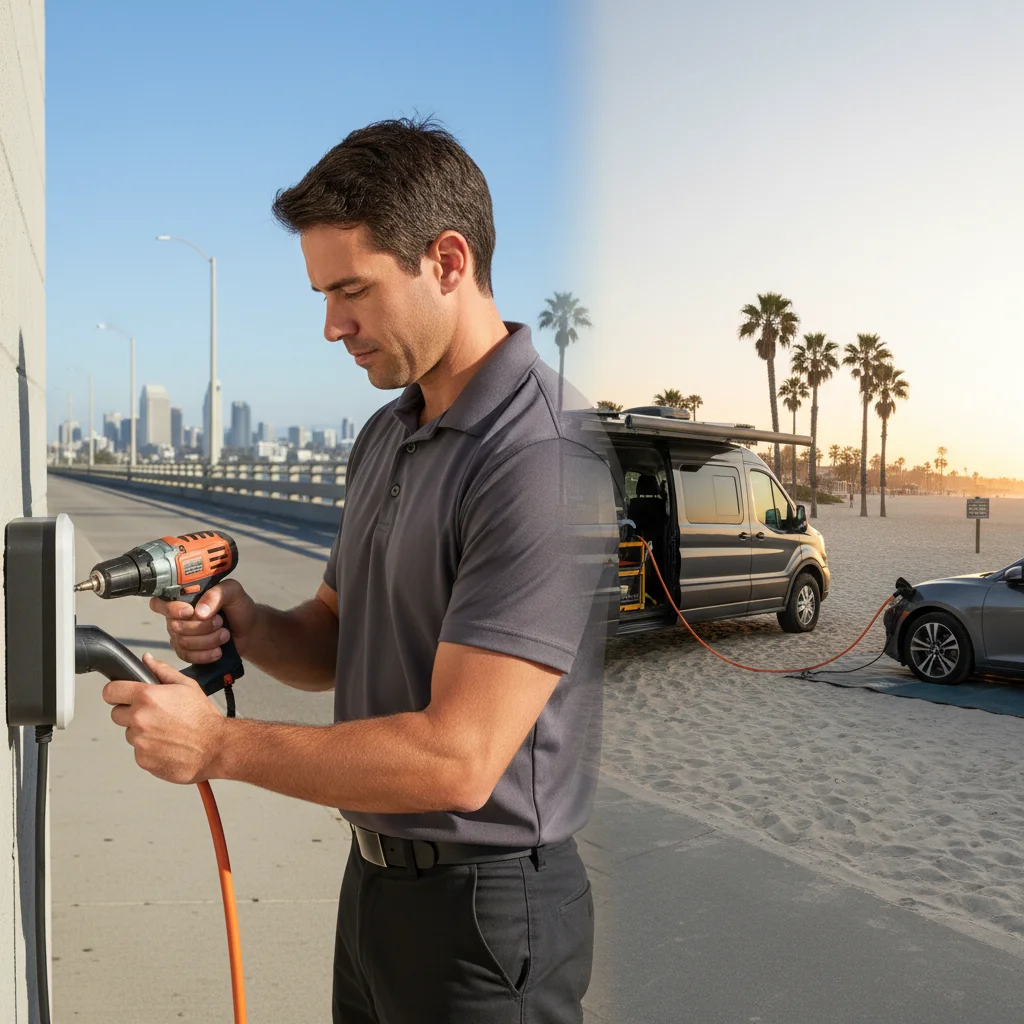
The Nevada shore of Lake Mead is a long reach
Past Boulder City, the Nevada shore of Lake Mead is National Park Service land. The full name is Lake Mead National Recreation Area. Hoover Dam itself is Bureau of Reclamation property. Follow posted rules if you stall inside those sites. Ranger or security direction comes first on those sites. Cell coverage stays thin along that shore. A boater or day visitor who ran errands on the way out can finish low. That leaves little range for the climb home.
That’s why a call from the lake is a long dispatch for any operator. Call while you still have a phone signal. Stay with the car at a launch ramp, overlook, or lot. Don’t walk the shoulder in this kind of heat. This Lake Mead roadside note covers the Nevada-shore stall. Out-of-charge recovery adds miles at the car when the pack is empty.
Empty pack, or a 12-volt that won’t wake the car
Not every dark EV is out of traction-battery range. Most EVs still run a small 12-volt battery. It powers the computers, locks, and contactors. Valley heat wears that 12-volt down fast. A car that won’t unlock or won’t wake is often a 12-volt problem. The charge port sometimes won’t release either. An operator can jump or replace that 12-volt on site.
If the high-voltage pack is empty, you need electrons, not a jump. A jump won’t refill a high-voltage pack. The operator’s Level 2 source is the tool for that. Run this charge, jump, or tow checklist before you guess.
What the operator brings to the bumper
Independent operators in this network bring a 240-volt Level 2 source to the car. A Tesla uses the native NACS plug. Other EVs use a CCS or J1772 adapter. Typical charging time adds about 10 to 20 miles of range. That takes 15 to 30 minutes on the cable. That’s session time, not a promise of when someone arrives. The operator quotes you before any work starts. The operator bills you directly after the quote.
They handle Tesla and every major EV brand. The pros we connect you with are licensed and insured. Charge Pro LV is only the referral line. We don’t own the trucks, and we don’t set the price.
A mobile charge is the usual path when the car will still accept power. A tow is the path when it won’t. A shop visit is the path when a fault needs a tech. Tow operators in Nevada need a Nevada Transportation Authority certificate. If you’re still hooked, you can ask to be let off at the original spot. Ask for the filed release fee on scene. Confirm that release figure before you pay. We don’t publish those tow rates here.
How to get help from town to the lake
Call Charge Pro LV when the car is stuck in Boulder City. That includes the Railroad Pass grade and the lake and dam run. We’ll connect you with a local operator who can charge or jump at the bumper. The local hub is our Boulder City charging page. Stay with the car and keep the hazards on. Get the quote before the cable goes in.
Reach the referral line at (702) 935-4699. Tell the operator where you are on US-93, I-11, or the Nevada shore.