A stranded EV driver in Henderson wants the same thing a stranded driver in Summerlin wants. The truck shows up. The truck carries the right plug. The truck works in 110F sun without tripping. That sounds obvious. Most of the kits that show up on a curb in this valley do not meet that bar.
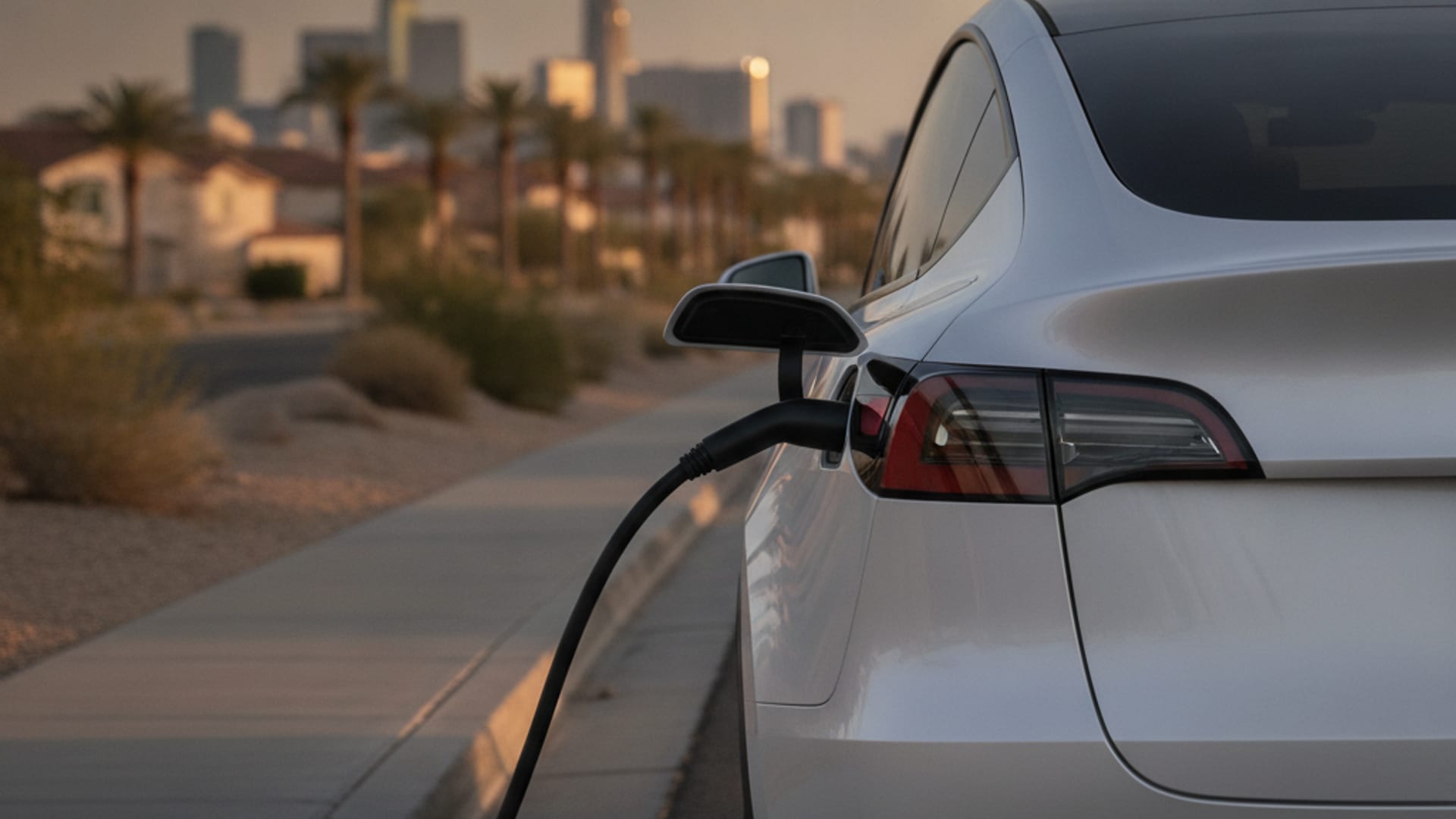
Desert heat changes what a mobile charger has to do
The NWS Las Vegas reading at KLAS lists an average July high of 104.5F. About 78 days a year reach 100F or more. About 9.4 days reach 110F or more. The record is 120F, set on 2024-07-07. The airport runs 5 to 15F warmer than outlying ground. The east valley can run up to 11F hotter than the rim. A truck’s electronics sit on the asphalt in that bowl. A standard portable EVSE derates fast. Cheap units trip at the wall before they trip at the car.
Operators who work the valley run commercial-grade Level 2 units with thermal headroom. They spec the cabling for sustained output, not a five-minute test. They bring a generator or inverter that holds rated output in 100F heat. They check amperage at the plug, not just at the source. A unit that drops to 8 amps in the sun isn’t rescue-grade. It is a trickle.
A native NACS plug, with adapters for everything else
The Tesla share of valley registrations is the largest. A truck without a native NACS plug spends the first five minutes of every call hunting an adapter. Operators who do this daily carry a NACS lead built into the unit. They wrap it on the truck, not in a bin.
Other brands are covered by adapters. CCS covers most modern non-Tesla EVs sold in North America. J1772 covers older EVs and plug-in hybrids. A truck should carry both adapters on the same call. Charging an Ioniq 5 with a Tesla-only plug burns a second visit. So does a Leaf with a CCS-only truck.
A 240V Level 2 source runs the show. A typical session adds 10 to 20 miles of range in 15 to 30 minutes of charging. That window is charging time, not an arrival time. It is enough to leave a resort lot, climb a ramp, or reach a working public charger. The kit has to deliver that number on a 110F afternoon. See Mobile EV charging for what a working call looks like.
Cables, connectors, and connectors that survive grit
Monsoon dust finds every gap. Operators who run the valley wash connectors after every call. They carry dielectric grease for the pins. They replace any cable that shows heat damage at the bend. A bent pin is the most common connector fault. A driver who yanked a heavy cable across hot pavement has bent pins. The truck has to spot that, not just push energy through it.
Desert heat also shortens cable life. PVC insulation cracks faster at 110F than at 90F. Operators who work this region stock heavier jackets. They spec commercial-grade strain relief. They retire any cable that shows surface checking. A rescue truck should look maintained. If the cable is cracked, the unit likely is too.
What the truck needs on board beyond the plug
Three things separate a working truck from a showpiece:
A working 240V source. A generator or inverter that holds rated output in the heat. A truck that drops below 24 amps at noon in Henderson is a liability.
A native NACS plug plus CCS and J1772 adapters. The Tesla share is large. The CCS share is growing. A truck that handles only one connector burns time on every other call.
A documented 12V jump kit with surge protection. A dead 12V looks like a dead pack from outside. The truck has to be able to test which it is, and jump the 12V without frying a module. For the 12V path, see Tesla 12V battery jump.
Where the valley’s stalls actually happen
Operators learn the patterns. A valet deck at the Cosmopolitan holds a car through a long stay. A self-park structure at the Wynn bakes an EV for hours. A garage in Green Valley holds a charging session that never starts. A ramp in Downtown Las Vegas leaves a Fremont Street car with the wrong stall. A driveway in Anthem cooks a 12V through a long weekend.
The truck that shows up needs to reach the car, not just the curb. Tight resort ramps are a regular call. A flatbed can’t turn in there. A charging van can. The kit matters as much as the truck. See How mobile EV charging trucks work for the broader mechanical layout.
What to ask before you book a call
Ask if the truck carries a native NACS plug. Ask if it carries CCS and J1772 adapters. Ask if the operator has worked the Las Vegas Valley in summer before. Ask whether the unit is rated for sustained output in heat. The operator’s answers tell you whether the call ends with a charged car or another wait.
NV Energy serves the Las Vegas Valley and publishes a managed charging program for owners who can plug in overnight. Their Residential EV Recharge Rider time-of-use window runs 10:01pm to 8:00am. That helps at home. It does not put a working plug in a stalled car at a curb. For the broader utility role in the valley, see NV Energy’s EV programs.
For a national view of charger types and connectors, the U.S. Department of Energy AFDC glossary is the cleanest reference. It keeps the connector names consistent across brands.
What an operator will quote on site
Charge Pro LV is a referral line for the Las Vegas Valley. It matches stranded drivers with independent local mobile rescue operators. It performs no work, owns no trucks, and employs no technicians. It does not set prices or promise an arrival time. The operator quotes you before starting and bills you directly. The pros we connect you with are licensed and insured.
EV roadside assistance is the umbrella. Out-of-charge recovery is the empty-pack job. Tesla roadside rescue is the Tesla-specific call. Operators on this line carry the kit above. They quote you on site. The session adds the miles you need to reach a working plug.
Call (702) 935-4699 when you want us to match you with a local operator whose truck has the right plug for your car.
Related guides
For another angle on the same valley stall, see How mobile EV charging trucks work · Mobile EV charging near you in the valley.
Frequently asked questions
What connector does a roadside mobile EV charger need in Las Vegas?
A native NACS plug covers Tesla. CCS covers most modern non-Tesla EVs. J1772 covers older EVs and plug-in hybrids. The truck should carry all three on the same call. A truck that only carries one burns time on every other EV.
Does a mobile EV charger work in 110F valley heat?
A commercial-grade Level 2 unit with thermal headroom holds rated output in the heat. A standard portable EVSE derates fast in 110F sun and trips before it reaches the car. Operators who work the valley run commercial units, not consumer portable boxes.
How many miles of range does a mobile charger add?
A typical 240V Level 2 session adds 10 to 20 miles of range in 15 to 30 minutes of charging. That window is charging time, not an arrival time. It is enough to leave a resort lot or reach a working public charger.
Does the truck need to be a flatbed?
No, a charging van is the right tool for an empty pack at the curb. A flatbed is for a car that cannot roll under its own power. The two jobs are different. The truck on a mobile EV charging call is built for charging at the bumper.