Your Tesla sat through a long Strip convention, came back dark, and a jump only kept it awake for an hour. The 12V is worn out. Heat aged it faster than the meter said it would. A replacement at the car is the right next move, and the operator quotes the work before they start.
What the desert does to a Tesla 12V
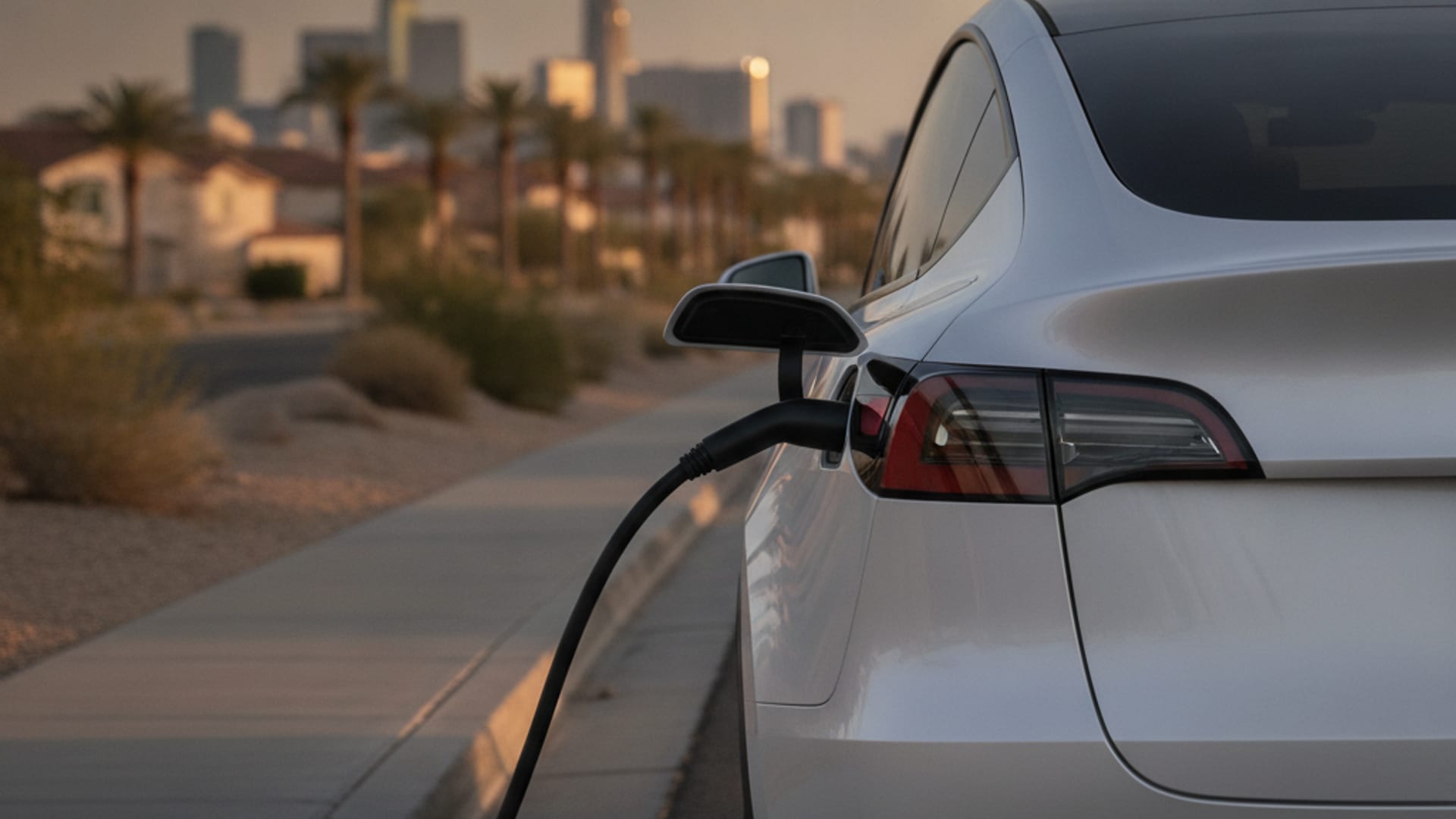
NWS Las Vegas averages a July high of 104.5F at KLAS. About 78 days a year reach 100F. About 9.4 days reach 110F. The all-time record is 120F, set on July 7, 2024. A Tesla parked at a Strip self-park or a Harry Reid lot sits in that heat for hours.
Lead-acid 12V cells lose capacity in heat faster than they lose it in cold. Heat accelerates grid corrosion and water loss. A 12V that would last six years in a cooler climate can fail in three here. Tesla moved many Model 3 and Model Y cars to a lithium 12V around 2021. Both chemistries still age in heat. Tesla did not publish a heat-failure percentage we could verify for this page, so we do not quote one.
Cabin Overheat Protection and Sentry Mode add parked load on top of the heat. Tesla does not publish a published drain figure for either, so we do not quote one. The behavior is well documented in owner forums. The combined effect is that the 12V lives harder here than it does in milder climates.
Recurrent Auto found about 5 percent range loss at 90F and 17 to 18 percent at 100F. AAA, in May 2026, measured 8.5 percent range loss at 95F. Those numbers are about the drive pack, not the 12V. They still explain why the cabin runs hard at a resort garage and why the 12V keeps paying for it.
What the operator quotes before starting
Charge Pro LV is a referral line. It matches stranded EV drivers with independent local operators. The operator quotes you before starting and bills you directly. Charge Pro LV does not set prices. Charge Pro LV does not publish a parts or labor rate. The operator owns the quote.
The operator typically quotes two numbers on the call. The first is the jump number, which is the smaller fee. The second is the replacement number, which is the larger fee. You choose which one to authorize. Nobody on this line bills you for work you did not accept.
This page does not print a Tesla 12V parts figure. Tesla did not publish a current retail figure we could verify, and aftermarket parts prices vary by brand and chemistry. The operator quotes the actual number on the call. Confirm before they unroll a cable.
Tesla 12V battery jump is the service page that explains the same procedure for any modern EV. EV 12V battery replacement signs lists the warnings that show up before a full failure.
What the replacement looks like on site
The operator arrives with a portable jump pack, a replacement 12V matched to the car, and basic hand tools. On a Model 3 or Model Y, the 12V sits under the hood, front right. On a Model S or Model X, the 12V sits in the frunk area near the firewall.
The operator disconnects the negative terminal first, then the positive. They remove the hold-down and lift the old 12V out. They seat the new 12V, reconnect the terminals in reverse order, and reset the car’s 12V monitoring. The whole job takes about 20 to 40 minutes at the car.
The operator programs the new 12V into the car’s battery monitor if the car requires it. Some Teslas do this step automatically. Some require a manual reset through the service menu. The operator knows the difference for the year and model on site.
The operator does not move the car. The replacement happens at the stall, in the driveway, or in the lot where the car sits. You do not watch a flatbed hook your car.
What you do before the operator arrives
Set hazards if the car is on a shoulder. Move to a legal parking spot if the car will roll. Turn off Cabin Overheat Protection in the climate menu. Turn off Sentry Mode in the safety menu. Both settings draw the 12V and confuse the new battery’s first hours.
Confirm the car is unlocked. The operator needs to open the frunk or the hood. If the handles will not present because the 12V is gone, the operator uses the emergency 12V jump points under the hood to wake the body controller. The locks will then release.
Have the key fob or the phone key ready. The operator will test the wake after the replacement. They will confirm the screen lights, the handles present, and the app reconnects. That is the test that proves the new 12V is doing its job.
For the broader pattern, Tesla 12V battery failure in valley heat walks the same desert climate and the same failure mode. The replacement above is the next chapter of that page.
What the replacement does not include
The replacement does not include a drive-pack charge. If the drive pack is empty, the operator brings a 240V Level 2 source after the 12V swap. A typical session adds 10 to 20 miles of range in 15 to 30 minutes of charging. That is a separate job, quoted separately.
The replacement does not include a software update. Tesla publishes firmware updates through the car’s network connection. The new 12V does not change the firmware path. The car’s existing software runs on the new battery without a service visit.
The replacement does not include a warranty from Charge Pro LV. Charge Pro LV is a referral line. It does not warrant the operator’s work. The operator may warranty their own work. Ask on the call what the operator’s warranty covers and how long it lasts.
The replacement does not include a tow. If the car is on a shoulder and cannot be moved safely, the operator reaches the car in their service vehicle. If the car is in a tight garage, the operator works at the stall. A flatbed is a separate job, quoted by a separate provider.
When the replacement is not the right move
A 12V that is genuinely healthy does not need replacement. If the warning signs are subtle and the screen is bright, the 12V may simply need a charge. A drive at highway speeds will recharge the 12V through the DC-DC converter.
A drive pack that is empty does not need a 12V. The 12V wakes the contactors, but it does not add range. If the pack is at zero, the right move is mobile Level 2 charging, not a 12V swap. The operator brings the equipment that matches the failure.
A car that is showing electrical faults beyond the 12V does not need a 12V alone. A car with multiple system errors may have a wiring issue, a module failure, or a water intrusion. The operator on scene decides what the next step looks like.
For more on the climate, the NWS Las Vegas climate page and the Recurrent Auto heat-loss data are the open sources.
When the car is dark and the handles will not present, call (702) 935-4699. Charge Pro LV connects you with a local operator. For the broader valley map, start at EV charging in the Las Vegas Valley.
Frequently asked questions
How much does a Tesla 12V replacement cost in the Las Vegas Valley?
This page does not print a parts or labor figure. Tesla did not publish a current retail number we could verify. Aftermarket parts prices vary. The operator quotes the work before they start and bills you directly.
Can a Tesla 12V be replaced at the car?
Yes. On a Model 3 or Model Y, the 12V sits under the hood, front right. On a Model S or Model X, it sits in the frunk area near the firewall. The operator replaces it at the stall, in the driveway, or in the lot where the car sits.
Does a Tesla 12V replacement include a charge?
No. The replacement swaps the small battery. The drive pack is still on its own state of charge. If the pack is empty, the operator brings a 240V Level 2 source as a separate job, quoted separately.
How long does a Tesla 12V replacement take?
About 20 to 40 minutes at the car. The operator disconnects the old battery, seats the new one, reconnects the terminals, and resets the car’s 12V monitor. Confirm the wake before the operator leaves.