A Cybertruck sat through the weekend in a driveway in Green Valley. The owner came out Monday morning and tapped the door handle. Nothing happened. No lights. No chimes. The big screen stayed black. The truck wouldn’t unlock, let alone start. Valley heat had cooked the small battery under the hood.
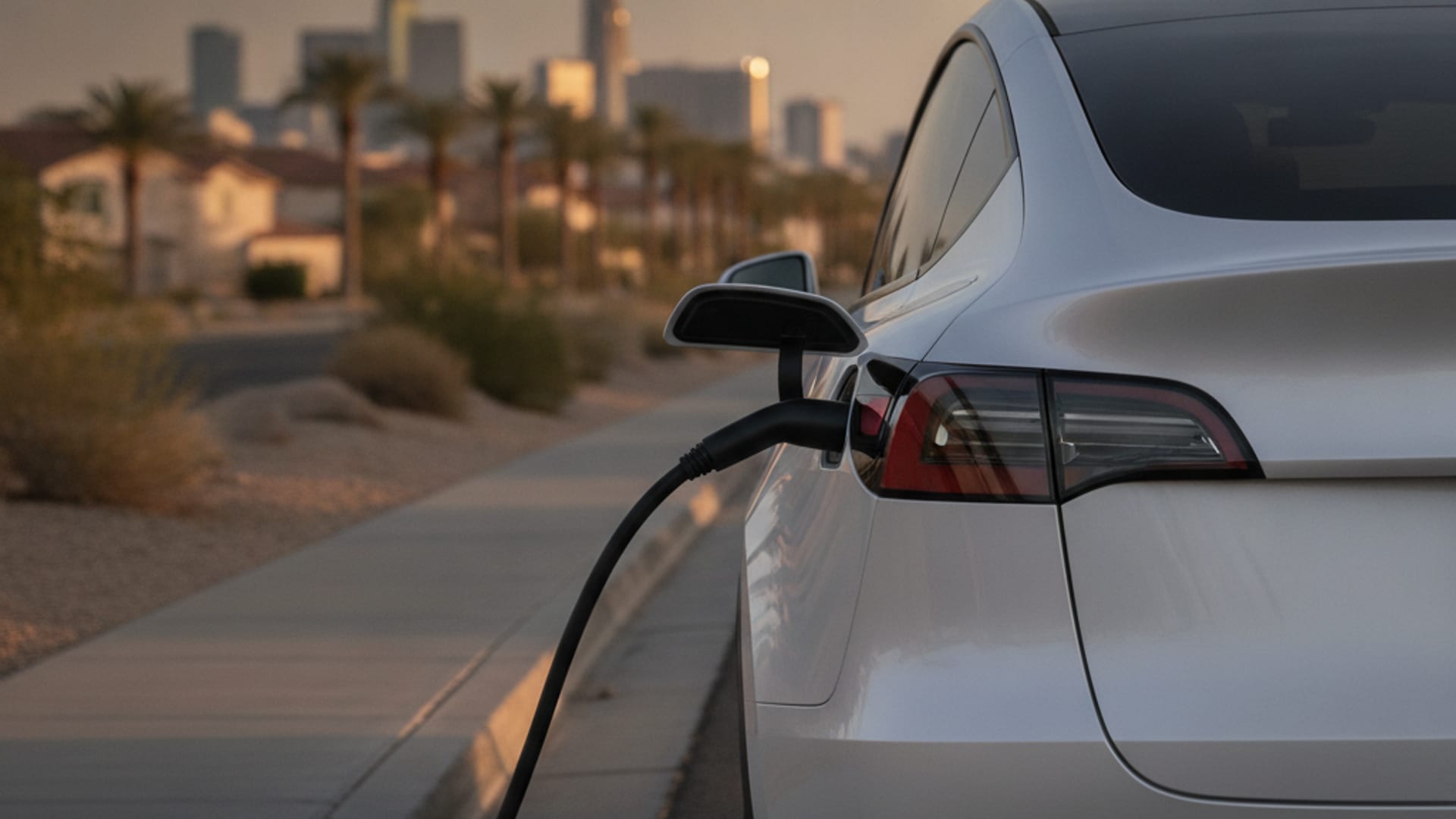
Why the Cybertruck 12V fails first in valley heat
The Cybertruck runs a 12V lithium-ion pack to wake the main pack and run accessories. That small pack lives in a service panel near the front. Heat shortens its life faster than the traction pack behind it. The NWS Las Vegas climate record puts the average July high at 104.5F, with about 78 days a year at or above 100F. The east valley can run up to 11F hotter than the rim. Green Valley, Henderson, and Paradise sit in that warmer bowl.
A garage pushes that further. Stucco absorbs heat all day. The air inside can sit at 130F well past sunset. The 12V sits in that air. When the truck finally cools overnight, the chemistry has already taken a hit. By Monday morning, voltage sags below the wake threshold. The truck thinks it has no key. It will not unlock.
A weekend is a typical failure window. Three days at Nellis on business, with the truck parked outside. Two days of work at the resort corridor, with valet parking in a hot deck. The pattern repeats every summer in Summerlin South and Southern Highlands.
What you’ll notice when the 12V is the problem
The Cybertruck signals a 12V failure in a few ways.
The door handle doesn’t extend when you press it. The phone key stops working. The app says “vehicle offline.” The windshield wiper stalk won’t toggle. None of this means the traction pack is empty. The big pack can sit at 80 percent and still refuse to wake.
Lift the frunk and look at the 12V service panel. A green LED means the battery is still healthy. No LED, or a red light, means the cell is below safe voltage. Do Teslas have a 12V battery? walks through what each indicator means on a Tesla 12V. The Cybertruck uses a lithium 12V, so the chemistry is different from a Model 3 lead-acid unit, but the symptoms match.
What to try before you call
Work in a safe spot. Pull off the road, set hazards, and stay out of traffic. Nevada law lets a disabled vehicle stay when it can’t avoid stopping, per NRS 484B.440.
Try the in-app wake command first. Open the Tesla app and tap “wake up.” The app tries a low-energy cellular handshake. If the 12V is at the edge, the wake may take it. If it does not, leave the truck alone for ten minutes. The Battery Management System sometimes resets on its own.
Look at the touchscreen for any signs of life. A dim flicker means the 12V is almost dead but not gone. A flashing red battery icon means the 12V is below safe voltage and the truck needs a jump.
Do not try to jump the Cybertruck 12V from another car. The procedure uses a dedicated low-voltage jump point under the hood. Hooking it up wrong will throw faults and may damage the lithium cell. The same warning shows up in Tesla 12V battery failure in desert heat: do not improvise.
When to bring in a mobile operator
If the truck still won’t wake after ten minutes, Tesla 12V battery jump is the right call. The pros Charge Pro LV connects you with bring a low-voltage booster rated for lithium 12V packs. They hook up at the Cybertruck’s built-in jump posts. They do not pull the battery out and they do not tow the truck to a shop.
In most cases the truck wakes on the first try. The operator leaves the booster connected for ten minutes so the truck can top off the 12V through its own DC-DC converter. Then they disconnect, the truck runs a self-check, and you drive away.
If the 12V is below its recovery window, the operator carries a replacement lithium 12V rated for the Cybertruck. They swap it on the spot in the same lot where you sit. The truck relearns the 12V serial number in a few minutes and resumes normal operation.
What an operator will not do
The operator won’t promise an arrival window. They won’t quote a price over the phone. They won’t tell you that your traction pack is the problem until the 12V is ruled out. Charge Pro LV is a referral line. It doesn’t own trucks, doesn’t hold trade licences, and doesn’t set prices. The matched operator quotes the job before starting and bills you directly.
A jump on site, a 12V swap on site, and an offer to follow the truck to a shop are the only outcomes. If the operator thinks the truck needs dealer-level diagnostics, they will say so. Tesla roadside rescue covers that next step.
What happens if you wait
A dead 12V left for a week in valley heat will not recover. The lithium cell drops below its safe minimum voltage. The truck’s Battery Management System locks the pack to protect it. At that point the truck will need a tow to a service centre, not a roadside call.
Heat compounds the damage. The traction pack sits at high state of charge while the truck is dead. Recurrent Auto found about 17 to 18 percent range loss at 100F. A truck that sits at 90 percent in 110F heat for a week loses measurable capacity to calendar aging. Geotab’s desert-climate study showed about 0.4 percent faster annual degradation in Phoenix-style heat. Don’t leave the truck sitting if you can help it.
Related guides
For another angle on the same valley stall, see How to tell a Tesla 12V is dead in valley heat.
Frequently asked questions
How long does a Cybertruck 12V last in Las Vegas heat?
Most lithium 12V packs on Cybertrucks last two to three years in the valley. Heat cuts calendar life faster than driving cycles do. A truck that lives outside in Henderson will see shorter life than one in a covered garage in Summerlin.
Can a Cybertruck 12V be jump-started from another Tesla?
No. Use the dedicated low-voltage jump posts under the hood. The system expects a controlled 12V source, not a direct connection to another running car. The Cybertruck owner’s manual gives the exact post locations and the safe procedure.
Will the Cybertruck tow itself if the 12V is dead?
No. The truck cannot shift out of park when the 12V is below safe voltage. The shift-by-wire system requires the small battery to work. A flatbed is the only safe transport.
Is the 12V covered under warranty when it dies in heat?
Tesla’s warranty covers 12V defects, not heat-driven calendar aging. A pack that fails inside the warranty period gets a free replacement at a service centre. A pack that fails outside the warranty period is a paid replacement. The operator quotes the cost before starting.
Can I leave the Cybertruck at Harry Reid long-term parking without a 12V tender?
Long-term parking at Harry Reid sits in the open. The 12V will not survive a multi-week trip without a tender. If the trip runs more than two weeks, arrange a battery tender through valet or ask someone to start the truck once during the trip.