An Uber driver in a Model 3 pulled into the Harry Reid Cell Phone Lot at 6 percent. The app was pinging for a pickup at Terminal 1. The driver had no time to sit at a Supercharger for 40 minutes. The question came up: does Uber roadside cover EV charging at the curb? The short answer is no. Uber’s published roadside help covers flat tires, jump starts, fuel delivery, and tows. EV pack charging isn’t on that list. A rideshare driver at a low pack at the airport needs a different line.
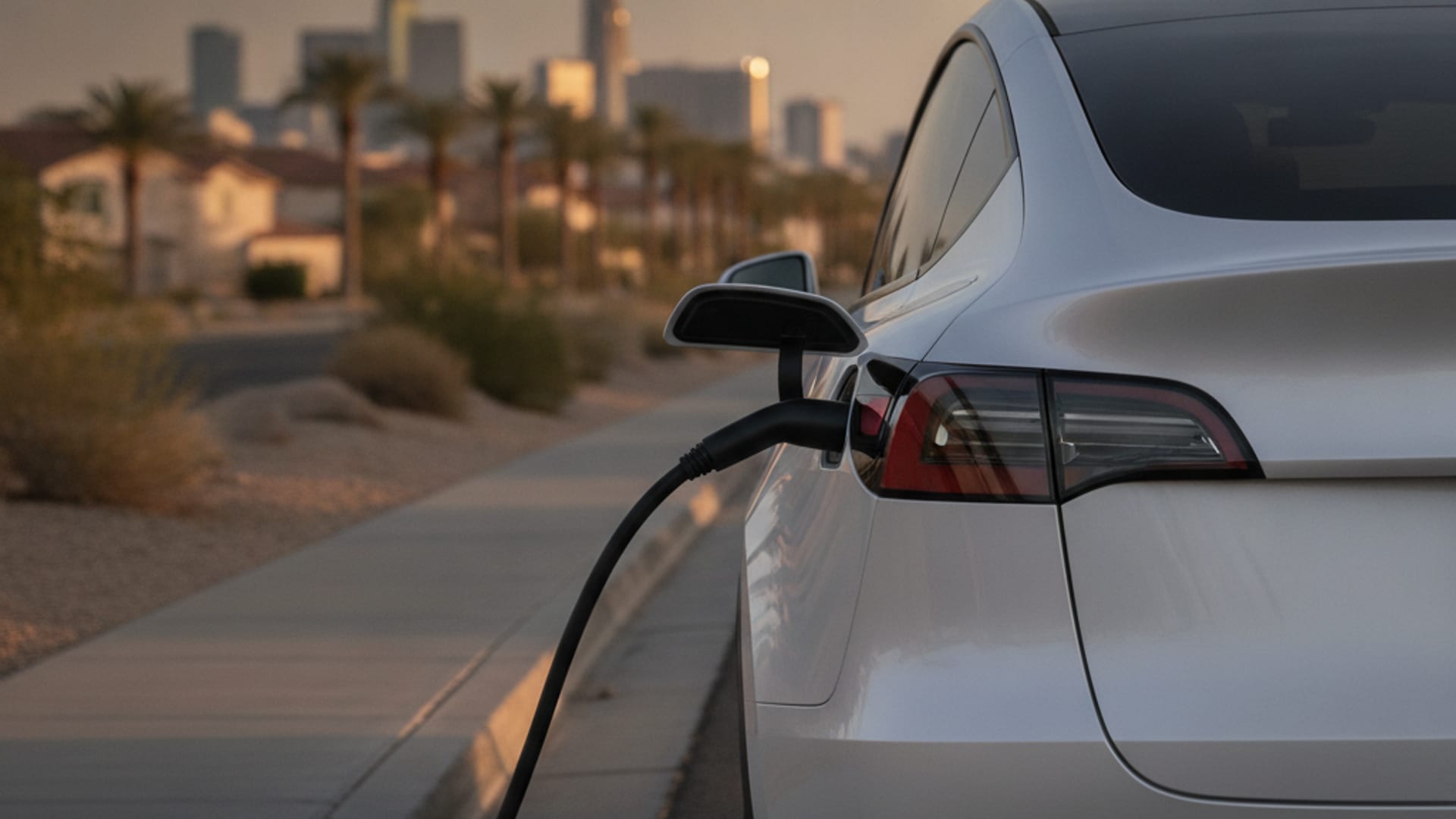
What Uber roadside actually covers
Uber’s roadside program runs through a partner network and shows up in the driver app under “Help.” The published categories are flat tires, dead batteries that need a jump, fuel delivery, lockouts, and tow service. The program helps a rideshare driver get the car rolling again when the failure is mechanical. A low traction pack is a different problem.
The driver’s app may surface a generic EV button, but that button usually links to the OEM’s roadside program. For a Tesla Model 3, that’s Tesla’s own line. For a Hyundai Ioniq 5 or a Kia EV6, that’s the brand’s line. Neither of those brings a mobile Level 2 charger to the curb.
Why the airport Cell Phone Lot is the bad place to run dry
Harry Reid sits inside Paradise. Terminal 1, Terminal 3, the Long Term lot, the Economy lot, the Remote Lot, the Cell Phone Lot, and Reservation Parking all sit in that township. Most drivers holding for a fare stage at the Cell Phone Lot on Paradise Road or at one of the terminal garages. Those lots have no fast chargers on site. A driver who ran the pack down to 6 percent has to drive off-airport to a working stall.
A Supercharger sits a few exits north on Paradise Road. That’s still 10 to 15 minutes of driving. A driver who’s online and waiting for a fare can’t burn that time. A driver who idles at the airport adds range on a slow Level 2 charger only if a working stall exists. There isn’t always one.
NV Energy serves Paradise and the airport. The utility publishes home EV rates and a managed charging program. The time-of-use EV window on the Residential EV Recharge Rider runs 10:01pm to 8:00am. That helps a driver who plugs in at home. It doesn’t help a driver at the curb at 6pm on a Saturday.
The real cost of a low pack at the airport
A driver at 6 percent is about 18 to 22 miles of range on a Model 3. The drive to the nearest working Supercharger, the wait in line, and the drive back to the staging lot can eat an hour. An Uber fare lost to range anxiety is a fare lost to the app.
NDOT’s Freeway Service Patrol covers Paradise Road and the airport connector during peak hours. Hours are 5:00am to 8:30pm, seven days a week. Quality Towing operates it, and GEICO sponsors it. The patrol handles tire changes, jump starts, fuel, minor fire suppression, and traffic control. NDOT’s published patrol materials do not mention EV charging. A driver sitting at 6 percent in the Cell Phone Lot doesn’t get a charge from that patrol.
What a mobile charge at the curb looks like
A mobile operator brings a 240V Level 2 source to the car. The operator carries a native NACS plug for Teslas and CCS or J1772 adapters for other brands. A typical session adds 10 to 20 miles of range in 15 to 30 minutes of charging. That’s enough to leave the lot and head to the nearest working Supercharger. The clock on charging is the operator’s quote. The clock on arrival is whatever the operator tells you on the phone.
Charge Pro LV is a referral line for the Las Vegas Valley. It matches stranded drivers with independent local mobile rescue operators. It performs no work, owns no trucks, and employs no technicians. The operator quotes you before starting and bills you directly. The pros we connect you with are licensed and insured.
For the airport pattern, see EV rescue at Harry Reid airport and mobile EV charging.
When the call is a flat, not a charge
If the driver has a flat tire at the curb, Uber’s roadside partner will come. If the 12V is dead and the pack is fine, Uber’s roadside partner will jump the 12V. Both of those fit the published help list. A low traction pack does not.
For the broader pattern on rideshare EVs, see mobile EV charging quotes in the valley. For Tesla-specific calls, see Tesla roadside rescue.
Related guides
For another angle on the same valley stall, see EV dead at Allegiant Stadium parking · How to get a mobile Tesla charge in the valley.
Frequently asked questions
Does Uber roadside charge my EV at Harry Reid Airport?
No. Uber’s published roadside help covers flat tires, dead 12V jumps, fuel delivery, lockouts, and tows. A low traction pack is not on that list. A driver who runs dry at the airport needs a mobile Level 2 charge at the car.
Can a rideshare driver charge at the airport?
The airport has limited public charging. The Cell Phone Lot and the terminal garages don’t all have working stalls. A driver who needs range usually has to drive off-airport to a Supercharger or to a working stall.
What does a mobile EV charge at the airport cost?
Charge Pro LV doesn’t set prices. The independent operator quotes you on the phone or on site. A typical charge adds 10 to 20 miles in 15 to 30 minutes of charging. That’s charging time, not an arrival promise. The operator bills you directly.
What if my 12V is dead but the pack has range?
That’s a jump, not a charge. Uber’s roadside partner will jump the 12V. If you want a fresh 12V at the car, ask for a mobile operator instead. Both Tesla 12V battery jump and non-Tesla EV rescue cover the airport.
Call (702) 935-4699 when you want a local operator at the car instead of a long dispatch.