Aliante sits on the north-valley grid in far North Las Vegas. EV roadside assistance in Aliante means a mobile operator comes to the car. Charge Pro LV matches you with independent locals. They add range or wake a dead 12V on site. They quote before they start, and they bill you directly. Drivers here stage for US-95 with a thinner margin than the dash shows. A home plug overnight doesn’t erase the south commute, or the heat that follows.
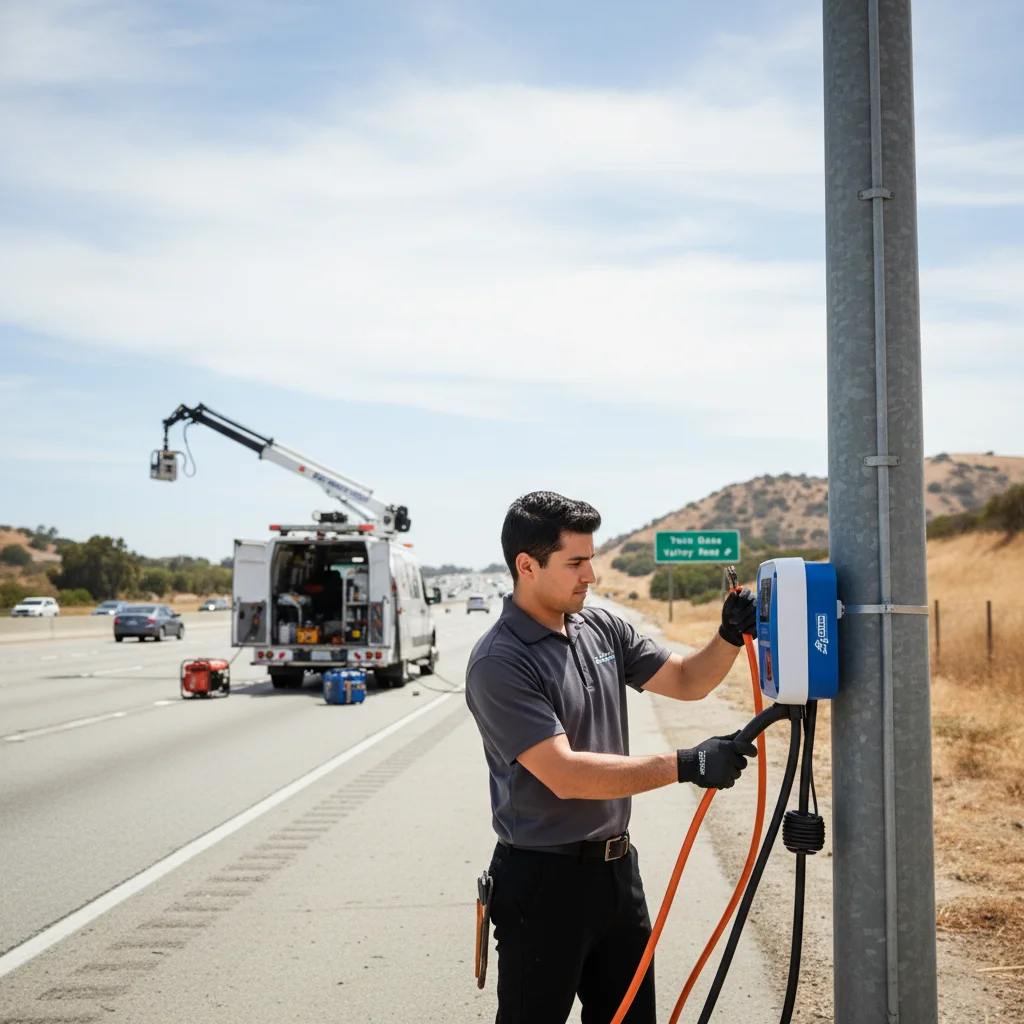
Home charging, then a long pull south
Aliante is a master-planned community in far North Las Vegas. It grew around the Aliante casino and golf. Housing is newer here, and home charging is the pattern. NV Energy serves North Las Vegas, including this pocket. Clark County’s Title 30 code requires EV-ready wiring in new construction. A Level 2 home charger still needs an electrical permit. Many Aliante drivers start from a home plug.
The regular commute still runs south into the city. That’s a long pull on I-15, US-95, or CC-215. Highway speed spends the buffer you counted on at breakfast. Nevada has no toll roads, express lanes, or transponder systems. I-15, I-215, CC-215, US-93, US-95, and I-11 are all free. Free pavement doesn’t give those miles back.
July is the hard month on a parked pack. NWS Las Vegas lists an average July high of 104.5F. About 78 days a year reach 100F or more. About 9.4 days reach 110F or more. The record high is 120F, set on July 7, 2024. Recurrent Auto found about 5% range loss at 90F. The same work found 17 to 18% loss at 100F. Air conditioning can draw 3 to 5 kW to cool a hot cabin. Holding an already-cool cabin takes about 1 kW. AAA, in May 2026, measured 8.5% range loss at 95F. Don’t pin any of those numbers on Tesla. No Tesla-published range-loss figure could be confirmed.
Aliante sits farther out than Harry Reid International Airport. The airport can run 5 to 15F warmer than outlying areas. Downtown and the east valley can run up to 11F hotter than the rim. You’re still in desert heat on a North Las Vegas afternoon. The estimate that looked fat in the garage can slip before dinner.
US-95 staging and the lots people sit in
The local stall in Aliante is often the north launch. People charge at home, then treat US-95 as a short hop. That highway isn’t the short hop it looks like on a map. Indian Springs sits farther north on the same corridor. Creech Air Force Base is near Indian Springs. Once you’re committed, a U-turn isn’t a small errand.
Las Vegas Motor Speedway is in North Las Vegas. A long sit in a hot lot cooks the cabin. You come back, run the A/C, and watch the estimate fall. Casino lots and golf parking around Aliante do the same thing. Nellis Air Force Base sits on the northeast edge of the valley. Errands that way add loops you didn’t budget for a south commute. Floyd Lamb Park is a north-valley outing with the same heat-soak. The College of Southern Nevada’s North Las Vegas campus is another weekday pull. None of this means a charger is missing. Cars sit in the sun, then they ask for miles the A/C already spent.
If the pack is already too low to start the north run, stay put. Get a mobile charge on site in Aliante, and don’t roll out on hope. The same north-edge math shows up in North Las Vegas. You’ll see it in Centennial Hills too.
Tell the 12V failure from an empty pack
A dark car isn’t always an empty pack. Most EVs still use a 12V battery to wake computers and close contactors. Valley heat wears that 12V down. Average January lows sit near 37F, with about ten freeze nights. Parked summer days are harder on it. Geotab found hot-climate packs degrade about 0.4% per year faster. Phoenix-style desert heat is the hard case in that work. The 12V usually complains first in this climate.
If locks are sticky and screens stay black, ask for a 12V jump. If the car is awake and the range reads zero, you need a charge. Operators we connect you with handle Tesla and every major EV brand. They can jump or replace a dead 12V on site. They also bring Level 2 charging when the traction pack is empty.
Give the operator a clear pin in ZIP 89084 or 89085. Say whether you’re in a driveway, a casino lot, or on a shoulder. Say what the dash showed before it died.
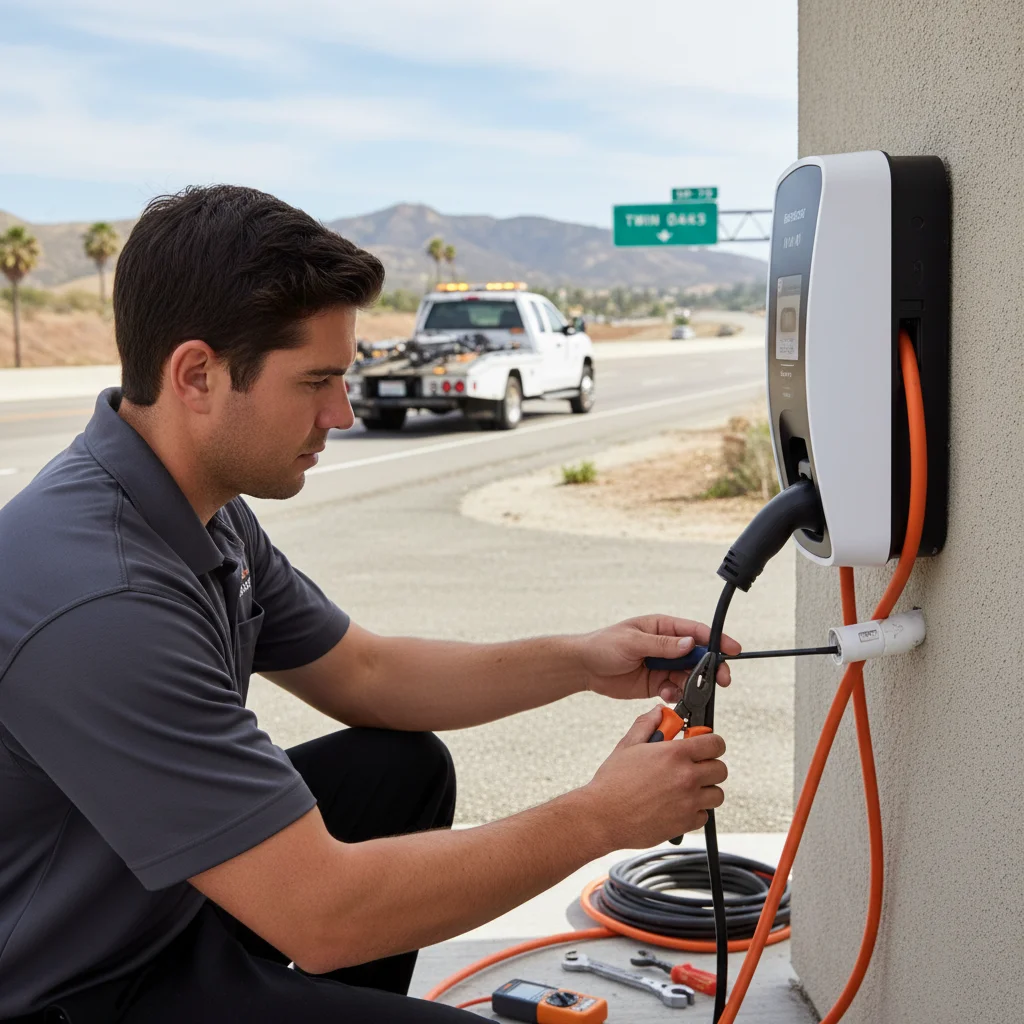
What actually arrives at the car
Charge Pro LV is a referral line, and we hold no license. We don’t own trucks or charging gear, and we don’t employ technicians. We set no prices and we publish no arrival window. The operator quotes you before starting and bills you directly.
The work at the bumper is Level 2. Operators bring a 240V source to the car. Teslas take a native NACS plug. Other EVs use a CCS or J1772 adapter. Typical charging adds 10 to 20 miles of range. That takes 15 to 30 minutes of charging. That clock is plug time, not a promise of when someone shows up.
Ten to twenty miles can get you off a shoulder. It can finish a short hop back to a home plug. It isn’t a full fill of the pack. For that on-site charge, start with mobile EV charging. For the broader rescue path, use EV roadside assistance.
If a jump brings the car back and it dies again, stop repeating the jump. The 12V likely needs a replacement, not another jump. The operator can put that in the quote.
Patrol help, tows, and the statutes that apply
NDOT’s Freeway Service Patrol covers the busiest Las Vegas Valley freeways. Quality Towing runs it, and GEICO sponsors it. Hours are 5:00am to 8:30pm, seven days a week. The stop is free to motorists. They handle tire changes, jump starts, fuel, minor fire suppression, and traffic control. NDOT reports about 55,000 incidents a year statewide. About 31,500 of those are in Las Vegas. None of the published FSP materials mention electric vehicles. They also don’t mention EV charging or EV-specific service. The patrol doesn’t advertise EV charging, which is an observed silence in their materials. It isn’t a claim that they can’t touch an EV.
On a freeway shoulder, NRS 484B.440 matters. A disabled vehicle that can’t avoid stopping is exempt from the no-stopping rule. The statute sets no time limit on how long it may remain. NRS 484B.443 lets law enforcement remove a disabled or abandoned vehicle. On freeways and primary highways, abandoned means 24 hours. On other roads it’s 72 hours, and the owner pays removal.
Tow operators need a Nevada Transportation Authority certificate. That’s under NRS 706.4463 and the sections around it. Non-consent tow rates are operator-filed tariffs under NAC 706.408. There’s no single statewide maximum on this site. We’re not publishing a tow rate here. An empty pack usually needs electrons, not a hook. A flat tire or a crash is a different job. So is a port that won’t take a charge.
Nevada 511 and nvroads.com show closures and cameras. The Nevada State Police Highway Patrol Southern Command is (702) 486-4100. The cell shortcode is *647 for Highway Patrol. Those contacts are for highway safety and rotation tows.
When to call from Aliante
Call when the pack is too low to finish the drive you’re on. Call when the car won’t wake and the 12V is the likely cause. Call from a driveway, a lot, or a shoulder in Aliante. Stay out of live lanes while you wait. Put the hazards on if you’re on a freeway.
Skye Canyon and Tule Springs share this north-edge layout. Newer streets, home plugs, then a long south run. The dash can still overpromise on a hot US-95 start. Monsoon season is July and August, with flash flooding in washes and underpasses. Don’t stand in a dip if rain hits.
Nevada has no state EV purchase rebate and no EV-specific registration surcharge. Clean Cars Nevada is in force from model year 2025. None of that moves a stalled car, but a charge at the bumper does. A separate guide covers charge, jump, or tow when the EV dies. Charge Pro LV serves the Las Vegas Valley, including Aliante. Call (702) 935-4699 to get matched with a local operator.