EV roadside assistance in Tule Springs is help at the car. You need a mobile charge or a 12V jump. A tow is a different job if the car is broken. This ZIP 89131 pocket sits at the far north of the built valley. Drivers stage here before the US-95 run. The map still looks like the Las Vegas Valley. The open miles past Floyd Lamb Park spend range faster than the screen shows.
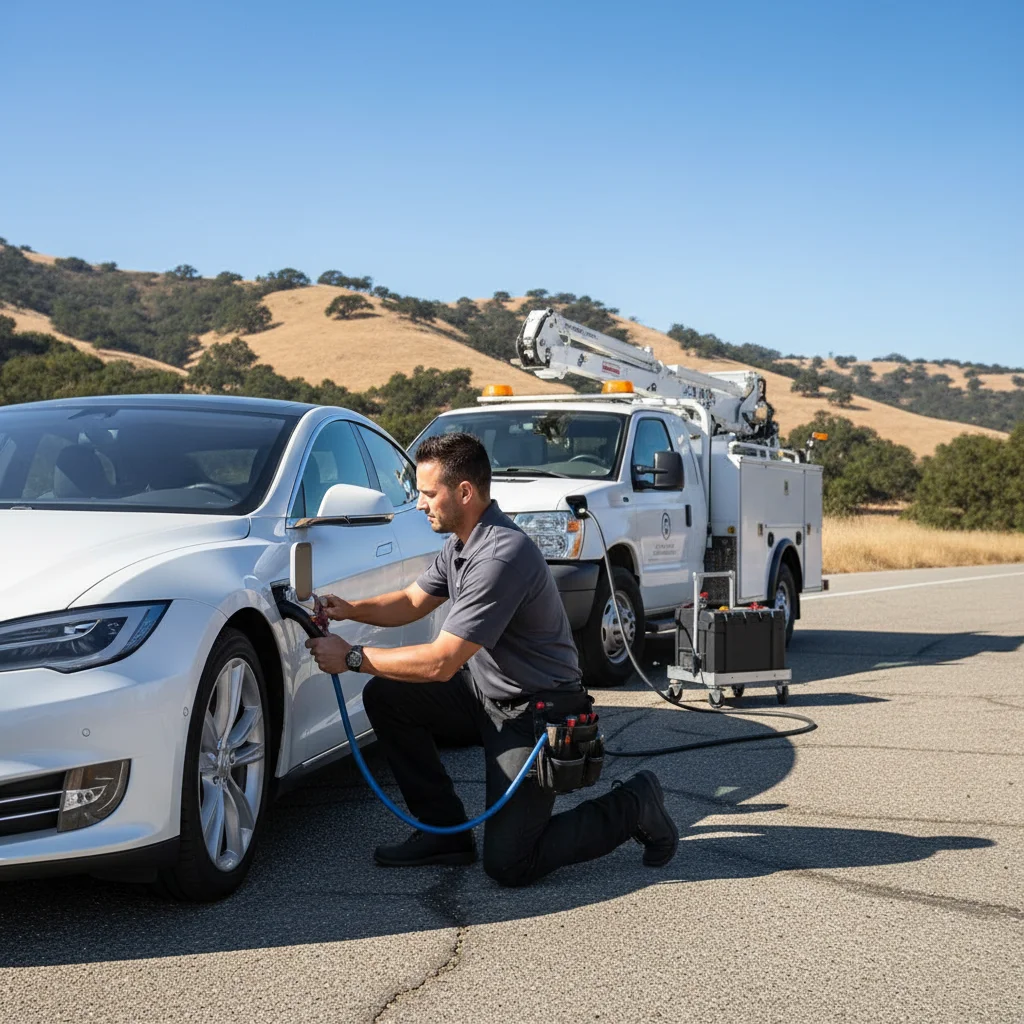
A north staging pocket before US-95
Tule Springs isn’t a separate Census place. Don’t look for a population figure that belongs to this community alone. It sits on the north edge of the built valley. Skye Canyon and Centennial Hills sit behind you on that grid. Ahead, US-95 keeps going toward Indian Springs and Creech Air Force Base.
That layout fools a range estimate. You’re still in the north-valley grid, with the built valley behind you. The road beyond is a longer, more exposed pull. Valley-floor elevation runs about 2,000 to 2,920 feet. Indian Springs sits near 3,169 feet. You don’t need a mountain pass to spend miles. Heat and cabin cooling will do it.
NV Energy serves this part of the Las Vegas Valley. Home charging here is on Nevada Power, not a co-op. Indian Springs, farther up US-95, is Valley Electric Association country. That’s a utility line, not a rescue plan. If you charge overnight, NV Energy has a time-of-use EV window. The Residential Electric Vehicle Recharge Rider runs 10:01pm to 8:00am. That plug is how many north-valley drivers leave with a full pack. It doesn’t help a car that’s already sitting in a Floyd Lamb lot.
There aren’t any toll roads on US-95. Nevada doesn’t have express lanes or a transponder system. Margin here is battery, heat, and cabin load.
If the pack is already fading as you point north, pause. Read what to do on US-95 toward Indian Springs. Treat Tule Springs as a staging pocket. Don’t treat the estimate as a finish line.
Heat on an open north lot
NWS Las Vegas numbers are blunt. The average July high is 104.5F. About 78 days a year hit 100F or more. About 9.4 days reach 110F. The all-time record high is 120F, set on July 7, 2024.
Tule Springs is open and exposed. Floyd Lamb Park and the fossil beds sit at the edge of the built valley. A car that parks for hours soaks heat into the cabin. Recurrent Auto found a 3 to 5 kW draw to cool a hot cabin. Holding an already cool cabin is about 1 kW. The same work found about 5% range loss at 90F. At 100F the loss was 17 to 18%. AAA, in May 2026, measured 8.5% range loss at 95F.
None of those figures come from Tesla. Tesla hasn’t published a range-loss number we can cite. Use the independent tests, then leave a buffer the range screen doesn’t show.
The airport heat island runs 5 to 15F warmer than outlying ground. Downtown and the east valley can run up to 11F hotter than the rim. Tule Springs is on that outer rim. It’s still desert, and a parked EV still cooks. Monsoon months are July and August. Flash flooding hits washes and underpasses. If Nevada 511 shows water or a closure, don’t thread a low pack through it. Check nvroads.com before you leave the lot.
Floyd Lamb Park, the fossil beds, and the shoulder
The pattern is a stop that lasts longer than the drive in. You roll up from Skye Canyon or Centennial Hills. You park at Floyd Lamb Park or the fossil beds and stay. Hours later the cabin is hot. The return still includes the north grid, or US-95 itself.
A park lot isn’t a freeway shoulder. Stay in the stall if the car is already low. Don’t creep toward the exit on the last percent. If you’re already in a travel lane and can’t keep moving, stop. Nevada gives you a stop rule. NRS 484B.440 lets a disabled vehicle stop when it can’t avoid it. The statute doesn’t set a time cap. NRS 484B.443 is the other clock. Law enforcement may remove a disabled or abandoned vehicle. On freeways and primary highways, 24 hours is the abandoned mark. On other roads it’s 72 hours. The owner pays the removal. Get a charge, a jump, or a legal tow before that window.
The NDOT Freeway Service Patrol works the valley’s busiest freeways. Hours are 5:00am to 8:30pm, seven days a week. Quality Towing runs it, and GEICO sponsors it. It’s free for tire changes, jump starts, fuel, minor fire suppression, and traffic control. NDOT’s published patrol materials don’t mention EV charging. Don’t wait on the patrol for a pack fill. They may still help with a hazard or a conventional jump. Ask when they stop, and don’t assume a Level 2 charge. A stall in a Floyd Lamb lot isn’t a freeway incident anyway.
For a public plug while you wait, check the U.S. Department of Energy AFDC station map. This page isn’t a live stall list. Confirm a pin is actually open before you spend your last percent on it.
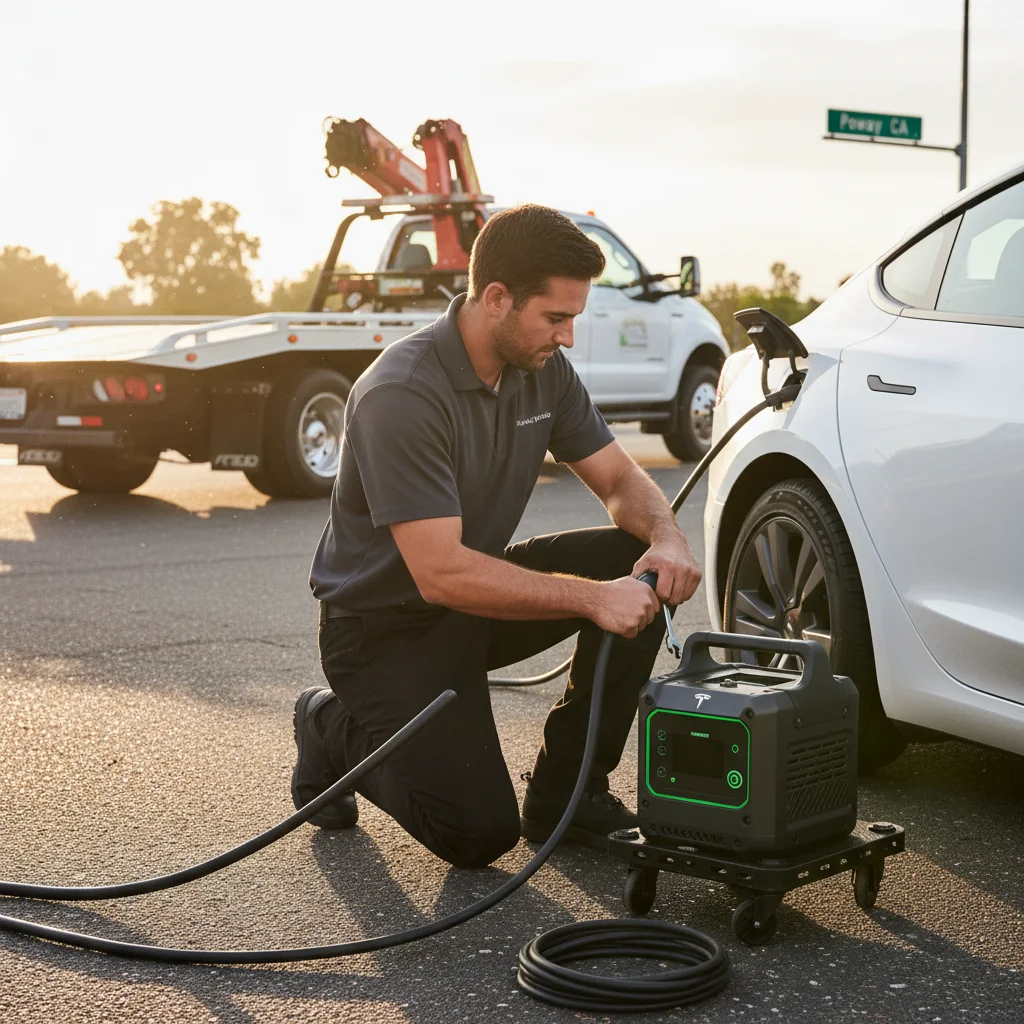
Empty pack, or a car that won’t wake
Two failures look the same from the sidewalk.
If the screens work and the charge is low, the high-voltage pack is spent. You need energy at the port. Mobile EV charging is the match. The operator brings a 240-volt Level 2 source to the car. Native NACS covers Tesla. CCS or J1772 adapters cover other brands. Typical charging time adds about 10 to 20 miles in 15 to 30 minutes. That’s plug time, not a promise of when someone arrives.
If the car is dark, locked, or silent, think 12V first. Teslas and most other EVs run a small 12-volt battery apart from the pack. When that 12V dies, the contactors don’t close. The car won’t wake, even with a full pack. That’s a Tesla 12V battery jump job, not a charge. Operators can jump or replace that 12V on site. They handle Tesla and every major EV brand.
Don’t keep rolling on a pack at zero. A fully depleted pack is hard on the battery. Park, put the hazards on, and call.
What Charge Pro LV actually does here
Charge Pro LV is a referral line. We don’t own trucks, employ technicians, or set prices. We match stranded drivers with independent local operators. The operator quotes you before any work starts, and they bill you directly.
A stranding at this north edge is a longer reach for any operator. That’s geography, not a clock. Stay with the car if it’s safe. Give a cross street, a park name, or a US-95 marker. ZIP 89131 is a start, and the Floyd Lamb lot is better.
The pros we connect you with are licensed and insured. They do the charge or the 12V work. We serve Tule Springs and the rest of the Las Vegas Valley. For the local layout, see the Tule Springs charging page.
Charge where it sits, or call a tow
Most empty-pack stalls don’t need a flatbed. If the car will take a charge, add range on site. That gets you off the shoulder. A tow is the right call for a tire or a suspension hit. It’s also right for a fault that charging won’t clear. Say so if that’s what you have.
Tow operators in Nevada need a Nevada Transportation Authority certificate. Non-consent tow rates sit in operator-filed tariffs under NAC 706.408. There’s no single statewide maximum on this site. Ask the tow company for its tariff before the hook goes on. NRS 706.4463 and related tow statutes cover a hooked vehicle. It must be released at the original spot. The operator sets that release fee. Confirm the fee with them. We don’t publish it.
Factory roadside programs are a separate path. Compare what each one will actually do at your bumper. A local EV roadside assistance operator can charge or jump on site.
What to have ready when you call
Four facts cut the back and forth.
- Exact place. Floyd Lamb Park, a cross street, or a US-95 marker. “Tule Springs” is too big.
- Make, model, and year. That confirms NACS, CCS, or J1772.
- State of charge, even a guess. Zero and eight percent are different jobs.
- Whether the car wakes. A black screen points to 12V, not an empty pack.
Stay out of the travel lane. There aren’t pay lanes to manage, and there’s high-speed traffic. If you still have a percent or two, creep to a lot. If you’re already at zero, stay put.
We connect Tule Springs drivers with a local operator for a charge or a jump. Call (702) 935-4699. The operator quotes the work, then bills you.