EV roadside assistance in Skye Canyon is for the northwest staging mistake. You leave a driveway in ZIP 89166 with what looks like enough range. Then you point the car at US-95 or the Mount Charleston climb. The neighborhood miles you trusted on local streets aren’t the miles that climb needs.
Why Skye Canyon range fails on the north run
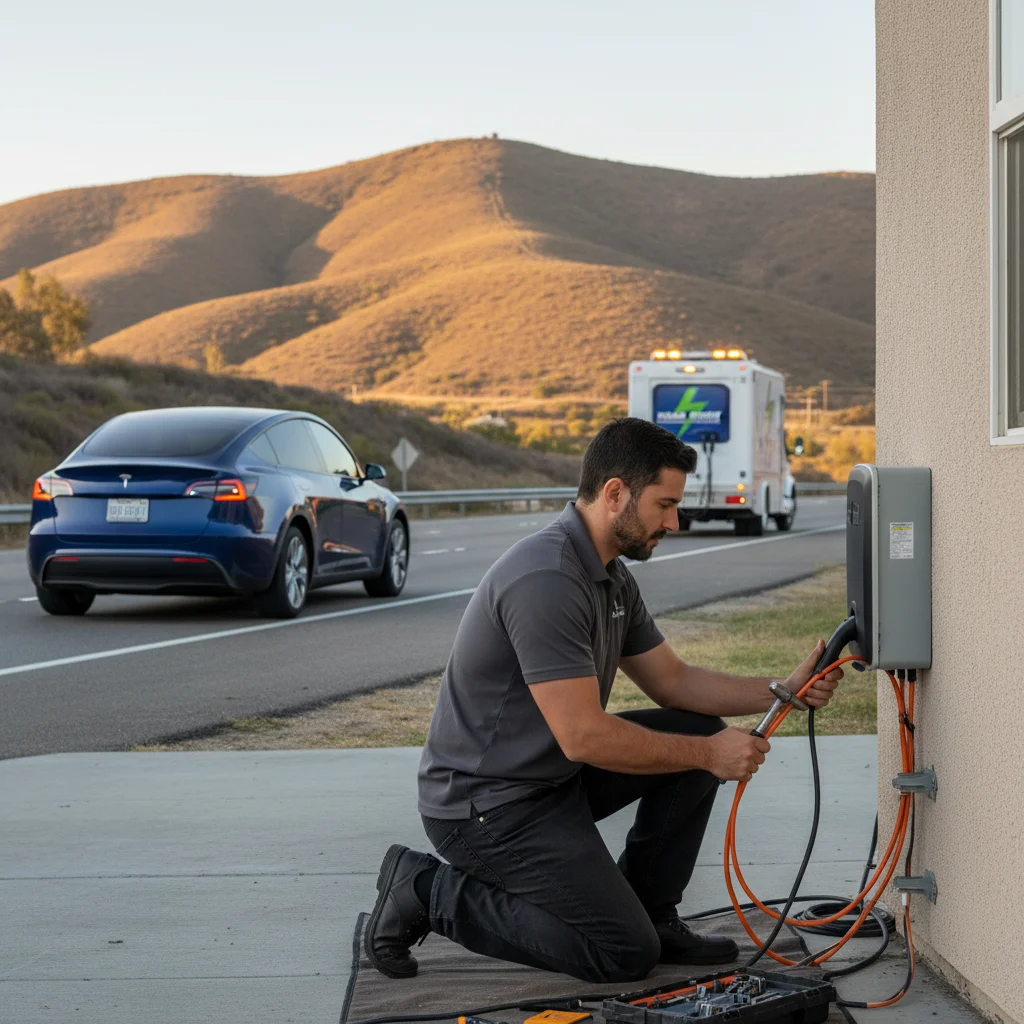
Skye Canyon is the newest northwest development toward US-95 and the Spring Mountains. It sits higher and cooler than the valley floor, and it’s farther out. That mix fools a trip computer on a quiet morning. A loop on residential streets doesn’t preview the north run. The car spent those miles on gentle grades. Then you ask it for a mountain or a desert highway.
The valley floor sits about 2,000 to 2,920 feet. Mount Charleston town sits at about 7,506 feet, and Charleston Peak is 11,916 feet. Indian Springs sits at about 3,169 feet on US-95. You’re not rolling out of a flat in-town loop. You’re launching from the rim toward the Spring Mountains National Recreation Area. That’s USFS country around Mount Charleston, not a city street. It’s a real elevation change, not a map line.
NV Energy serves this side of the valley, including Mount Charleston. Clark County’s Title 30 code requires EV-ready wiring in new construction. A Level 2 home charger still needs an electrical permit. Overnight charging in a new garage is easier. It still doesn’t add climb miles you didn’t pack. Home leftover range is still leftover range, and the north run spends it.
US-95 north isn’t a neighborhood loop
US-95 out of the northwest rim is a free highway. Nevada has no toll roads, express lanes, or transponder systems. That doesn’t make the north run cheap on the pack. You’re climbing toward the Spring Mountains corridor on that north run. You’re also heading toward Indian Springs and Creech Air Force Base. Wind, grade, and cabin cooling all pull from the same battery.
NWS Las Vegas records an average July high of 104.5F. About 78 days a year reach 100F or more. About 9.4 days reach 110F or more. The all-time record high is 120F on July 7, 2024. The airport often runs 5 to 15F warmer than outlying areas. The east valley and downtown can run up to 11F hotter than the rim. Skye Canyon’s extra elevation helps with heat, but it doesn’t cancel air conditioning.
Recurrent Auto found about 5% range loss at 90F. Loss rose to about 17 to 18% at 100F. Cooling a hot cabin can draw 3 to 5 kW. Holding an already cool cabin is about 1 kW. AAA, in May 2026, measured 8.5% range loss at 95F. None of those range-loss figures come from Tesla. If you left with a thin buffer, heat and grade finish the job.
That’s when EV roadside assistance at the car starts to matter. Drivers treat ZIP 89166 like a full tank for US-95, and it isn’t. If the pack is already low when you leave, don’t gamble the highway. A mobile EV charging stop at the house still beats a shoulder stall. If you’re already north of here, read the US-95 Indian Springs page.
Mount Charleston from this rim spends the buffer
Skye Canyon is the launch point for the Mount Charleston run. Kyle Canyon Road is the climb that spends the last miles. The town sits thousands of feet above the valley, and the peak sits higher still. Your car’s estimate was built on last night’s streets, not on that grade.
A full cabin, a hot start, and the climb stack. You can leave home feeling fine and still run short on the way up. You can also make the summit and still run short on the descent. If that’s the trip, read EV roadside assistance in Mount Charleston before you go. If you’re already on the grade, keep the Kyle Canyon Road page handy.
Nevada 511 and nvroads.com report road conditions, closures, and cameras. Check them before you commit the last percent to a mountain road. The Spring Mountains don’t care that you charged overnight in a new garage.
Empty pack or a 12V that won’t wake
Not every stall here is a zero on the drive screen. Plenty of EVs look dead when the 12-volt battery quits. Lights, locks, and computers ride that small battery, and heat wears it. A car that sat in the driveway can refuse to wake. That can happen with range still on the pack. Tesla and every major EV brand still use a 12-volt system for that job.
Tell the operator which one you’re dealing with. An empty traction pack needs a charge at the car. A silent 12-volt needs a jump or a replacement on site. Mixing those two jobs up wastes the stop. If you drive CCS or J1772 instead of NACS, say so. Non-Tesla rescue in Skye Canyon covers that adapter path.
What the operator brings, and what Charge Pro LV doesn’t
Charge Pro LV is a referral line, not a shop with trucks. It matches stranded EV drivers with independent local mobile rescue operators. It doesn’t hold a license, own trucks, or employ technicians. It doesn’t set prices or promise an arrival time. The operator quotes you before starting and bills you directly.
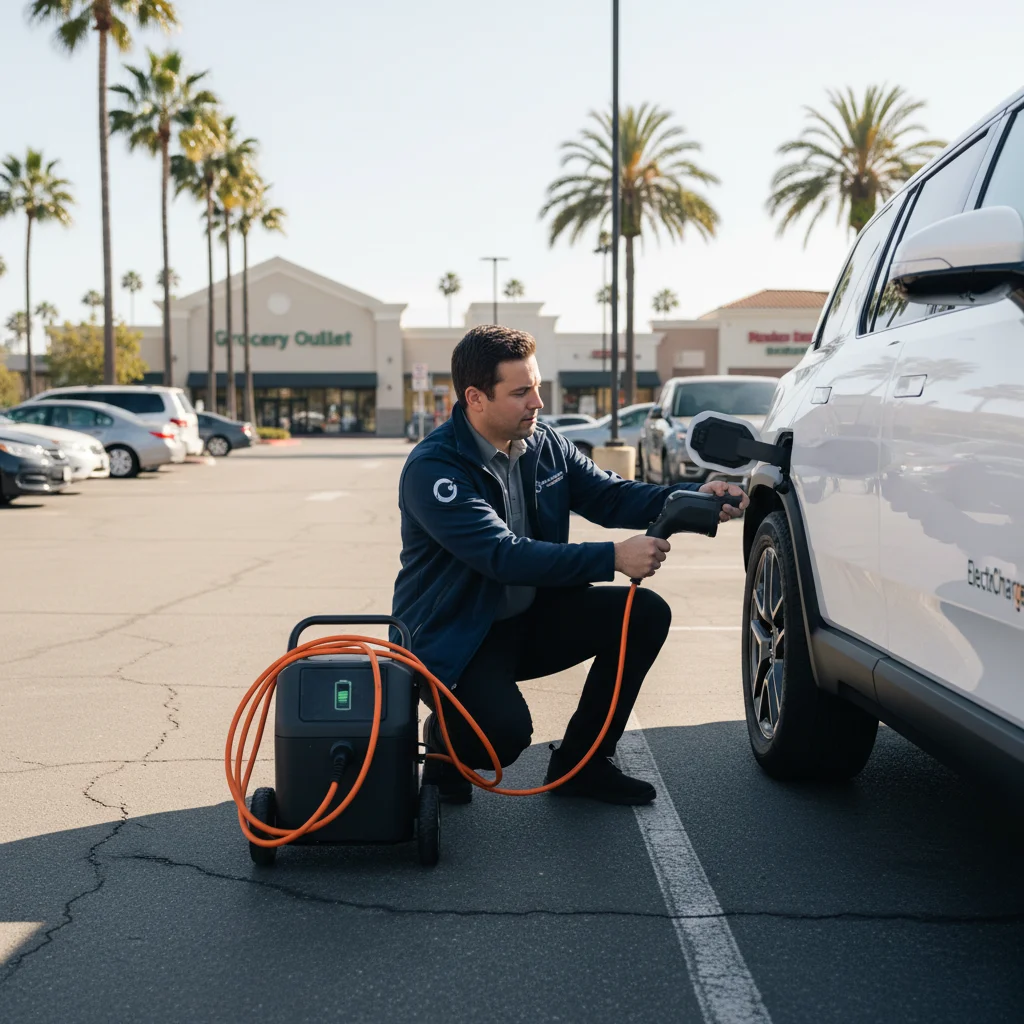
What those operators do is specific at the bumper. They bring a 240-volt Level 2 source to the car. Teslas get a native NACS plug. Other EVs use a CCS or J1772 adapter. Typical charging adds about 10 to 20 miles of range. That 15 to 30 minutes is charging time, not a travel-time promise. They can also jump or replace a dead 12-volt battery on site.
Skye Canyon sits farther out than a Strip stall. An operator has a longer run to this rim. Plan for the extra distance and don’t treat the call as a countdown. Get the car into a safe spot first, then call.
Charge at the car, or wait on a Nevada tow
A disabled car that can’t avoid stopping is exempt under NRS 484B.440. That statute covers the no-stopping-on-highway rule. It doesn’t set a time limit for how long the car may remain. NRS 484B.443 still matters after that exemption. Law enforcement may remove a disabled or abandoned vehicle. On freeways and primary highways, a vehicle is treated as abandoned after 24 hours. On other roads it’s 72 hours, and the owner pays removal.
Tow operators need a Nevada Transportation Authority certificate under NRS 706.4463. Non-consent tow rates are flat-rate, operator-filed tariffs under NAC 706.408. There’s no single statewide maximum on this site. Confirm the tow quote before a hook goes on.
The NDOT Freeway Service Patrol covers the most-traveled Las Vegas valley freeways. Quality Towing operates it, and GEICO sponsors it. Hours are 5:00am to 8:30pm, seven days a week, and it’s free to motorists. It lists tire changes, jump starts, fuel, minor fire suppression, and traffic control. None of NDOT’s published patrol materials mention electric vehicles, EV charging, or EV-specific service. That’s an observed absence, not a claim that the patrol can’t help an EV. Don’t wait on the patrol for a Level 2 charge they don’t advertise.
A tow still leaves you with a second problem. The car has to reach a place that can charge it, then you wait there. A mobile charge happens where the car already sits. For an empty pack, that’s usually the cleaner path. For a wreck or a tire, a tow may still be the right call. Ask the operator which job they can actually do.
Nevada is an all-party consent state for telephone calls. That’s NRS 200.620 and NRS 200.650. You’ll hear a recording-consent notice on the line, and that’s required.
Staging the north run before you leave
If Mount Charleston or US-95 is the plan, add range before you leave the driveway. Charge at home if the car will take it. Recheck the estimate after cabin cooling starts. Don’t use in-town leftover miles as mountain miles. If the pack is already thin in the driveway, stay put and call. Don’t roll onto the highway to see if it holds.
If you’re already stuck in the community, stay with the car. If you’re on a shoulder toward the Spring Mountains, stay visible and safe. Call Charge Pro LV at (702) 935-4699. We’ll connect you with a local operator. That operator can quote a charge or a 12-volt fix at the car.