Your Tesla is dead in a lot at The District at Green Valley Ranch. You’re not the truck owner. You will not see a branded Charge Pro LV wrap on the side, because the truck belongs to an independent operator we connect you with. Here’s what the truck actually carries, what it can do, and what it cannot do.
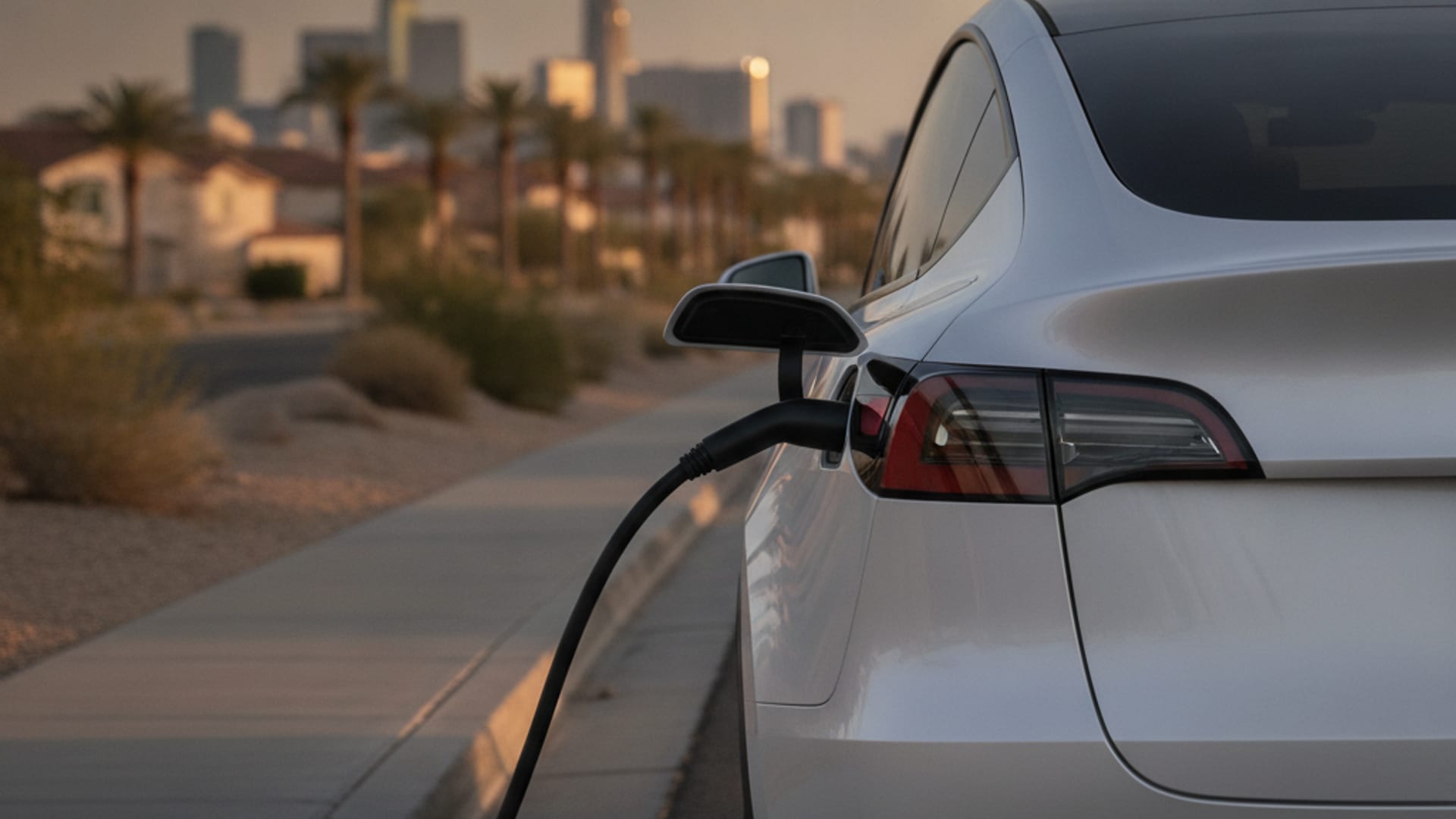
Charge Pro LV owns no trucks
Charge Pro LV is a referral line. It does not own a fleet, a warehouse, or a yard. It does not employ the operators. It does not set the price on any job. The pros we connect you with are licensed and insured, and they own their own trucks. The matched operator quotes you before starting and bills you directly.
What that means in practice: when you call (702) 935-4699, you reach a phone line that matches stranded EV drivers with a local operator who has the right gear for your stall. The operator drives to you in their own truck. The truck and the operator are theirs. The referral is the service Charge Pro LV performs.
What the truck carries for the typical call
Three things live in the back of a mobile EV rescue truck in this valley.
A 240V Level 2 source. The truck holds a generator or a battery bank that produces 240-volt AC at the right current for an EV’s onboard charger. That is the same current your garage wall connector delivers. The session is a real Level 2 session, not a 120V trickle. A typical session adds 10 to 20 miles of range in 15 to 30 minutes of charging time. That is charging time, not a clock on arrival.
The right adapter. Teslas use NACS in North America. Most non-Tesla EVs use CCS1 or J1772. A mobile truck carries native NACS, a CCS1 adapter, and a J1772 adapter. That covers every EV that runs on the road today. The matched operator picks the connector before they clip in.
A 12V booster and a 12V replacement battery. The most common cause of a non-start in this valley is not an empty pack. It is a dead 12V. Heat cooks the small auxiliary battery, and the high-voltage system cannot wake. A lithium-safe booster jumps the car in minutes. A weak 12V gets replaced on site so the next park does not stall the same way.
What the truck can do at the stall
Add range. The matched operator brings the truck, clips in, and adds 10 to 20 miles of range in 15 to 30 minutes. That is enough to leave the lot, reach a working DC fast charger, or limp home. The session ends when the operator unclips.
Jump a dead 12V. A few minutes to clip, a few minutes to confirm the contactors close, and the car wakes. The main pack then charges the 12V on the next drive.
Replace a 12V on site. A weak 12V that will not hold a jump gets swapped for a fresh one at the stall. That is a 30 to 45 minute job. The matched operator carries the right battery for the make.
Diagnose a connector problem. A heat-stuck latch, a bent pin, or a port that will not release can keep the truck from clipping in. Operators carry tools to work around a stuck latch and a way to release a stuck cable. Read what to do when an EV charge port is stuck for the workflow.
What the truck cannot do
Tow. Mobile EV rescue trucks are not flatbeds. A car that cannot roll under its own power and cannot be revived at the stall needs a flatbed. NRS 706 sets the rules for Nevada tows, and NAC 706.408 sets non-consent tow rates as operator-filed tariffs. The matched operator can recommend a tow partner but does not flatbed your car.
DC fast charge. A mobile truck’s generator cannot deliver the 150 kW to 350 kW a DC fast charger delivers. The session is real Level 2, not a fast-charge substitute. A car that needs 80 percent in 20 minutes is not a roadside job. Drive it to a working DC fast charger.
Repair the high-voltage pack. A car that threw a high-voltage warning or shows contactor error codes needs a dealer, not a roadside session. The matched operator can add range to a low pack, but a faulted pack is a tow, not a charge.
Set the price. The matched operator quotes the job before starting and bills you directly. Charge Pro LV does not set prices, fees, or discounts. The market is the market. The operator’s tariff is theirs.
Where the trucks cover in this valley
The matched operators work every region of the Las Vegas Valley. Strip Corridor, East Las Vegas, Henderson, West Valley, North Las Vegas, Southwest, Lake Mead, I-15 South, and the Desert Mountains are all in scope.
A few valley edges depend on operator coverage. Goodsprings, Jean, and Primm sit on the I-15 South corridor toward the California state line. Operators cover that run, but a Primm call takes longer to staff than a Strip call. Mount Charleston town sits at about 7,506 feet. Operators cover it. Mesquite and Moapa Valley sit on Overton Power District territory and require the operator to carry a route plan.
NDOT’s Freeway Service Patrol covers the busiest valley freeways from 5:00am to 8:30pm, free to motorists. The patrol offers tire changes, jump starts, fuel, minor fire suppression, and traffic control. NDOT’s published patrol materials do not mention EV charging. NDOT FSP is a freeway shoulder resource, not an EV rescue substitute. For an EV-specific stall on a shoulder, call the matched operator through Charge Pro LV.
What you can do to make the operator’s job faster
Park in the safest reachable spot. The operator cannot reach across a live lane. A wide shoulder, a back corner of a lot, or a parking garage level with truck access is faster than a tight stall.
Tell the phone line the year, make, model, and connector. NACS for Tesla. CCS1 for most non-Tesla. J1772 for older non-Tesla or level-2-only sessions. That information lets the matched operator load the right adapter and battery.
Describe the dash. A dead dash is a 12V job. A turtle indicator or a reduced-power warning is a pack job. The operator arrives with the right gear when the description is right.
Stay with the car until the operator arrives. NRS 484B.440 lets a disabled vehicle stay on a highway when it cannot avoid stopping. NRS 484B.443 lets law enforcement remove a vehicle after 24 hours on a freeway. You have time, but not unlimited time.
How to call
Call Charge Pro LV at (702) 935-4699. Tell the line where the car is sitting, what the dash is doing, and what you drive. The matched operator quotes the job before starting and bills you directly. The truck belongs to them. The session is theirs. The match is the service.
For broader coverage of the same idea, read how mobile EV charging trucks work and mobile EV charging near me in the Las Vegas Valley.
Frequently asked questions
Does Charge Pro LV own the trucks?
No. Charge Pro LV is a referral line. It matches stranded EV drivers with independent local mobile rescue operators who own their own trucks. The matched operator quotes you before starting and bills you directly.
Can a mobile EV rescue truck fast-charge my car?
No. The truck carries a 240V Level 2 source. A typical session adds 10 to 20 miles of range in 15 to 30 minutes of charging time. That is enough to reach a working DC fast charger or to drive home.
Can the operator jump my 12V on site?
Yes. A lithium-safe booster wakes most EVs in minutes. A weak 12V that will not hold a jump gets replaced on site in about 30 to 45 minutes.
Can the operator tow my car if it cannot roll?
No. Mobile EV rescue trucks are not flatbeds. A car that cannot roll under its own power and cannot be revived at the stall needs a flatbed. The matched operator can recommend a tow partner.
Does NDOT Freeway Service Patrol do the same thing?
NDOT FSP covers the busiest valley freeways from 5:00am to 8:30pm, free to motorists. It offers tire changes, jump starts, fuel, minor fire suppression, and traffic control. NDOT’s published patrol materials do not mention EV charging. For an EV stall on a non-freeway street or in a parking lot, call Charge Pro LV at (702) 935-4699.