The charge cable is stuck because the port latch never got power to open. Valley heat soaks the port and weakens the 12V that moves the solenoid. You still need that cable free before you can roll. If the session never ended, you may need a mobile plug at the car.
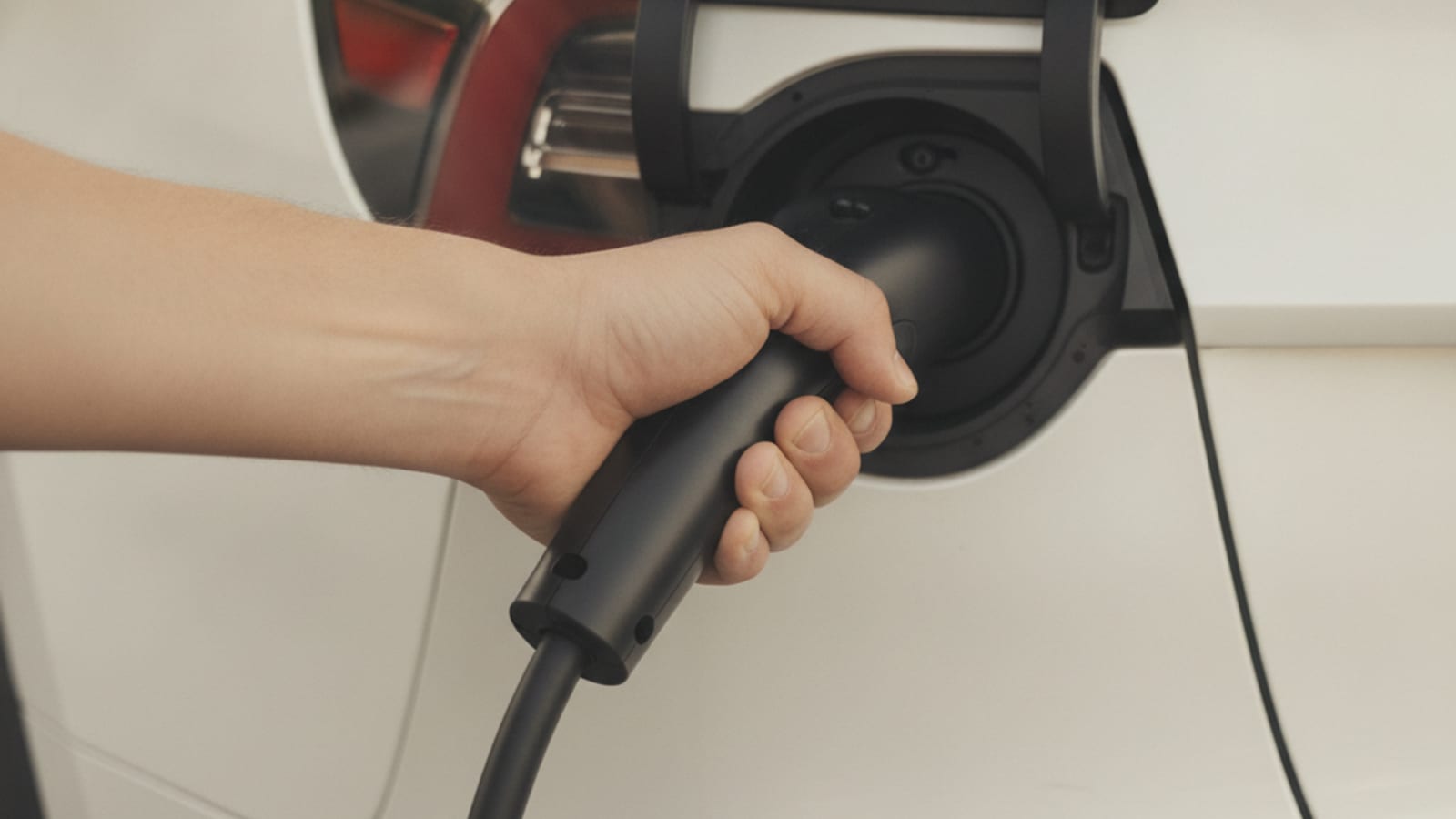
This is a lock problem, not a range problem. The high-voltage pack can still hold miles, even with the latch stuck. The small latch just won’t let go.
Heat is what sticks the latch here
NWS Las Vegas puts the average July high at 104.5F. About 78 days a year hit 100F or more. About 9.4 days a year hit 110F or more. The airport record is 120F, set on July 7, 2024.
The east valley and downtown can run up to 11F hotter than the rim. A car that sat in Winchester or Sunrise Manor cooks harder than one in Summerlin. Summerlin sits near 3,500 feet on the west rim. The valley floor sits about 2,000 to 2,920 feet.
The lock is a small solenoid in the charge port. It needs 12-volt power to retract, and heat is hard on that 12V. Tesla 12V failure in valley heat is often why the release never fires.
Don’t yank the handle, because the latch is still closed. Force can break the port door or the connector.
What the lock is doing
EVs lock the cable while current is flowing. That keeps a live plug from pulling free mid-session. It also keeps a stranger from unplugging you at home.
The car sends a release command when charging stops. The solenoid then pulls the latch clear. If the command never arrives, the cable stays. If the 12V is too weak, the solenoid still does nothing.
Paradise and Winchester hold the Strip corridor, not the City of Las Vegas. A heat-soaked port there still needs the same fix. Free the cable before you try to leave the space.
Checks to run before you pull trim
On the car’s screen, stop charging and wait for confirmation. A paused stall can look finished while the lock stays on. That glitch shows up after a long hot sit, then a plug-in at home.
Wake the car if it looks asleep, then open and close the driver door. Then try the connector button again on the handle.
Reboot the car next if the button still fails. On a Tesla, hold both steering-wheel scroll wheels for ten seconds. On a Rivian, hold the cruise stalk down for ten seconds. On most other brands, hold the power button until the screens cycle.
If the screens stay dark, treat it as a 12V problem. Jumping the 12V often restores the solenoid, so try the release again after. See how to jump start a Tesla 12V when the car won’t wake.
A worn handle latch is a cable fault, not a car fault. The button on some older Tesla Mobile Connectors never fully depresses. Try another cable if you have one. Don’t keep slamming the same handle.
Manual releases, by brand
Every major EV has a mechanical backup. Makers put it there because solenoids fail. Use the backup release before you call anyone.
Ford Mach-E and F-150 Lightning
Ford hid the release in the port housing. Open the charge door and look near the rim. You’ll see a small triangular tab with an unlock mark. Pull that tab away from the port while you ease the cable out.
On a Lightning, FordPass can still command a release if the car is awake. For the frozen-cable case, read Ford Mustang Mach-E charge port stuck: release a cable in the heat.
Hyundai Ioniq 5, Kia EV6, and EV9
Look in the rear cargo area first. On the driver’s sidewall, pop the plastic cover. Press and hold the small button while you pull the cable. Hyundai Ioniq 5 charge port stuck after sitting in the heat covers the heat-soak path.
Tesla Model 3 and Model Y
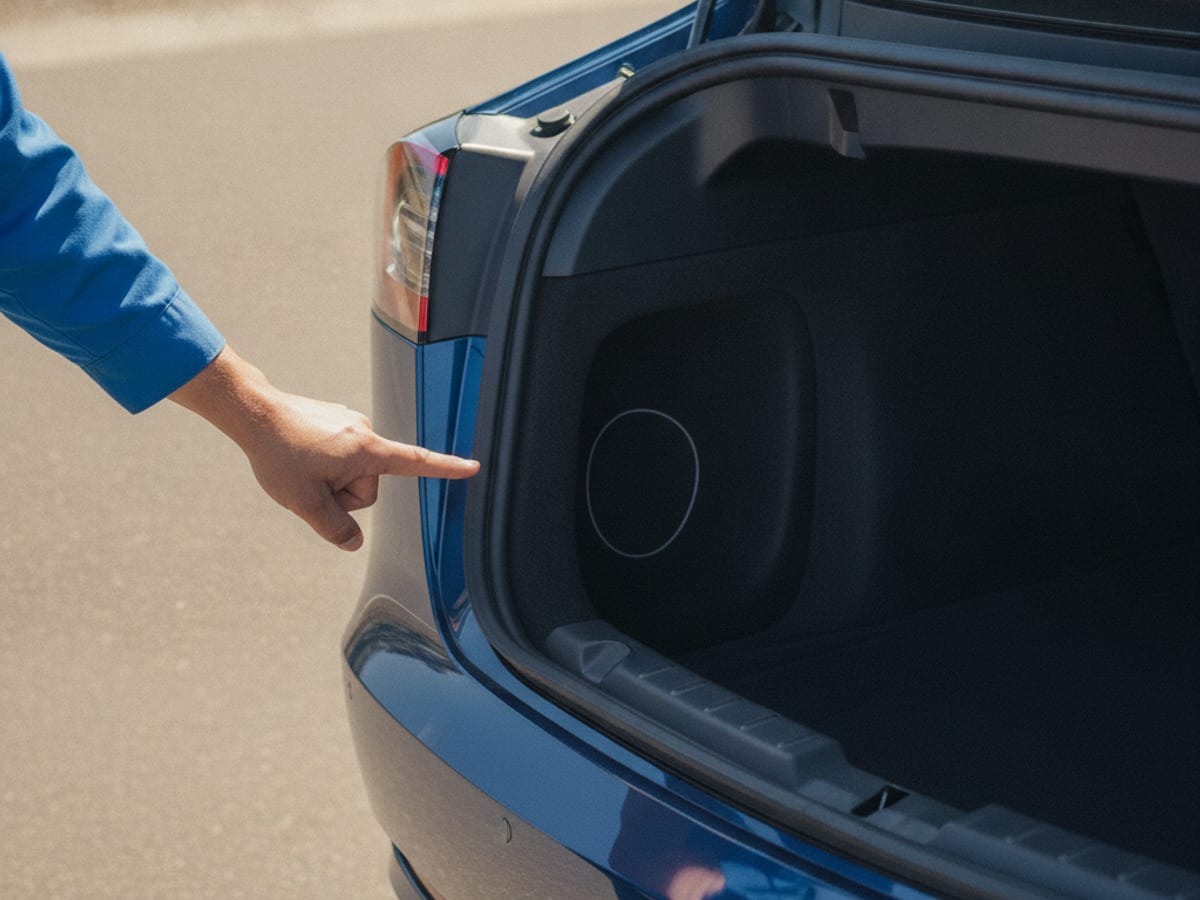
Open the trunk and work along the passenger inner wall. Peel the carpeted trim and remove the small access panel. Behind it is a plastic tab on a cable. Pull that cable down and hold it. Slide the charge connector out while you keep tension.
Tesla Model S and Model X
Open the rear hatch and start at the driver’s taillight trim on older cars. The release cable sits behind that panel, so pull it straight toward you. On 2021 and newer refresh cars, look on the passenger trunk wall like a Model 3.
Rivian R1T and R1S
Open the rear passenger door and lift the rear seat bottom. Find the service panel and the release cord. Pull it firmly, then remove the connector. Rivian charge port stuck: release a frozen cable in the heat walks that desert-park case.
Chevrolet Bolt, Polestar 2, and Volkswagen ID.4
On a Bolt, lift the rear cargo floor. The cord sits near the 12V battery. Pull the cord and the handle together.
On a Polestar 2, open the trunk first. The cord is near the driver’s tailgate hinge, behind a small panel.
On an ID.4, lift the cargo cover. Look on the passenger side behind the C-pillar trim for a labeled loop.
If the release still does nothing
Confirm the car is actually awake before you pull again. Then pull the manual release again while you rock the connector slightly. A light side-to-side wiggle can clear a latch caught on the handle lip. Don’t lever the plug or twist the handle hard.
If that fails, stop and leave the cable in the port. A torn solenoid is a shop job, and brute force makes that more likely.
On a freeway shoulder, Nevada law still applies. NRS 484B.440 lets a disabled vehicle stay when it can’t avoid stopping. NRS 484B.443 lets police remove a disabled or abandoned vehicle. On freeways and primary highways, that clock is 24 hours. On other roads, the wait is 72 hours. The owner pays the removal, so stay with the car when you can. Use Nevada 511 or nvroads.com for closures and cameras.
The NDOT Freeway Service Patrol covers the busiest valley freeways. Hours are 5:00am to 8:30pm, seven days a week. Quality Towing runs it, with GEICO as sponsor. Published patrol materials don’t advertise EV charging. Ask for a jump if the 12V is flat. Don’t expect a mobile Level 2 plug from that van.
You still can’t drag the car with the cable attached.
When a mobile operator is the next step
Call when the plug still won’t move, or the car is dark. Call when you’re blocking a stall, or the handle button is broken.
Charge Pro LV is a referral line. We match you with independent local mobile rescue operators. We don’t own trucks, employ technicians, or set the price. The operator quotes you before any work starts, then bills you directly.
What they can do at the car is simple. They can jump or replace a dead 12V on site. They can bring a 240V Level 2 source with a native NACS plug. They carry CCS or J1772 adapters for non-Tesla EVs. Typical charging time adds 10 to 20 miles in 15 to 30 minutes. That’s time on the plug, not a promise of when someone arrives.
Use Tesla roadside rescue if you drive a Tesla. Use mobile EV charging if you need range after the cable is free.
Once the cable is out
Run a full charge session when you can. If it completes and releases on its own, you likely had a glitched session. If the lock fails again, book a shop visit for the solenoid.
If you needed a 12V jump, plan a replacement soon. Heat in this valley wears that battery. Recurrent Auto measured about 5% range loss at 90F. Loss rose to 17 to 18% at 100F. That isn’t a Tesla-published number.
Monsoon storms in July and August can leave water in the port. Dry it before you plug in again.
If the cable is still stuck in the Las Vegas Valley, call (702) 935-4699. We’ll walk the manual release with you. If that isn’t enough, we match you with a local operator who quotes before they start.