Your Chevy Silverado EV won’t start after a night on a job lot. That’s usually the 12V, not an empty Ultium pack. The screens stay dark. The doors ignore the fob. Last night’s range readout doesn’t help if the truck never wakes.
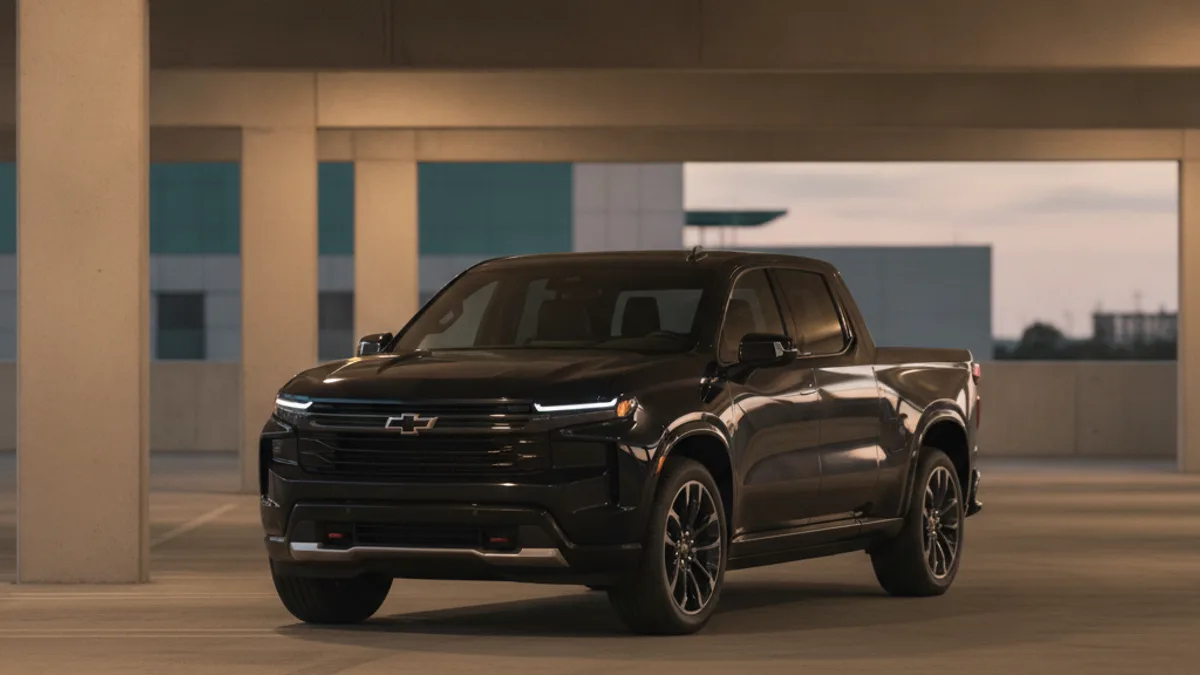
A dark Silverado EV is a wake problem first
Treat a Chevy Silverado EV that won’t start as a 12V failure until you prove otherwise. The small battery powers the computers that boot the truck. Those computers close the contactors that connect the Ultium pack. If the 12V can’t hold voltage, that handshake never finishes. Nothing on the dash lights. Drive won’t engage. The traction pack can still hold a normal charge.
This split confuses people on work trucks. You parked with miles showing. You come back to a brick. The instinct is that the pack went empty overnight. That’s the wrong first guess on this platform. A pack at a healthy percentage still can’t talk to the truck if the 12V is asleep.
The DC-DC converter is supposed to prevent that. It steps high-voltage down to about 12 to 14 volts. That feed keeps the small battery topped while the Silverado EV sits. When the converter weakens, or the 12V is simply worn, the trickle stops covering the parasitic load. You get a dark cabin. You get a truck that won’t answer the fob. A jump can bring it back once. A 12V near the end of its life will strand you again within days.
Why valley job lots create this no-start
The Silverado EV is a work truck, and the drain pattern matches the job. Crews leave one overnight with lights on. They leave tools or a job box on the eTrunk outlets. Accessory loads keep pulling after the driver has gone home. The 12V pays for that sit. Trailering does the same damage while you drive. A weak 12V then fails to recover once the truck is back in the yard.
Heat finishes the job the accessories started. NWS Las Vegas lists an average July high of 104.5F. About 78 days a year reach 100F or more. About 9.4 days reach 110F or more. The record high is 120F, set on July 7, 2024. A parked Silverado EV still runs thermal management in that soak.
People then blame the Ultium pack for the morning no-start. Recurrent Auto found about 5% range loss at 90F and 17 to 18% at 100F. AAA, in May 2026, measured 8.5% range loss at 95F. Those figures are for the drive battery in heat. They’re not a Tesla number. They’re also not proof your 12V is fine. A shorter workday range and a dead 12V can show up on the same afternoon. The dark dash is still the 12V talking.
The valley isn’t one temperature. The airport runs 5 to 15F warmer than outlying areas. The east valley and downtown can run up to 11F hotter than the rim. A truck that sat in Paradise or Winchester takes a harder soak than one parked in Summerlin. Summerlin sits near 3,500 feet and climbs toward 4,400 near Red Rock. Henderson sits near 1,867 feet on the southeast floor. North Las Vegas and the Las Vegas Motor Speedway lots sit on the hotter floor too.
You’ll see this around Nellis AFB staging, about eight miles northeast of the core. You’ll see it at Las Vegas Convention Center lots after a long exhibit day. You’ll see it after a night at Allegiant Stadium in Paradise. You’ll see it in long-term parking at Harry Reid International Airport. Harry Reid is in Paradise, unincorporated Clark County. It isn’t in the City of Las Vegas. Airport parking publishes free battery jump starts and tire inflation. That’s a parking-lot 12V service. Don’t treat it as a pack charge.
Home charging doesn’t rule the 12V out either. NV Energy serves Las Vegas, North Las Vegas, Henderson, Paradise, Winchester, Spring Valley, Enterprise, Sunrise Manor, Summerlin, and Whitney. The Residential Electric Vehicle Recharge Rider names an EV charging window from 10:01pm to 8:00am. A truck that sat on that window can still wake dead. The Ultium pack got the overnight feed. The 12V still has to boot the truck in the morning.
What the truck does when the 12V sags
The pattern is consistent. Doors stop unlocking. Screens stay black. The truck won’t shift into drive. The last range figure you remember still looked fine. The 12V feeds dozens of modules at once. A low-voltage event doesn’t print one tidy error. It prints a stack of unrelated warnings. That stack is what a bad 12V looks like on the Silverado EV.
Don’t try to clear the stack by restarting over and over. Restore voltage, then see what remains. If the truck was recently serviced, don’t pull 12V terminals to force a reset. GM is specific that a disconnect at the wrong moment can turn a jump into a dealer visit. When you’re guessing, stop. Get a diagnosis instead of creating a second fault.
Where GM hid the battery, and why the eTrunk fights you
The 12V lives under the hood inside the eTrunk, passenger side, under a plastic cover on tabs. With power, you pop the front trunk and you’re there. The eTrunk release is electric. Fob, dash button, and fascia button all need 12V. When the small battery is dead, you can’t open the compartment that holds it.
That lockout isn’t unique to Chevy’s truck. The GMC Hummer EV and the Porsche Taycan put owners in a similar frunk stall. GM did give Silverado EV owners a mechanical way out. Learn it before you’re standing on a dark lot with a phone light.
The manual eTrunk release
Sit in the driver’s seat and reach under the dash, low and left. There’s a gray release cable with a loop on the end. It sits in the same zone a hood release uses on a gas truck. Pull the cable twice. The eTrunk unlatches with no electrical power. The cable is tucked up, so the first find takes a second.
After it pops, lift the passenger-side cover. A flathead helps when the tabs are stiff. Go slow so you don’t crack the plastic. The battery and terminals are under that cover.
How to wake the 12V without making a mess
With the cover off, you can see the terminals. The negative is a 10mm bolt connection. The positive sits beside it. Clamp a jump pack or a donor vehicle positive lead to positive first. Then clamp negative to the Silverado’s negative terminal, or to nearby unpainted metal. Wait about a minute. Then try to power the truck.
If a standard pack doesn’t wake a deeply discharged truck on the first try, leave it connected longer. Some 12V batteries need a short trickle before they’ll hold the handshake. Don’t keep cranking the start button while the voltage is still on the floor. For clamp order and desert-heat cautions, use the guide to jump starting an EV in desert heat.
Symptom to likely cause
| Symptom | Likely cause |
|---|---|
| Dashboard fully dark, doors ignore the fob | 12V fully discharged |
| eTrunk ignores fob, dash, and fascia button | 12V too low to power the electric release |
| Unrelated warning lights stack at once | Voltage sag confusing several modules |
| Won’t shift into drive with range still showing | 12V can’t finish the Ultium handshake |
| No-starts return within days of a jump | 12V has failed and needs replacement |
If this truck has needed more than one jump in a few weeks, stop stretching it. A 12V that can’t hold a charge needs to be replaced. Another jump only buys a short window. The signs your EV 12V needs replacement are the checklist to run after the second stall.
Lot stall versus freeway stall
Most Silverado EV no-starts happen in a yard, a job lot, or a parking structure. Some happen on I-15, I-215, CC-215, US-95, or I-11. Nevada has no toll roads and no express-lane transponders. Those freeways are free. I-15 HOV lanes run from Silverado Ranch to the Spaghetti Bowl. They need two-plus occupants from 6-8am and 4-6pm on weekdays. A dead truck in that lane is still a disabled vehicle.
NRS 484B.440 lets a vehicle stay stopped on the highway when it’s disabled and can’t avoid stopping. That statute sets no time limit. NRS 484B.443 lets law enforcement remove a disabled or abandoned vehicle. Abandoned treatment starts after 24 hours on freeways and primary highways, and after 72 hours on other roads. The owner pays removal. If you’re on a shoulder, stay with the truck if you can do it safely. Use Nevada 511 or nvroads.com for closures and cameras. Nevada State Police Highway Patrol dispatches rotation tows on shortcode *647.
NDOT Freeway Service Patrol works the busiest valley freeways. Quality Towing operates it. GEICO sponsors it. The published window is 5:00am to 8:30pm, seven days a week, and it’s free to motorists. Listed help includes tire changes, jump starts, fuel, minor fire suppression, and traffic control. NDOT says the patrol clears about 31,500 Las Vegas incidents a year. None of NDOT’s published FSP materials mention electric vehicles, EV charging, or EV-specific service. That’s an advertising silence, not a claim the patrol can’t help an EV. A 12V jump is still a 12V jump if someone can get clamps on the battery.
Empty pack versus sleeping 12V
If the screens come back after a jump, you had a wake problem. If the truck is awake and the range is actually on the floor, that’s a charge problem. Independent operators in this network bring a 240V Level 2 source to the car. They use a native NACS plug, or a CCS or J1772 adapter for non-Tesla EVs. That typically adds 10 to 20 miles of range in 15 to 30 minutes of charging. That number is charging time. It isn’t an arrival time.
Don’t mix the two jobs. Towing a truck that only needed a 12V wake is wasted motion. Jumping a truck whose Ultium pack is empty won’t create miles. For the awake-but-empty case, EV roadside assistance is the charge-at-the-truck path. For GM’s other electric truck on the same low-voltage architecture, see the GMC Sierra EV stranded charging guide.
The Hummer EV lockout is the same family
The GMC Hummer EV no-start writeup covers the frunk lockout on the other Ultium truck. The Silverado EV adds work-truck accessory drain and the gray dash cable. The eTrunk is just GM’s name for the front trunk on this model.
Who to call in the Las Vegas Valley
Charge Pro LV is a referral line. It matches stranded EV drivers with independent local mobile rescue operators across the Las Vegas Valley. It doesn’t hold a trade license. It doesn’t own trucks or equipment. It doesn’t employ technicians. It doesn’t set prices, and it doesn’t promise when someone will arrive. The operator quotes you before starting and bills you directly.
On a non-Tesla EV rescue, the pro who arrives can jump a Silverado EV 12V. They can talk you to the manual eTrunk release if every button is dead. They can check whether the battery is holding, or whether it needs replacement so the next hot sit doesn’t repeat this. If the pack is empty rather than asleep, they can add Level 2 range at the truck instead.
Call (702) 935-4699 when the Chevy Silverado EV is dark and the eTrunk won’t pop. Don’t force covers under the hood. Get a quote from the operator before any clamps go on.
Frequently asked questions
Why won’t my Chevy Silverado EV start if the range still looks fine?
The range figure comes from the Ultium pack. The 12V is what boots the computers and closes the contactors. If that small battery is dead, the truck never finishes startup. A jump on the 12V is what usually lights the dash again.
How do I open the eTrunk with a dead 12V?
Reach under the dash on the driver’s side, low and left. Find the gray looped release cable. Pull it twice. The eTrunk unlatches mechanically, with no electrical power.
Will a jump keep a Chevy Silverado EV from dying again?
A jump restores a discharged 12V long enough to start. It doesn’t fix a battery that can no longer hold charge. Repeat no-starts after a jump mean replacement, not another set of clamps.