A Dodge Charger Daytona EV won’t start after valley heat for a simple reason. The 12V is dead. The traction pack is the wrong first guess. The dash stays black. The start chime never plays. The app can still show range. The car itself stays asleep. Begin at the remote jump posts under the hood.
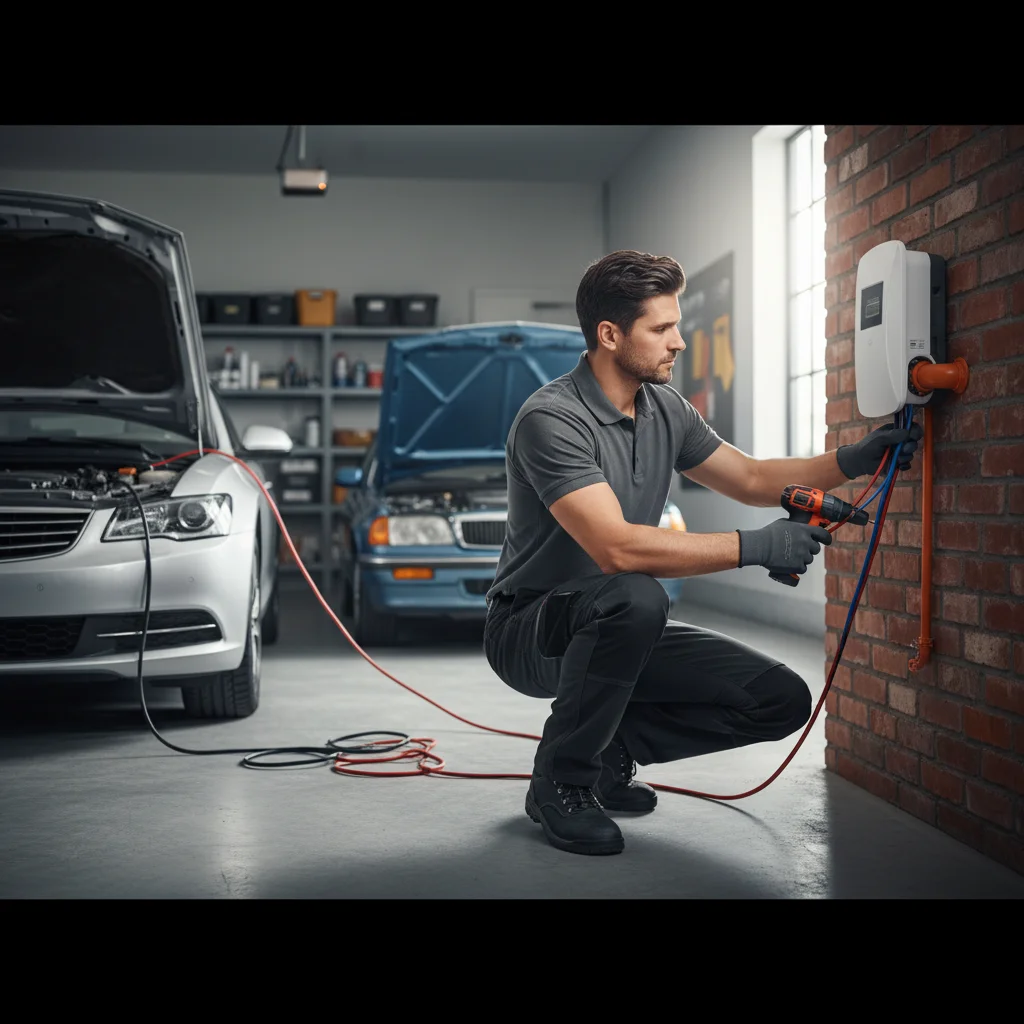
Two batteries, two different failures
The big pack under the floor feeds the motors. It doesn’t power the locks, the cluster, or the wake-up modules. A separate 12V battery does that job. Those modules close the high-voltage contactors when you press start. If the 12V can’t hold voltage, the Daytona never boots.
A dark cabin with a healthy app reading is the split. The pack still has energy. The low-voltage system can’t use it. A public plug won’t fix a car that won’t wake. Waiting for a reset won’t either.
If you were driving and range was falling, treat it as an empty pack. A 12V jump won’t add miles. You need energy delivered at the car. The broader 12V stall path is in what happens when an EV’s 12-volt battery dies in the valley.
Jump the hood posts before you touch the trunk
The Daytona’s 12V sits in the trunk on the driver’s side. It’s typically behind or under a side trim panel. Confirm that in your owner’s manual. Year and trim can change the layout.
You shouldn’t need the trunk to jump the car. Remote positive and negative posts live under the hood for this stall. Clip the jump pack’s positive clamp to the positive post. Clip the negative clamp to the negative post. Let the system rest a moment. Then try to start.
The trunk lid is the trap. Its release is electric. A fully dead 12V won’t pop it. Jump at the hood first. Once the car has power, the normal trunk release should work. Don’t pry the lid. Check the manual for any mechanical override before you try one.
Clamp order and heat cautions are in how to jump start an EV in desert heat.
Read the symptoms before you call
Match what you see to the likely cause.
The car is fully dark. No dash. No chime. The trunk won’t open. The 12V is flat. Jump at the under-hood posts.
The app shows a full traction battery. The car won’t wake. The 12V is still the problem. Skip the charge port.
The car starts, then dies again within a day or two. That 12V is near the end. Plan a replacement, not another jump. Signs your EV 12V needs a replacement covers that loop.
You were driving normally, then lost power as range hit the bottom. That’s the traction pack. You want a non-Tesla EV rescue with a CCS or J1772 adapter.
Scat Pack output comes from the high-voltage pack and the motors. It doesn’t change how the 12V behaves. A base Daytona EV and a Scat Pack wake the same way.
Valley heat is hard on a sitting 12V
NWS Las Vegas lists an average July high of 104.5F. About 78 days a year reach 100F or more. About 9.4 days reach 110F or more. The record high is 120F, set on 2024-07-07.
A closed Daytona in that heat still feeds always-on modules from the 12V. A few parked days can finish a weak battery. Overnight street parking does the same thing.
Heat isn’t even across the valley. The airport area runs 5 to 15F warmer than outlying ground. Downtown and the east valley can run up to 11F hotter than the rim. A car in Winchester or Sunrise Manor takes more of that load. A car in Summerlin sits near 3,500 ft.
Recurrent Auto found about 5% traction range loss at 90F. It found 17 to 18% at 100F. AAA measured 8.5% range loss at 95F. Those studies describe the drive pack, not the 12V. They still explain a short, hot hop after the car finally wakes. They don’t mean you should plug in first when every screen is black.
Where Daytona EV no-starts show up here
The Strip and Harry Reid International Airport sit in Paradise. That’s unincorporated Clark County, not the City of Las Vegas. Winchester is the same setup. Cars sit for hours in resort and event lots while cabin temps climb.
If the Daytona is silent in a Paradise resort lot, start with the 12V. Treat a black dash as a 12V job first.
Airport parking lists free battery jump starts and tire inflation. That’s a 12V-style jump, not a pack charge. The airport site doesn’t publish whether those lots have EV charging. So that isn’t confirmed here. If the car won’t wake, ask for the jump. Drive to a charger once it’s alive.
After a Raiders or UNLV date at Allegiant Stadium, watch the same split. It shows up in the parking ramps. Dark screens mean jump. A falling range number on the way in is different. You may need miles added at the car.
On I-15, I-215, or US-95, stay legal if you stall. NRS 484B.440 covers a vehicle disabled so it can’t avoid stopping. Stay with the car if it’s safe. Law enforcement may remove a vehicle treated as abandoned. That’s after 24 hours on freeways and primary highways. It’s 72 hours on other roads, under NRS 484B.443.
NDOT’s Freeway Service Patrol runs 5:00am to 8:30pm, seven days a week. It covers the busiest valley freeways. Quality Towing operates it. GEICO sponsors it. It’s free to motorists. It advertises tire changes, jump starts, fuel, minor fire suppression, and traffic control. It doesn’t advertise EV charging. A 12V jump may still fit the advertised jump-start work. An empty pack doesn’t. Nevada 511 at nvroads.com shows closures and cameras.
Can roadside assistance jump-start an EV explains when a conventional jump is the right call.
What help looks like once you call
Charge Pro LV is a referral line for the Las Vegas Valley. It matches stranded EV drivers with independent local operators. It performs no work. It owns no trucks. It employs no technicians. It sets no prices and promises no arrival time.
The operator inspects the Daytona on site. If the 12V is dead, they jump it or replace it there. If the pack is empty, they bring a 240V Level 2 source. For a non-Tesla they use a CCS or J1772 adapter. That session typically adds 10 to 20 miles of range. That’s in 15 to 30 minutes of charging. That clock is charging time, never an arrival time.
The operator quotes you before work starts and bills you directly. If you’re stuck in resort traffic, use EV roadside assistance on the Strip. That’s the local path for that corridor.
Frequently asked questions
How do you jump start a Dodge Charger Daytona EV?
Use the remote jump posts under the hood. Skip the trunk until the car has power. Connect the jump pack’s positive clamp to the positive post. Connect the negative clamp to the negative post. Wait a moment, then try to start. Confirm post locations in the owner’s manual, since year and trim can differ.
Why won’t the trunk open when the Charger Daytona EV is dead?
The trunk release is electric. The 12V battery also lives in the trunk. With a fully dead 12V, the release has no power. Jump the car at the under-hood posts first. Use the normal trunk release once the car responds.
Can the Charger Daytona EV no-start with a full traction battery?
Yes. A full reading in the app only means the high-voltage pack still holds energy. The 12V is a separate circuit. It runs the wake-up path. If the car won’t wake, jump the 12V. Don’t spend that time on the charge door.
If your Dodge Charger Daytona EV won’t start in the Las Vegas Valley, call Charge Pro LV. The number is (702) 935-4699. The operator quotes the job before any work begins.