A locked latch in 100-degree lot heat can pin a Mach-E to the cable. The CCS handle won’t come out until the port releases. You’re clipped to the stall, not out of range. Run the car-side checks before you pull anything. If those fail, a mobile tech can free it at the car.
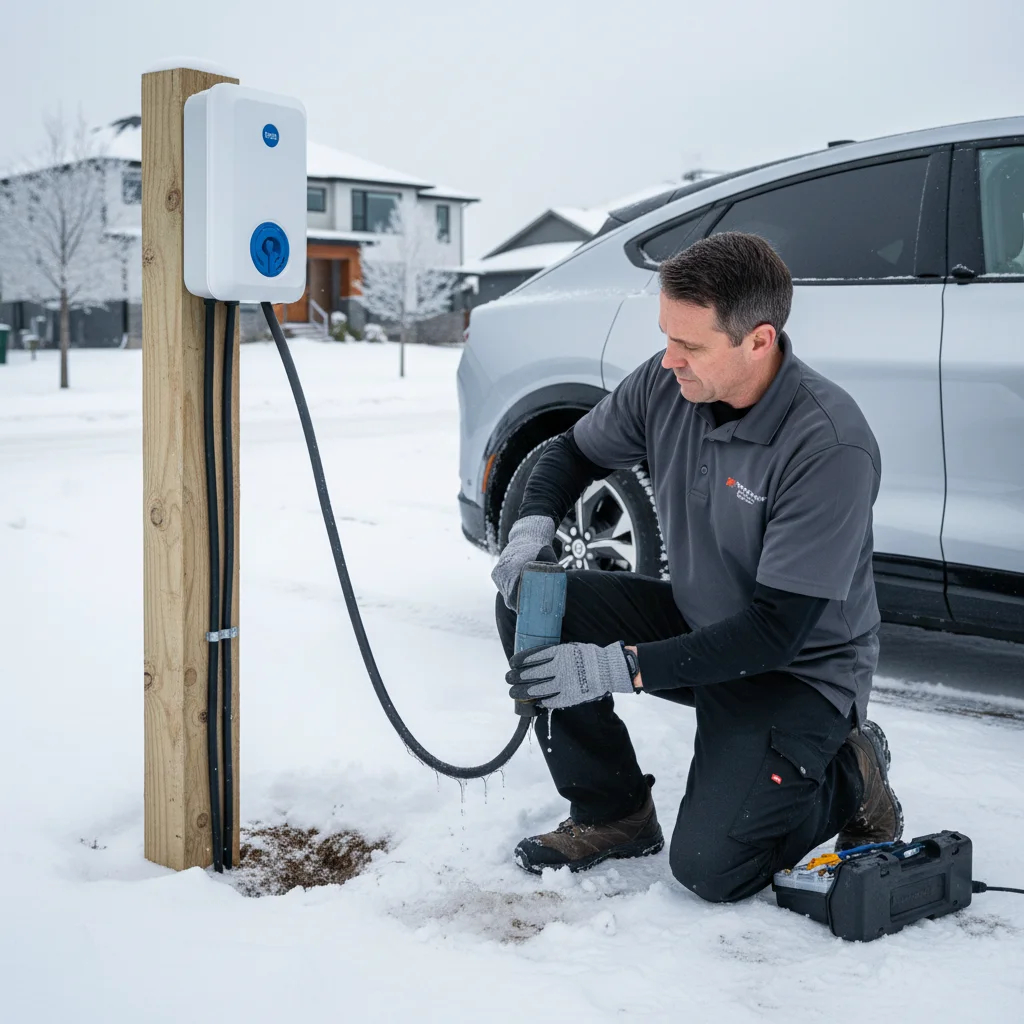
Why valley heat locks a Mach-E to the cable
Las Vegas Valley summers cook a parked Mach-E for hours. KLAS lists an average July high of 104.5F. About 78 days a year reach 100F or more. About 9.4 days a year hit 110F or more. The record high is 120F, set on July 7, 2024. Pavement in a Paradise resort lot holds that heat after sunset. So does a Winchester curb off the Strip corridor. Downtown and the east valley can run up to 11F hotter than the rim. Airport weather at Harry Reid runs 5 to 15F warmer than outlying ground. Summerlin sits near 3,500 feet and gets a small break. The valley floor doesn’t get that same break.
Recurrent Auto found about 17 to 18 percent range loss at 100F. AAA measured about 8.5 percent range loss at 95F. None of those figures come from Ford or Tesla. They still explain a full pack sitting next to a dead latch.
The latch and the charge door both run on the 12V system. The high-voltage pack can still read as complete. The small 12V battery can still sag in that heat. When that voltage sags, the solenoid never fires. FordPass may still look fine on your phone, and the handle stays locked.
The charge door and the latch are separate jobs
The Mach-E uses a motorized charge door on the fender. It also has an electronic latch inside the port. The door opens from FordPass or the cabin switch. The latch clamps the CCS connector while current flows. Both parts are electric, not a simple mechanical catch. You can’t pry them like a fuel door.
If the door closed on the cable, stop and don’t wedge it. If the door is open and the handle is locked, that’s the latch. That’s the usual hot-lot call in this valley.
A DC fast session that didn’t close cleanly can freeze the body computer. The car thinks it’s done, but the latch never got the unlock. A hard restart of the car sometimes clears that hang, and sometimes it doesn’t.
The cabinet can hold the handle even after the car lets go. Sort car-side from station-side before you pull hard.
Try the session and the 12V before the strap
End the charging session on the Mach-E first. Use the screen if it still wakes, or FordPass if it doesn’t. Then end the session on the station screen or the network app. Some cabinets keep the lock until their own session closes. Walking off at a full pack doesn’t always count as an end.
Watch the charge port light while you try. A blink with no motion often means a weak 12V. If the car is dark, that battery may already be dead. You won’t open the frunk until it gets a jump. That’s a different stall from a stuck cable. A dark car is a 12V job first. See Checks to run when your Ford Mustang Mach-E won’t start.
Don’t twist the CCS handle or kick the door. Pins bend and plastics crack if you force the handle.
Other CCS cars seize in the same heat. Hyundai Ioniq 5 charge port stuck after sitting in the heat is the sedan parallel. Rivian charge port stuck: release a frozen cable in the heat is the truck version.
Ford’s frunk strap is the manual override
Ford put a mechanical release in the front trunk that bypasses the solenoid.
Open the frunk from the FordPass app first. You can also use the hood release in the cabin. If the 12V is dead, both fail, so jump that battery first. There’s an auxiliary positive post under a small cover near the driver-side strut tower. Ground the jumper to a clean body bolt. Once the car wakes, try the latch again. You may not need the strap after that.
Look to the driver’s side of the frunk floor. Aim at the back wall once the lid is up. You’ll see a bright orange pull loop, yellow on some years. That loop looks like a fat zip-tie handle. That loop ties to a cable that runs to the port latch.
Pull once in a steady motion, not a jerk. Listen for a soft click at the charge port. Go back to the CCS handle and press its release button. Then draw the connector straight out of the port.
The strap is a workaround, not a repair. It doesn’t revive a dying 12V on its own. It doesn’t clear a hung session by itself. If the lock returns, treat the 12V as the real fault.
When the strap moves and the handle still doesn’t
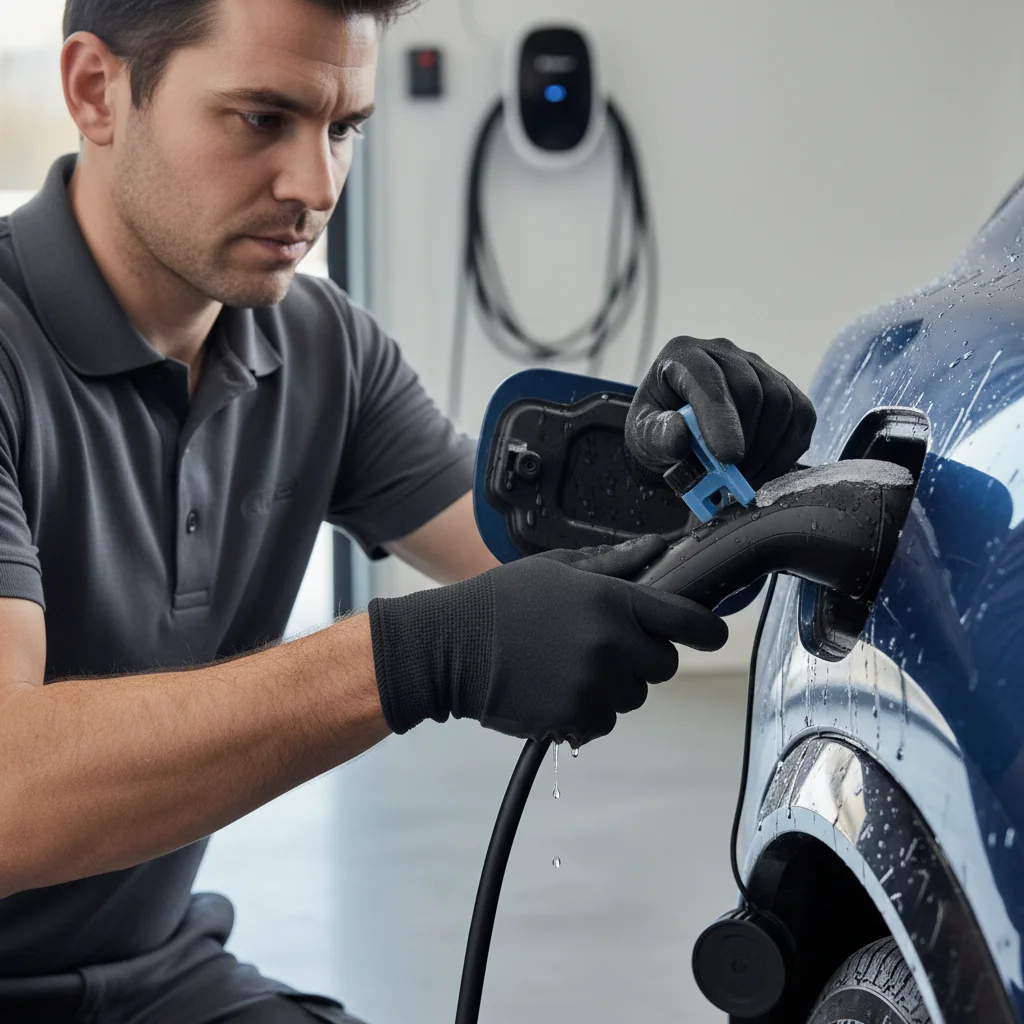
If the loop travels and the connector stays, stop blaming the Mach-E. The station may still be holding it from its side. Confirm the car shows that the session ended. Then close it through the cabinet’s own end-session control.
Major networks print a support number on the unit. Read the station ID from the cabinet label. Ask them to unlock that stall from their side. Confirm any hold time with the network, since no wait figure is published here.
A stall that reboots can drop every locked handle. Stay with the car if you wait on a reboot. Don’t treat a power blip as a plan. Don’t leave a Mach-E clipped to a live stall. That includes Town Square and Allegiant Stadium parking.
NDOT’s Freeway Service Patrol covers the busy valley freeways. Hours run from 5:00am to 8:30pm, seven days a week. Quality Towing operates it, and GEICO sponsors the patrol. Their published materials don’t mention EV charging at all. Treat that as missing copy, not a proven limit. Nevada 511 and nvroads.com show closures and cameras. The Nevada State Police Highway Patrol dispatches rotation tows. None of that is a CCS latch kit.
Electrical miss versus a bent hook
An electrical miss is the common valley case. The solenoid got a release command and never moved. Low 12V voltage is the usual valley cause. A software hang after DC fast charging is next. The port light may blink, or FordPass may show a charge error. The orange strap usually works on that electrical miss because you’re skipping the solenoid.
A mechanical miss is rarer, and it’s worse. The hook inside the port is bent, jammed, or disconnected. The strap may feel slack, and the handle still won’t move. Another pull on the strap won’t fix it. The port needs a close look from a tech.
Firm resistance on the strap means the cable is intact. Slack with no click means the linkage is wrong. Leave that second case to someone with tools. The operators Charge Pro LV connects you with carry that CCS kit. Start that port inspection with Non-Tesla EV rescue. For any brand, use the stuck cable guide. The Mach-E strap is the Ford-only extra step.
How long you can sit, on a lot or a freeway
A disabled vehicle that can’t keep moving is exempt from the highway no-stopping rule. That’s NRS 484B.440, and the statute sets no time cap. Law enforcement can still remove a disabled or abandoned vehicle under NRS 484B.443. On freeways and primary highways, abandoned treatment starts after 24 hours. On other roads, that window is 72 hours, and the owner pays removal. Non-consent tow rates aren’t a single statewide cap. The Nevada Transportation Authority regulates them under operator-filed tariffs. No dollar figure for those tows is published here.
Nevada has no toll roads and no express-lane transponders. If you’re clipped to a garage charger, you’re not on that freeway clock. You’re still blocking a stall in that garage.
Paradise resort lots are a usual Mach-E pin-down. So is curb space in Winchester off the Strip. Allegiant Stadium parking after a game cooks the same latch. Harry Reid long-term parking is another long hot soak. The airport site doesn’t publish EV charging there. Airport parking does advertise free 12V jumps and tire inflation.
If the car itself won’t wake, you’re past a cable problem. Get the 12V sorted first, then retry the latch.
When a person at the bumper is the next move
You’ve pulled the strap and ended both sessions. You’ve jumped the 12V if the car was dark. The CCS handle still won’t come out of the port. You need hands on the port, not another app tap.
Charge Pro LV is a referral line, not a shop. It matches stranded EV drivers with independent local mobile rescue operators. It performs no work and owns no trucks. It employs no technicians, sets no prices, and promises no arrival time. The operator quotes you before starting, then bills you directly.
Those operators can bring a 240V Level 2 source to the car. Use that when the pack is also low. They typically add 10 to 20 miles of range. That takes 15 to 30 minutes of charging. That’s charging time, and never an arrival time. They can jump or replace a dead 12V on site. They handle Tesla and every major EV brand. A Mach-E uses a native CCS charge port, and adapters cover other brands.
Call (702) 935-4699 when the strap and the station have both failed. Ask for a mobile tech who can release that locked cable at the car. The referral network serves the whole Las Vegas Valley. That includes Paradise, the Strip, Henderson, and North Las Vegas.
For the wider map, use the Las Vegas Valley charging hub. If you’re in an unincorporated resort lot, start in Paradise. Use EV roadside assistance in Paradise when the car won’t wake.