When remaining miles fall fast on southbound I-15 toward Primm, stop. Get the car as far right as the shoulder allows. Stay with it and call for a charge at the vehicle. Heat and a desert headwind on the Jean-to-Primm run can wipe a safe margin. That margin looked fine on the valley floor. Do not keep rolling on a guess.
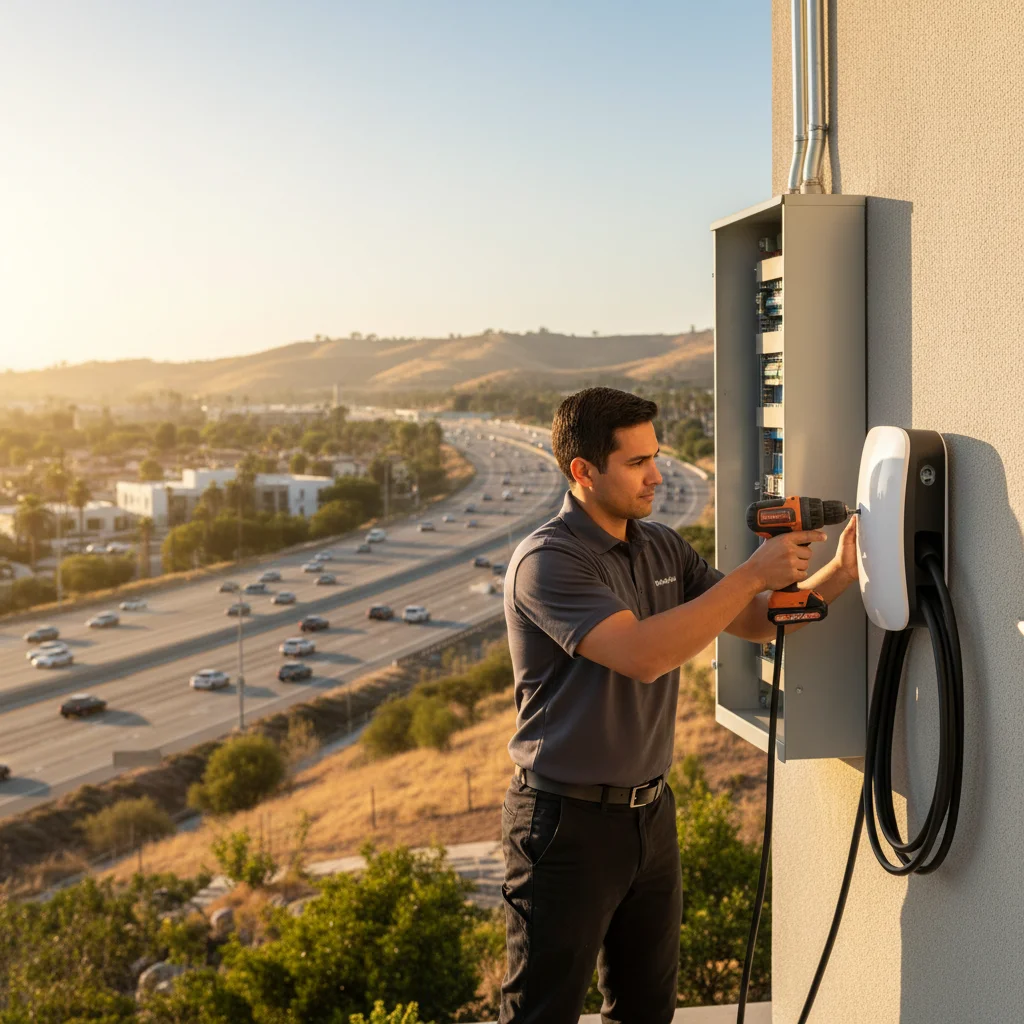
Heat and headwind on the run toward Primm
Primm is the Nevada border town on I-15 at the California line. It is not a separate Census place. This page will not invent a population for it. The community sits in ZIP 89019, at about 2,618 feet. Jean sits a little higher, at about 2,841 feet. Southbound between them, suburban I-15 gives way to open desert.
You may have launched from Enterprise or Southern Highlands with a buffer that felt honest. Valley-floor driving does not train the car for this stretch. The valley floor sits about 2,000 to 2,920 feet. Primm is not a mountain town. Heat and wind have a long, open run. The next climb is the part that surprises people.
That climb is the I-15 rise toward Mountain Pass. The high point is about 4,730 feet. It sits on the California side of the line. Charge Pro LV serves the Las Vegas Valley, including Primm. It does not serve Baker, Barstow, or Mountain Pass. The range loss still starts on the Nevada shoulder. Drivers headed for Los Angeles often stage their last Nevada charge in Primm. A headwind can erase that plan. So can 110-degree heat on the long climb toward Mountain Pass. A comfortable margin can become about 7 percent.
NWS Las Vegas numbers at the airport make the heat plain. The average July high is 104.5F. About 78 days a year reach 100F or more. About 9.4 days reach 110F or more. The all-time record high is 120F, set on July 7, 2024. Recurrent Auto found about 5% range loss at 90F. At 100F, the same work showed 17 to 18% loss. Cooling a hot cabin can draw 3 to 5 kW. AAA, in May 2026, measured 8.5% range loss at 95F. No Tesla-published range-loss figure was located for this page. We are not assigning Tesla a number the company did not publish.
The estimate on the dash is a memory of the last miles. If those miles were slower city streets, the estimate runs high. South of Jean, cabin cooling and a headwind spend that buffer fast. Eighteen percent becomes eleven. Eleven becomes seven. You are still in Nevada. The car is already in a hole.
NV Energy serves Primm, Jean, and Goodsprings. That fact helps at a house later. It does not add miles on I-15. If you still had a chance to stop in town, that was the time. If you are already on the shoulder, solve the car in front of you. Public charger inventories could not be verified from station databases on the research date. Confirm any plug in a live app before you bet remaining range on it.
If the pack is already this low, bring energy to the port. Out-of-charge recovery is the name for that 240-volt stop. Farther north, an empty pack near Silverado Ranch is the in-valley version.
Get off the travel lane and stay put
If the car cannot hold highway speed, treat it as a disabled stop. NRS 484B.440 covers a vehicle disabled so it cannot avoid stopping. That vehicle is exempt from the no-stopping-on-highway rule. The statute sets no time limit on how long it may remain. That is not an invitation to wait all night. NRS 484B.443 lets law enforcement remove a disabled or abandoned vehicle. On freeways and primary highways, a vehicle is treated as abandoned after 24 hours. The owner pays removal.
Nevada has no toll roads. It has no express lanes and no transponder systems. I-15 here is free. You are looking for a wide, legal shoulder. You are not hunting a pay gantry.
Pull as far right as you can. Turn the hazards on as soon as you stop. If you can leave through the passenger door, do that. Standing in the travel lane is the danger. Stay with the car. Do not walk the shoulder for a better look at a post.
Report where you are. Nevada 511 and nvroads.com show conditions, closures, and cameras. The Nevada State Police Highway Patrol Southern Command number is (702) 486-4100. The cell shortcode is *647. Give a milepost if you can read one. If not, give the last named place your nav still shows. Jean and Primm are enough for a dispatcher to start.
The NDOT Freeway Service Patrol covers the busiest Las Vegas valley freeways. Quality Towing operates it. GEICO sponsors it. Hours are 5:00am to 8:30pm, seven days a week. It is free to motorists. Patrol crews handle tire changes, jump starts, fuel, minor fire suppression, and traffic control. They clear about 55,000 incidents a year statewide. About 31,500 of those are in Las Vegas. None of NDOT’s published patrol materials mention electric vehicles. They also do not mention EV charging or EV-specific service. That is an absence in the brochure. It is not a claim that a patrol truck cannot help you. If they stop, take the safety help. Do not assume they will fill the pack.
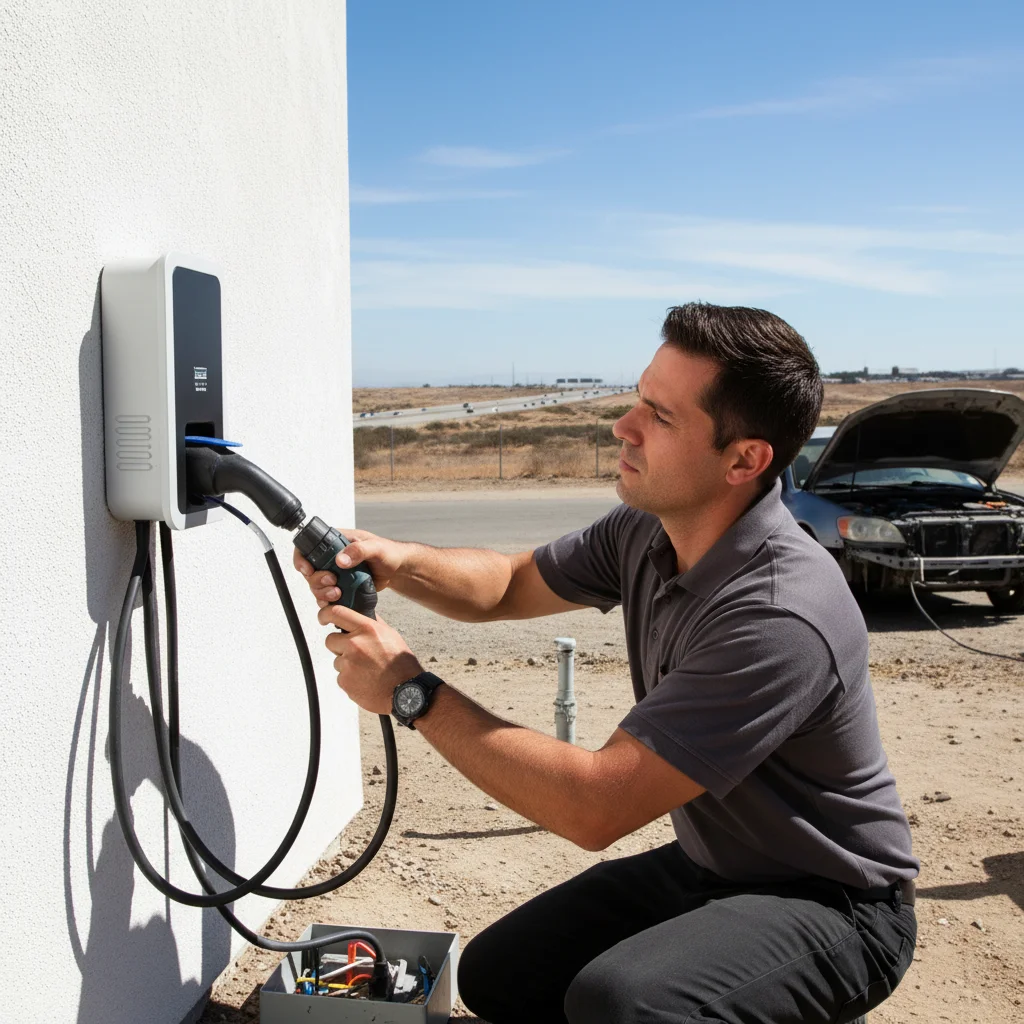
Empty pack or a 12V that will not wake
Tell the line which failure you have. They are different jobs.
An empty traction pack can still show a screen at zero. Locks may work. Hazards may work. You need energy in the high-voltage battery. A 12V jump will not create highway range.
A dark car is often the 12V. Handles, screens, and locks can all stay dead. Valley heat is hard on that small battery. Independent operators in this network can jump a dead 12V on site. They can replace it on site too. They can also bring a 240-volt Level 2 source for an empty pack. Say which one you are looking at.
Tesla cars take a native NACS plug. Other EVs may need a CCS or J1772 adapter. Year, make, model, and color tell the operator what to bring. Mention a non-Tesla before they roll. Do not wait until they are standing at the bumper.
What a mobile charge at the car actually is
Charge Pro LV is a referral line. It matches stranded EV drivers with independent local mobile rescue operators. It performs no work. It owns no trucks and no equipment. It employs no technicians. It sets no prices and promises no arrival time. It publishes no business hours and holds no license. The operator quotes you before starting. That operator bills you directly. The pros we connect you with are licensed and insured.
Those operators bring a 240-volt Level 2 source to the car. They typically add 10 to 20 miles of range in 15 to 30 minutes of charging. That window is charging time. It is never an arrival time. On most I-15 stops toward Primm, that is enough to roll off the shoulder. Then you finish a stop you choose.
That call is EV roadside assistance. It is not a branded truck from this company. For local land context, use the Primm charging and rescue page. If those miles vanished on the Jean climb, read the shoulder guide for that stretch. Jean roadside help covers the same heat and headwind a few miles north.
What to tell the line
Short facts beat a long story.
Give your location first: southbound I-15 toward Primm, last exit, milepost, or a nav pin. “Near the state line” wastes a round of questions. Give the vehicle next: year, make, model, and color. Adapter gear depends on it. Give the battery state. Percent if you can see one. Pack empty or 12V dead. Car still on or fully dark. Say whether you are fully on the shoulder. Mention a tight spot or poor sight distance if you have it. Say whether a patrol unit is already with you. The operator can plan around that truck.
Do not ask this line for a clock. Charge Pro LV does not promise one. The operator on your call can speak to traffic as it is.
For the valley-wide version of this stop, use the freeway out-of-charge guide.
Tow versus a charge on this shoulder
A tow is the right tool when the car cannot take energy. It is also the right tool when an officer orders the vehicle moved. Nevada tow operators need a Nevada Transportation Authority certificate. That sits in NRS 706.4463, 706.4467, 706.4469, 706.4477, and 706.4479. They must release a still-hooked vehicle at the original location for the operator’s set release fee. Non-consent rates are operator-filed tariffs under NAC 706.408. There is no single statewide maximum. This site publishes no dollar figure. Confirm the current rate with the tow company before you sign.
If the pack will take a charge, 10 to 20 miles on site usually beats a flatbed. You keep the next decision. You are not waiting on a yard.
Before you roll south again
Leave the valley with a margin you would not spend around Summerlin. The Jean-to-Primm run is where heat and wind spend that margin. Leave Primm, and that climb is where about 7 percent shows up. Stage energy while you still choose the stop. If you did not, the play does not change. Shoulder, hazards, stay with the car, charge at the port.
Charge Pro LV serves every community in this valley, Primm included. Call (702) 935-4699 for a mobile rescue on I-15 south toward the line. The line connects you with an independent operator. That operator quotes before any work starts.